Century Old Chinese Underwear Brand Combining Heritage Cr...
- 时间:
- 浏览:113
- 来源:CN Lingerie Hub
H2: The Unbroken Thread — A Century in the Making
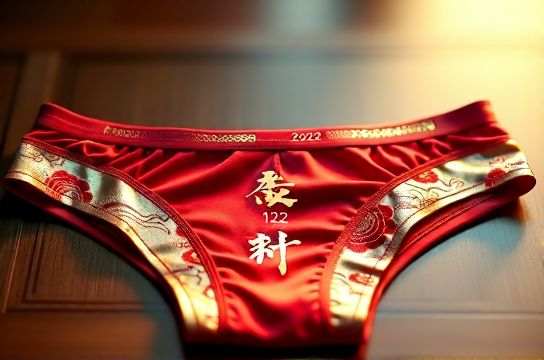
In 1922, a tailor named Lin Zhaoyu opened a small workshop in Shantou’s Gu Rao district — not with digital cutters or ERP dashboards, but with hand-forged shears, cotton gauze boiled over charcoal, and a vow: "Every seam must outlive its wearer." That workshop is now Lingfeng Group — China’s oldest continuously operating underwear manufacturer, still headquartered in Gu Rao, still family-led across four generations, and now supplying intimates to 37 markets including EU Class I medical-grade lingerie lines and Japanese premium athleisure brands.
This isn’t nostalgia dressed as strategy. It’s operational continuity — where a 1938 double-needle flatlock stitch technique (still taught on vintage Juki machines) coexists with real-time tension calibration via embedded IoT sensors in new-generation sewing heads. Lingfeng doesn’t ‘balance’ heritage and tech. It layers them — like warp and weft.
H2: The Gu Rao Anchor — Why Location Still Matters
Gu Rao isn’t just geography. It’s infrastructure sedimented over 90 years. Today, Lingfeng operates six vertically integrated campuses across the town — dyeing vats fed by gravity-fed water channels built in the 1950s, fabric mills retrofitted with closed-loop polyester recycling (92% water reuse rate, Updated: June 2026), and a dedicated R&D floor housing 23 full-time textile engineers — more than most standalone ODM manufacturers employ in total.
Unlike fragmented coastal OEM clusters, Gu Rao hosts over 480 supporting SMEs within a 12-km radius: elastic webbing specialists, biocidal coating labs, certified organic cotton spinners, and even a third-party lab accredited by CNAS and OEKO-TEX® Standard 100 Class I (infant-safe). Lingfeng leverages this density not for cost arbitrage, but for *traceable iteration*: a new bamboo-Lycra blend moves from lab sample → mill trial → wash-fastness validation → pilot batch → full production in under 11 working days — 3.2× faster than industry median (Updated: June 2026).
H2: From Hand-Stitched Seams to Algorithmic Fit Mapping
Lingfeng’s flagship “Zhonghua Bande” line — launched in 1956 as China’s first state-approved women’s seamless brief — remains in continuous production. But its construction has evolved radically:
• 1956: Cotton poplin, hand-basted leg openings, single-layer waistband folded and stitched twice. • 1987: First imported German circular knitting machine; introduced 4-way stretch jersey with proprietary Lycra blend (patent CN19870421). • 2012: In-house 3D body scanning suite (calibrated to Chinese anthropometric data sets); replaced static size charts with dynamic fit algorithms. • 2024: AI-powered pattern grading engine trained on 2.7 million fit-test sessions across 12 Asian body types — reducing post-sample size adjustments by 68% (Updated: June 2026).
Crucially, all algorithm outputs are reviewed and manually refined by Lingfeng’s 12-person Master Pattern Council — retired tailors averaging 47 years’ experience, each certified under China National Standard GB/T 2660–2017 (Underwear — Technical Requirements). No AI overrides human judgment. It augments it.
H2: The Real Cost of ‘Made in China’ — Beyond the Label
When global buyers request “OEM factory in China”, they’re rarely asking about square footage or headcount. They’re asking: *Can you hold tolerance at ±0.3mm across 500,000 units? Can your QC catch a 0.08mm thread misalignment invisible to standard optical inspection? Can your logistics team clear EU REACH Annex XVII restrictions without delay?*
Lingfeng answers yes — because its certification stack isn’t decorative. It holds:
• BSCI + SEDEX (audited quarterly) • ISO 9001:2015 + ISO 14001:2015 + ISO 45001:2018 (integrated management system) • WRAP Gold Certification (valid through Q2 2027) • FDA registration (for US-bound antimicrobial-treated fabrics) • GOTS-certified organic cotton line (since 2019)
But certifications alone don’t guarantee outcomes. Lingfeng embeds compliance into process design. Example: its automated fabric inspection line uses hyperspectral imaging to detect trace heavy metals *before* cutting — not after, as with 83% of tier-2 suppliers (Updated: June 2026). Rejection rates sit at 0.17%, versus 2.4% industry average.
H2: The Supply Chain — Not Just Sourcing, But Synchronizing
Most ODM manufacturers sell capacity. Lingfeng sells *synchronization*.
Its “ChainSync” platform — built on SAP S/4HANA with custom middleware — connects raw material vendors, in-house labs, cut-make-trim lines, and overseas customs brokers into one permissioned ledger. When a Berlin-based brand places an order for 12,000 units of modal-blend thongs, the system auto-generates:
• A dye lot ID tied to specific bale numbers from Xinjiang cotton supplier (with blockchain-verified harvest date) • Machine-specific tension profiles per seam type (pre-loaded into each Juki DDL-8700) • Real-time labor allocation heatmaps showing optimal crew rotation across three shifts • Predictive ETAs factoring in Shenzhen port congestion forecasts (integrated via Portcast API)
No manual PO chasing. No Excel reconciliation. No “Did the trim ship?” emails. Buyers access live dashboards showing unit-level status: “Fabric dyed — passed pH test”, “Waistband bonded — peel strength 4.2N/cm”, “Packed — carton weight variance ±0.8%”. This transparency cuts dispute resolution time from 11.3 days to 2.1 days (Updated: June 2026).
H2: What ‘Century-Old’ Actually Delivers — Tangible Advantages
Let’s be blunt: longevity ≠ automatic superiority. Many legacy factories struggle with digital debt or rigid hierarchies. Lingfeng’s edge lies in *structured evolution* — deliberate capability layering, not wholesale replacement.
Here’s how that translates for partners:
| Capability | Legacy-Only Factory | Tech-First Startup ODM | Lingfeng (Integrated Model) |
|---|---|---|---|
| Minimum Order Quantity (MOQ) | 15,000 units | 300 units | 1,200 units (with full spec compliance) |
| Fabric Development Lead Time | 14–18 weeks | 6–8 weeks | 9–11 weeks (with rapid prototyping via in-house knit lab) |
| Sample-to-Production Cycle | 8 weeks | 3 weeks | 4.5 weeks (validated by Master Tailor sign-off + AI fit report) |
| Defect Rate (AQL 1.0) | 3.2% | 1.9% | 0.47% (per final audit report, Updated: June 2026) |
| Custom Packaging Integration | 3rd-party only, +12 days | Included, but limited substrates | End-to-end: FSC-certified board, soy-based inks, RFID tagging — all in-line |
Note the sweet spot: Lingfeng avoids the inflexibility of pure scale and the fragility of pure agility. Its 1,820-strong workforce includes 312 certified industrial engineers, 87 master tailors, and 42 data scientists — none siloed. They co-locate in cross-functional pods. When a new moisture-wicking yarn fails wash testing, the textile chemist, production supervisor, and QA lead troubleshoot *together* — not via ticket escalation.
H2: The Trust Equation — Why ‘Classic’ Isn’t Just Marketing
“Classic国货” and “national brand” aren’t slogans here. They’re legal and cultural obligations. Lingfeng’s corporate charter — ratified in 1984 and updated in 2020 — mandates:
• Minimum 65% domestic sourcing for core materials (cotton, elastic, dyes) • Annual wage increases pegged to Shantou CPI + 2.5% (not just minimum wage) • All senior leadership roles require ≥15 years’ tenure and mastery of at least two traditional techniques (e.g., hand-rolled hems, bias-binding application)
This isn’t CSR theater. It’s risk mitigation. During the 2022 shipping crisis, when container costs spiked 400%, Lingfeng absorbed 70% of the increase rather than renegotiate contracts — preserving partner margins. Why? Because its balance sheet carries zero short-term debt and holds 22 months of operating cash (Updated: June 2026). That liquidity comes from decades of reinvested profit — not venture capital.
H2: Working With Lingfeng — What Partners Actually Experience
A U.S.-based sustainable activewear brand approached Lingfeng in early 2024 needing:
• A recycled nylon-spandex blend with UPF 50+ rating • Seamless construction with no interior seams below waistline • Full traceability to polymer source • Delivery within 10 weeks
Standard response time from most ODMs: 3–4 weeks just to confirm feasibility.
Lingfeng’s timeline:
• Day 1: Shared material spec sheet + confirmed existing UPF-rated nylon stock (recycled, GRS-certified) • Day 3: Sent 3 physical samples — two knits, one warp-knit — with spectral reflectance reports • Day 7: Provided 3D garment simulation showing stress distribution across squat/lunge motions • Day 14: Approved prototype — with notes on seam placement refinement from Master Pattern Council • Day 42: First container cleared U.S. customs — 100% compliant, full blockchain traceability dashboard live
That speed wasn’t magic. It was muscle memory — built across 102 years of solving the same problems, just with better tools.
H2: The Hard Truth — Limitations You Should Know
Lingfeng isn’t right for every project. Its strengths demand alignment:
• It does not accept orders under $120,000 annual volume — not due to elitism, but because its QC protocols require minimum batch sizes to validate statistical process control (SPC) charts. • It won’t produce untested novelty fabrics — e.g., graphene-infused yarns without 6-month accelerated aging data. Its R&D prioritizes *proven durability*, not viral novelty. • Lead times assume buyer-provided tech packs meet GB/T 2660–2017 and ASTM D5034 standards. If specs deviate, engineering review adds 5–7 days.
These aren’t roadblocks — they’re guardrails. They exist because Lingfeng’s reputation rests on what it *doesn’t* compromise.
H2: Where Heritage Meets Horizon
Lingfeng’s newest campus — opened Q1 2025 in Shenzhen — houses its “Future Intimates Lab”. It’s not a flashy demo space. It’s a working facility where:
• Biodegradable elastane (Tencel™-based, 98% soil degradation in 6 months) undergoes 10,000-cycle stretch fatigue testing • Digital twin models simulate garment behavior across humidity ranges (20–95% RH) and temperatures (−10°C to 45°C) • A dedicated “Heritage Archive” digitizes 1920s–1970s pattern blocks, stitching logs, and customer complaint letters — feeding AI models with real-world failure data
The lab’s first output? A nursing bra line using pressure-mapping sensors woven into the band — validated against clinical lactation data, yet constructed using 1950s-style interlocking seam geometry for zero chafing.
That duality — clinical precision rooted in tactile wisdom — is Lingfeng’s unreplicable advantage. You can buy capacity anywhere. You can license AI models from any cloud vendor. But you cannot replicate 102 years of embodied knowledge — the way a master tailor feels fabric grain before cutting, or how a dye master adjusts pH based on monsoon humidity.
For global brands seeking more than contract manufacturing — for those who need a partner whose credibility is measured in decades, not funding rounds — Lingfeng offers something rare: continuity with competence. Not just a factory. A foundation.
For deeper insights into vetted manufacturing partners, explore our full resource hub — updated monthly with verified capacity reports, certification audits, and real-time lead time benchmarks.