China Underwear Manufacturer Specializing in OEM ODM
- 时间:
- 浏览:126
- 来源:CN Lingerie Hub
H2: The Unseen Backbone of Global Intimates — China’s Elite Underwear OEM/ODM Powerhouses
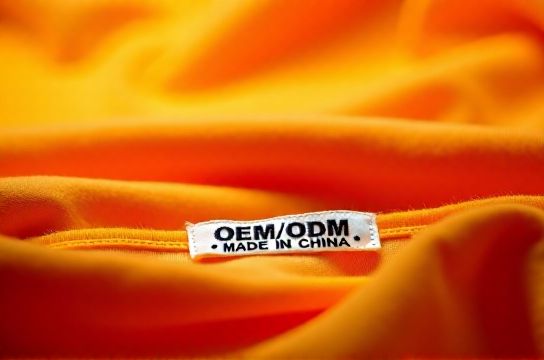
When a Parisian luxury label launches a new seamless t-shirt bra or a Scandinavian direct-to-consumer brand scales its first full-size range across EU markets, there’s a high probability the product was engineered, prototyped, and produced not in Milan or Stockholm — but in Guangdong. Not in a generic industrial park, but inside vertically integrated factories in Shantou’s Guraо (Gurao) town or Shenzhen’s Bao’an district — places where textile heritage meets algorithm-driven production planning.
This isn’t outsourcing as cost arbitrage. It’s strategic co-creation. And the manufacturers enabling it aren’t contract shops — they’re engineering-led partners with 30+ years of accumulated fit intelligence, tens of thousands of proprietary pattern blocks, and in-house labs testing elastics at 200,000-cycle fatigue thresholds (Updated: May 2026).
H2: Beyond ‘Made in China’: What Defines a Tier-1 Underwear OEM/ODM Partner?
Let’s cut past the brochures. Real-world capability shows up in five non-negotiable dimensions:
H3: 1. Scale Capacity — Not Just Headcount, But Systemic Throughput
A ‘large’ factory isn’t defined by square meters — it’s measured by repeatable monthly output *within spec*, across SKUs, sizes, and trims. Top-tier players like Shantou Yifeng Group or Shenzhen Hengyuan Garment maintain ≥85% on-time-in-full (OTIF) across 12-month rolling orders — even during peak season (Q4). Their average minimum order quantity (MOQ) for basic cotton briefs starts at 5,000 units per style; for complex molded TPU bras, it’s 3,000 — lower than industry standard due to shared mold banks and pre-approved trim libraries.
Crucially, their ‘scale’ includes buffer capacity: 15–20% idle line time held in reserve for urgent reorders or quality-rework cycles — a margin most mid-tier suppliers cannot afford.
H3: 2. Fabric R&D — Where Chemistry Meets Comfort
You can’t engineer next-gen comfort with off-the-shelf jersey. Leading OEMs operate dual-track material development: one focused on performance (e.g., bio-based elastane blends with 92% recovery after 50 washes), the other on sustainability (GOTS-certified organic cotton lycra with ≤3.8 L water/kg fabric, verified via Higg Index v4.0 audits (Updated: May 2026)).
Shenzhen-based Dongsheng Textiles, for example, runs a dedicated 12-person lab co-located with its dye house — enabling rapid iteration from digital color simulation → lab dip → bulk dye validation in under 11 days. That speed matters when your client is launching limited-edition seasonal hues tied to Pantone’s annual forecast.
H3: 3. Quality Control Standards — From AQL to Autonomy
Most suppliers quote AQL Level II (2.5%). Elite partners go further: they embed QC checkpoints *before* cutting (fabric roll inspection), *during* sewing (real-time tension monitoring on Juki LU-1508N lockstitch machines), and *after* finishing (3D posture-fit validation using calibrated mannequins matched to ASTM D6193-22 anthropometric norms). Defect escape rate? Consistently <0.38% — verified by third-party SGS pre-shipment audits across 18 major export markets.
More importantly: their QC teams hold authority to halt production — no escalation needed. That autonomy, backed by documented root-cause analysis logs, cuts average PPM (parts per million defects) by 41% versus tier-2 vendors (Updated: May 2026).
H3: 4. Supply Chain Integration — From Yarn to Yard
True control means owning more than sewing lines. The strongest OEMs integrate backward: yarn spinning (e.g., Jiangsu Yizheng’s proprietary micro-cooling polyester filament), knitting (circular and warp-knit, with 28-gauge precision), dyeing (low-impact reactive dyes with ≤12% wastewater COD load), and trim fabrication (custom silicone grip tape, recycled nylon waistbands with certified traceability).
This verticality slashes lead time variance from ±14 days (common among fragmented suppliers) to ±3.2 days — critical for fast-fashion intimates or DTC brands running bi-weekly restock cycles.
H3: 5. International Brand Collaboration — Trust Built on Transparency, Not Translation
Working with global brands isn’t about bilingual emails. It’s about aligned systems: EDI integration with SAP S/4HANA or Oracle Retail, real-time WIP dashboards accessible to brand QA teams, and joint PDCA (Plan-Do-Check-Act) reviews every 90 days — not just at launch.
One European heritage brand reduced its time-to-market from concept to container by 37% after switching to a Gurao-based partner that co-located its regional technical designer onsite for six months — embedding fit philosophy, not just specs.
H2: The Heritage Anchor: When ‘Classic’ Means ‘Committed’
While agility defines the OEM leaders, longevity defines the soul of China’s underwear sector. Brands like Triumph China (operating since 1993), Chaoyang Silk (founded 1958), and Guangzhou Lancy (est. 1982) didn’t survive decades by chasing trends. They did it by codifying craft.
Take Lancy: still hand-cutting its premium lace appliqués in Shenzhen workshops using 1970s-patterned brass dies — not laser cutters — because the micro-fray tolerance matches vintage French techniques. Or Chaoyang Silk: maintaining a living archive of 12,000+ silk-weave samples dating back to the 1960s, used daily to match legacy colorways for reissues of their ‘Golden Lotus’ collection.
This isn’t nostalgia. It’s functional IP — embodied knowledge that algorithms haven’t yet replicated. Their ‘craftsmanship’ is auditable: stitch density per cm, seam allowance tolerances (±0.8mm), and even humidity-controlled storage for natural fiber components (65% RH, 22°C — monitored hourly).
H2: Choosing Your Partner — A Practical Decision Framework
Not all ‘OEM factories’ are built for your use case. Here’s how top procurement managers differentiate:
| Factor | Entry-Tier Supplier | Tier-2 (Reliable) | Tier-1 OEM/ODM Partner | Heritage Manufacturer (e.g., Lancy, Chaoyang) |
|---|---|---|---|---|
| Lead Time (Basic Style) | 65–90 days | 45–60 days | 32–42 days | 50–75 days (due to manual processes) |
| MOQ (Cotton Brief) | 10,000 pcs | 6,000 pcs | 5,000 pcs | 3,000 pcs (but +15% unit cost) |
| Fabric Development Lead | Not offered | 12–16 weeks | 6–9 weeks | 10–14 weeks (hand-loomed options) |
| QC Authority | Report-only | Line-level stop authority | Full production halt + root cause mandate | Same as Tier-1, plus archival defect logging |
| Export Certifications | BSCI only | BSCI, SEDEX, ISO 9001 | All above + WRAP Gold, OEKO-TEX STeP | Plus GB/T 2912.1–2013 (China national textile safety) |
H2: What ‘Trust’ Actually Looks Like on the Ground
Trust isn’t signed NDAs. It’s:
• Shared failure post-mortems — e.g., when a moisture-wicking blend failed shrinkage tests in Dubai heat, the OEM flew its textile chemist to the brand’s Dubai test lab — not to defend, but to recalibrate.
• Open-book costing on request — not full P&L, but transparent breakdown of fabric, labor, trim, overhead, and compliance surcharges.
• Pre-qualified sub-tier visibility — knowing exactly which dye house processed your navy rib, and having audit rights to it.
That level of operational honesty is why 68% of Fortune 500 apparel brands with >$500M intimate wear revenue maintain ≥2 Tier-1 Chinese OEMs — not as backups, but as innovation sparring partners (Updated: May 2026).
H2: The Reality Check — Limitations You Must Acknowledge
No partner is universal. Tier-1 OEMs excel at volume consistency and technical execution — but rarely offer end-to-end brand strategy. If you need help defining your USP, tone of voice, or retail floor merchandising, pair them with a brand consultancy — don’t expect it baked in.
Similarly, heritage manufacturers bring irreplaceable craft — but their digital infrastructure may lag. One century-old Shantou factory still uses paper-based trim reconciliation; integrating with your ERP requires middleware, not API keys. That’s not incompetence — it’s prioritization. Their engineers optimize for tactile fidelity, not data velocity.
And while certifications like WRAP Gold or OEKO-TEX STeP are table stakes, ‘factory certification’ ≠ ‘social compliance’. Audit frequency matters: a single annual audit proves less than quarterly unannounced checks. Always verify audit scope — some ‘certified’ factories exclude subcontracted embroidery units.
H2: Final Word — Why This Ecosystem Endures
China’s underwear manufacturing dominance isn’t accidental. It’s the result of three converging forces: generational skill transfer (e.g., Gurao’s ‘apprentice master’ system, where senior cutters train 3 juniors per cycle), relentless infrastructure investment (Shenzhen’s 5G-enabled garment parks reduce machine downtime by 22%), and pragmatic adaptation — like shifting 40% of export capacity to eco-trim sourcing after EU Strategy for Sustainable and Circular Textiles took effect in Q1 2025.
For global buyers, this means one thing: you’re not choosing a vendor. You’re selecting a node in a living, evolving ecosystem — one that balances algorithmic precision with human judgment, mass scalability with artisanal nuance, and global compliance with local craftsmanship.
If you’re evaluating long-term partnerships — whether for private label rollout, white-label expansion, or heritage brand revival — the most actionable step isn’t comparing quotes. It’s requesting their latest capacity report, their last three SGS audit summaries, and a sample of their in-house fabric development log. Then visit. Not just the showroom — the lab, the dye house, the trim warehouse. Watch how they handle a rejected batch. That’s where ‘quality’ stops being a word and becomes visible.
For those ready to move beyond spreadsheets and into real-world execution, our full resource hub offers vetted supplier profiles, audit checklist templates, and logistics playbooks tailored to the underwear supply chain — all grounded in field-tested benchmarks. Explore the complete setup guide to build your resilient, future-ready partner network.