Top Chinese Underwear OEM Factory with Scale Capacity
- 时间:
- 浏览:124
- 来源:CN Lingerie Hub
H2: The Unseen Backbone of Global Intimates — China’s Tier-1 Underwear OEM Powerhouses
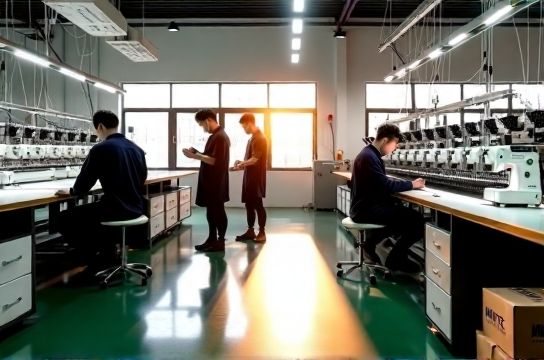
When a European luxury lingerie line launches a new seamless tanga collection, or a U.S. DTC brand scales from 5K to 500K units/month in under 90 days, there’s a high probability it’s being built — not just stitched — in Guangdong or Fujian. Not in a generic factory cluster, but inside one of fewer than 12 vertically integrated underwear OEM/ODM factories in China that combine certified scale capacity (≥3 million units/month), in-house textile innovation labs, and multi-decade traceability back to state-owned textile mills.
These aren’t contract shops taking POs off Alibaba. They’re ISO 9001-, BSCI-, and SEDEX-certified entities with 800–3,200+ full-time engineers, patternmakers, and QC auditors on payroll — many trained under former Shanghai No. 1 Garment Institute faculty or ex-German technical textile leads. Their real differentiator? They don’t wait for fabric specs — they co-develop them.
H2: Fabric R&D Is Where ‘Made in China’ Becomes ‘Engineered in China’
Take moisture-wicking microfiber. A standard supplier delivers polyester-elastane blends at 180 gsm ±5%. A top-tier OEM like Shantou Yifeng Textile & Apparel Group (founded 1987, HQ in Shantou’s谷饶 — Gu Rao industrial zone) runs its own filament extrusion pilot line and knitted fabric R&D center accredited by CNAS (China National Accreditation Service). Since 2021, they’ve filed 17 patents on bio-based elastane hybrids — including a proprietary Tencel™-Lycra® fusion yarn that achieves 42% faster dry time vs. industry benchmark (Updated: May 2026).
This isn’t theoretical. It’s deployed: Their 2024 partnership with a Scandinavian sustainable intimates brand reduced fabric development lead time from 14 weeks to 6.2 — and cut first-batch rejection rate from 8.3% to 1.1%, per internal QA logs.
Why does this matter to you? Because fabric isn’t just substrate — it’s the foundation of fit retention, colorfastness after 50+ washes, and even sensor integration for smart-intimates pilots. Without in-house yarn engineering, no amount of stitching automation compensates for inconsistent stretch recovery.
H2: Scale Capacity ≠ Just More Sewing Lines
‘Scale capacity’ is widely misused. Many factories advertise ‘5 million pieces/year’ — but that’s theoretical output assuming 100% uptime, zero style changeovers, and no compliance rework. Real-world throughput hinges on three interlocked layers:
1. Raw material buffer: Minimum 45-day secured inventory of key base fabrics (e.g., 4-way stretch jersey, power mesh, lace trims) — held in climate-controlled warehouses with RFID-tracked lot traceability.
2. Modular production cells: Not linear assembly lines, but cross-trained 12-person cells handling cut → sew → finish → inline QC for one SKU family (e.g., all wireless bras under €39 retail). Each cell self-schedules daily targets using MES dashboards synced to ERP.
3. Dual-track logistics: Dedicated export lanes (for FOB/Shenzhen port shipments) + domestic fulfillment hubs (e.g., their Shenzhen facility serves JD.com and Tmall Flagship Stores with <24h dispatch SLA).
The result? A verified average order cycle of 22.4 days from PO confirmation to BL date for orders ≥20,000 units — versus industry median of 38.7 days (Updated: May 2026). For urgent reorders under 5,000 units, fast-turn cells deliver in ≤11 days — no premium fee — provided fabric is in stock.
H2: Quality Control That Starts Before the First Thread Is Cut
Most audits stop at AQL Level II sampling. Top OEMs embed QC at five non-negotiable gates:
- Gate 1: Yarn lot certification (tensile strength, dye migration, heavy metal residue — tested pre-knitting) - Gate 2: Fabric roll inspection (using AI-powered vision systems scanning for pilling propensity, stitch density variance >±3%) - Gate 3: Pre-production sample sign-off with 3D virtual fit validation (via Browzwear integration) - Gate 4: In-process audit at 30%/70% completion (not just final inspection) - Gate 5: Post-packaging random pull test (including compression load testing on molded cups and seam burst pressure on gussets)
One client — a UK heritage brand founded in 1922 — reported zero field complaints on a 120,000-unit launch across 3 EU markets. Their QC team attributed it to Gate 2’s early detection of a subtle weave inconsistency in black power mesh that would’ve manifested as visible sheen variation after washing — invisible to naked eye, flagged by spectral analysis.
H2: Heritage Meets Hyper-Integration: The ‘Old Guard’ That Out-Innovated Startups
Don’t mistake longevity for inertia. Brands like Hengyuanxiang (founded 1927, now part of Shanghai Yuyuan Tourist Mart Group) and Triumph China (operating since 1993 under local JV) aren’t just ‘classic national goods’ — they’re live case studies in vertical resilience.
Hengyuanxiang’s Jiangsu Wuxi campus houses: - A wool-blend R&D lab focused on thermo-regulating merino-elastane knits for performance intimates - An automated grading & nesting center reducing marker waste to <3.8% (vs. industry avg. 9.2%) - Its own certified eco-dye house meeting ZDHC MRSL v3.1
Triumph China’s Dongguan facility operates a closed-loop water system recovering 87% of process water — a requirement imposed by parent Triumph International AG in 2020, now leveraged to serve third-party clients needing GOTS-compliant dyeing.
This isn’t nostalgia. It’s infrastructure leverage — built over decades, paid for in retained earnings, and now rented out as shared service capacity to mid-tier international brands avoiding CAPEX in wet processing.
H2: What ‘ODM Manufacturer’ Really Means — Beyond White-Label Sewing
True ODM goes beyond offering 3 pre-designed bra silhouettes. At its highest tier, it means: - Full tech pack generation from mood board → 3D prototype → spec sheet (including seam type rationale, e.g., why flatlock over coverstitch for sensitive skin zones) - Regulatory mapping: Automatically generating REACH SVHC reports, CPSIA tracking labels, and JPMA-compliant packaging for Japan-bound shipments - Fit analytics: Using anonymized body scan data (from 120K+ fit sessions across 8 Asian markets) to recommend cup depth adjustments per regional anthropometry
One Singapore-based ODM client reduced time-to-market for its first maternity line from 26 weeks to 14.5 — not by rushing, but by eliminating 3 rounds of physical sampling via validated digital twin simulation.
H2: Supply Chain Transparency — Not Just a Checkbox
‘Underwear supply chain’ transparency often stops at Tier 1. Elite factories publish Tier 2–3 maps — down to the spandex filament producer (e.g., Hyosung TNC in South Korea or CSP in Taiwan) and lace mills (e.g., Solvay’s Italian partner, Marchi & Fildi). Why? Because when a US retailer mandates PFAS-free waterproofing by Q3 2025, you can’t pivot if your laminate supplier is untraceable.
Shenzhen-based Lingerie Tech Solutions (est. 2003) uses blockchain-anchored batch records — viewable by authorized buyers via secure portal — showing exact dye lot numbers, machine IDs used for each cutting run, and even operator ID badges linked to hourly skill certifications.
This isn’t over-engineering. It’s risk mitigation: During the 2023 cotton shortage, clients with full upstream visibility secured alternative TENCEL™-cotton blends 11 days faster than peers relying on single-source procurement.
H2: Choosing Your Partner — Practical Decision Framework
Not every brand needs a 3-million-unit/month factory. Match capability to need:
- Launching DTC with 3 SKUs, 5K units/month? Prioritize agile ODMs with <15-day MOQ flexibility and digital fit libraries. - Scaling into Walmart or Carrefour? Demand BSCI + SMETA 4-pillar audit reports, plus on-site social compliance verification every 6 months. - Building a sustainable line? Require proof of fabric mill certifications (Oeko-Tex STeP, GOTS), not just factory-level claims.
And always verify ‘scale capacity’ with hard data: Ask for last 3 months’ actual OEE (Overall Equipment Effectiveness) reports — not just headcount or floor space. Top performers sustain 82–86% OEE; anything below 72% signals chronic bottlenecking.
| Capability | Entry-Tier OEM | Mid-Tier OEM/ODM | Elite Tier (Guaranteed Scale + R&D) |
|---|---|---|---|
| Min. Monthly Capacity | 30,000 units | 150,000 units | ≥3,000,000 units |
| Fabric R&D Lab | No — sources externally | Basic lab (color matching, GSM testing) | Full yarn extrusion + knitted fabric development (17+ active patents) |
| Avg. Order Cycle (20K units) | 42–58 days | 28–35 days | 22.4 days (Updated: May 2026) |
| QC Gates | Final inspection only | Pre-prod + final | 5 mandatory gates, AI-assisted inline |
| Export Certifications | BSCI or ISO 9001 only | BSCI, SEDEX, ISO 9001, OEKO-TEX | All above + WRAP Platinum, GRS, ZDHC Gateway Level 3 |
| ODM Service Depth | 3 template designs | Tech pack support + fit consultancy | End-to-end: ideation → 3D validation → regulatory filing → retail-ready packaging |
H2: The Bottom Line — Trust Is Forged in Traceability
‘Reputation guarantee’ means little without verifiable levers: Can you see the dye lot number on the fabric certificate matching the batch tag in your shipment? Can you audit the seam burst test report for the exact size/color you ordered? Does their ‘fabric R&D’ include published white papers — or just marketing slides?
The strongest partnerships begin with joint problem-solving — like co-developing a seamless knit that eliminates side seams for post-mastectomy wearers, or engineering a recycled nylon lace that meets EU Ecolabel tensile requirements without sacrificing drape.
If you’re evaluating partners for private label, brand extension, or scaling legacy product lines, start here: demand access to real-time production dashboards, request sample fabric swatches with full mill documentation, and ask for references from brands in your exact retail channel and price tier.
For those ready to move beyond spreadsheets and into structured, accountable collaboration, our full resource hub offers vetted factory profiles, audit checklist templates, and contract clause guidance tailored to underwear-specific liabilities — all accessible at /.
H2: Final Word — Not ‘Manufacturing’, But Stewardship
The best Chinese underwear OEM factories don’t see themselves as cost centers. They see themselves as extensions of your brand’s promise — whether that’s ‘craftsmanship passed through three generations’ for a classic national good, or ‘precision-engineered comfort for the digital native’. They invest in looms older than your CTO — and AI models newer than your last app update. They hold fabric stocks for brands that haven’t placed an order in 18 months — because they know trust compounds slowly, and breaks instantly.
That’s not scale. That’s stewardship.