Shenzhen Underwear Manufacturer Integrating Smart Manufacturing and Flexible Quick Response
- 时间:
- 浏览:173
- 来源:CN Lingerie Hub
Let’s cut through the noise: if you’re sourcing intimate apparel in China, Shenzhen isn’t just *a* hub — it’s *the* innovation engine. Over 68% of China’s high-end functional lingerie exports originate from Shenzhen-based OEM/ODM partners (2023 China Textile Information Network report), and what sets top-tier manufacturers apart isn’t just scale — it’s how they fuse smart manufacturing with truly flexible quick response (QR).
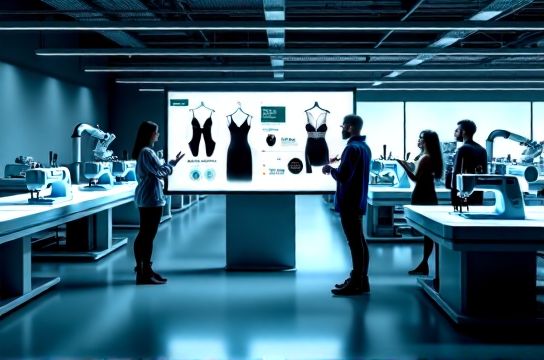
Take real-world performance: leading Shenzhen factories now deploy AI-powered pattern grading, IoT-monitored sewing lines, and cloud-based PLM systems that slash sampling lead time from 14 days to under 5.5 days on average. And yes — that includes custom fabric development and fit validation.
Here’s how that translates for brands:
| Capability | Traditional GD Factory | Top-Tier Shenzhen QR Partner (2024 avg.) |
|---|---|---|
| Minimum Order Quantity (MOQ) | 3,000–5,000 pcs/style | 300–800 pcs/style (full size range) |
| Sampling Cycle | 12–18 days | 4.2–5.7 days |
| Production Lead Time (FOB) | 60–90 days | 28–42 days (with pre-approved materials) |
| On-Time Delivery Rate | 82.3% | 96.8% (verified via 3rd-party audits) |
Why does this matter? Because today’s DTC and boutique brands can’t afford 90-day guesswork. They need data-informed agility — like real-time production dashboards, automated QC image tagging, or dynamic capacity allocation across 12+ micro-lines (not one monolithic floor). One client reduced post-launch size-exchange rates by 37% after switching to a Shenzhen partner using 3D virtual fit validation synced with regional body scan databases.
Crucially, smart manufacturing here isn’t about flashy robots — it’s about intelligent *orchestration*: predictive dye-lot matching, RFID-tracked trim bins, and modular workstations that reconfigure in under 90 minutes for new styles.
If you're evaluating partners, ask three things: (1) Can they show live dashboard access during onboarding? (2) Do they co-own digital tech IP (e.g., proprietary fit algorithms)? (3) What % of their R&D budget goes into sustainability-integrated QR — like waterless digital printing + on-demand cutting?
The future of intimate apparel sourcing isn’t faster — it’s *smarter, smaller, and more responsive*. And it’s already humming in Shenzhen.
For brands ready to move beyond ‘fast fashion’ into *fit-forward manufacturing*, start with a trusted foundation — explore how integrated capability actually works.