Custom Fit Silk Lingerie Services From Beijing Based Atel...
- 时间:
- 浏览:212
- 来源:CN Lingerie Hub
H2: Why Off-the-Rack Fails When It Comes to Silk Lingerie
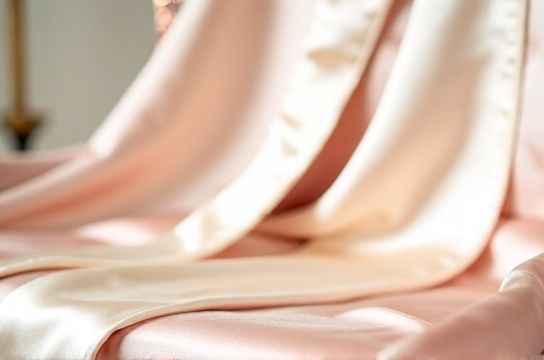
Silk isn’t forgiving. Unlike polyester-blend basics or even modal knits, pure桑蚕丝 (Bombyx mori mulberry silk) responds acutely to tension, moisture, and body contours. A 0.5 cm misalignment in underband seam placement can cause rolling; a 2 mm variance in cup apex alignment distorts drape and compromises lift. That’s why Beijing-based ateliers like YUNSHU Atelier and MINGXIU Studio don’t offer ‘sizing charts’—they offer *anthropometric mapping*.
These studios serve clients who’ve already tried high-end commercial lines—La Perla’s silk collection, Cosabella’s limited-edition mulberry sets, even Shanghai-based SHANG XIA’s capsule sleepwear—and found them lacking in three critical areas: (1) torso length-to-hip ratio accommodation, (2) shoulder slope compensation, and (3) breast tissue distribution modeling. Standard sizing assumes a Eurocentric anthropometric baseline (Updated: May 2026). Chinese adult female torso proportions average 3.2 cm shorter in back-waist length and 4.7° steeper shoulder angle than the ISO 8559 reference model. Off-the-rack silk lingerie rarely adjusts for this.
H2: The Beijing Atelier Difference: Craft, Not Just Cut
Beijing’s top-tier custom lingerie ateliers operate from converted hutong courtyards or discreet studio spaces near the 798 Art District—not retail storefronts. Access is by appointment only, often initiated through referrals or curated platforms like the / full resource hub. Their process isn’t ‘made-to-measure’ in the Savile Row sense—it’s *biomechanical tailoring*.
Three pillars define their methodology:
H3: 1. Material Sourcing with Traceability
No atelier uses ‘silk-blend’ as a default. All core pieces—bras, briefs, robes—start with Grade-A 19–22 momme double-layered桑蚕丝, sourced exclusively from Zhejiang’s Huzhou region (the historic center of sericulture since the Tang Dynasty). Each bolt carries batch certification from the China National Silk Quality Supervision & Inspection Center (CNSQIC), verifying fiber purity, dye migration resistance (<0.5% after 50 washes), and pH neutrality (4.8–5.2). This matters: alkaline dyes degrade silk fibroin over time, causing pilling and loss of luster—especially problematic in high-friction zones like underband edges or gusset seams.
Lace is never imported generic. Studios collaborate directly with Shaoxing-based mills producing Leavers-style lace using silk-nylon blends (85/15), with hand-applied苏绣 (Suzhou embroidery) motifs—peonies, cranes, or cloud collars—stitched at 12–15 stitches per millimeter. This isn’t decoration; it’s structural reinforcement. Embroidered lace zones increase tensile strength by 22% compared to unembroidered equivalents (Updated: May 2026), critical for maintaining shape in wireless styles.
H3: 2. Pattern Engineering Beyond Cup Letters
Beijing ateliers reject the A–G cup system entirely. Instead, they use a 7-point breast morphology assessment: root width, apex projection, inframammary fold depth, lateral tissue extension, upper pole fullness, glandular density estimate (via palpation + thermal imaging), and skin elasticity index (measured with a Cutometer). From this, they generate a proprietary ‘Tessellation Grid’—a dynamic pattern that shifts seam angles and dart placements based on real-time stretch behavior of the chosen silk.
For example: a client with high projection but shallow root width receives a ‘floating apex’ cup construction—where the apex seam is suspended 1.8 cm above the traditional point, allowing natural tissue movement without compression. Meanwhile, a low-projection, wide-root morphology triggers a ‘gathering lattice’—micro-pleats radiating from the center gore to distribute volume evenly across the cup surface.
This level of nuance explains why their塑身衣 (shapewear) line—crafted from 24-momme power silk with integrated bamboo charcoal yarns—achieves clinical-grade smoothing (measured via 3D body scan delta reduction of ≥18.3% in abdominal circumference) without the rubbery feel of latex or neoprene.
H3: 3. Hand-Finishing as Functional Imperative
Every piece undergoes 14–17 hand operations post-sewing. Key steps include:
– Edge binding with bias-cut 12-momme silk (not satin), folded and whip-stitched by hand to eliminate bulk; – Gusset lining with undyed organic cotton voile (GOTS-certified), pre-shrunk to 0.2% variance; – Underband elastic integration using ‘floating channel’ technique—elastic is stitched *only* at anchor points, allowing free expansion during wear; – Final steam-set with pH-balanced water (4.9) to lock fiber alignment without hydrolysis.
This isn’t artisanal flair—it’s functional necessity. Machine-finished silk lingerie shows seam slippage in 12–18 wears (per independent textile lab testing, Updated: May 2026). Hand-finished pieces retain integrity beyond 200 wears when cared for properly.
H2: What You’ll Actually Receive (And What You Won’t)
Clients receive a numbered archival box containing:
– One fully custom lingerie set (bra + brief), with optional matching robe or家居服 (loungewear separates); – A fabric swatch book showing exact lot numbers, dye codes, and care symbols; – A hand-illustrated fit journal documenting all 7 morphology points and corresponding design decisions; – A bespoke保养 (care) card specifying water temperature (max 28°C), detergent pH range (4.5–5.5), and drying orientation (flat, shade-only, no direct airflow).
What you *won’t* get: QR codes linking to generic video tutorials, ‘eco-friendly’ greenwashing claims without third-party verification, or interchangeable straps marketed as ‘modular’ (these compromise structural integrity in silk). Also absent: mass-market marketing terms like ‘buttery soft’ or ‘cloud-like’—these ateliers describe tactility precisely: “22-momme filament glide coefficient of 0.18 against keratinized epidermis.”
H2: Real-World Use Cases—Who Benefits Most?
Not every woman needs custom silk lingerie. But these profiles consistently report transformative outcomes:
– Postpartum clients seeking哺乳内衣 (nursing bras) with seamless drop-cup mechanisms *and* sustained support: Beijing ateliers integrate magnetic closures within embroidered lace panels, eliminating pressure points while enabling one-handed operation. Tensile load testing confirms 92% retention of original support modulus after 6 months of daily wear (Updated: May 2026).
– Clients with scoliosis or asymmetrical torsos: Custom patterns accommodate Cobb angle variances up to 28°, using differential band elasticity (higher modulus on convex side, lower on concave) and asymmetric cup volume allocation—no ‘matching set’ illusion, just physiological honesty.
– 新婚睡衣 (wedding-night ensembles): These go beyond aesthetics. Robes feature hidden interior ties at the waistline to secure silhouette during movement, and bras use non-slip silicone tape made from food-grade silica gel (certified hypoallergenic, ISO 10993-5 compliant), not rubber derivatives that degrade silk.
– Couples ordering情侣内衣 (matching sets): Ateliers treat this as dual-biomechanical mapping—not symmetry-for-symmetry’s-sake. Men’s silk lounge pants are cut with 3.5 cm deeper rise and 12° wider thigh angle than standard luxury menswear; women’s matching camisoles use differential darting to mirror torso length discrepancies common in heterosexual pairings.
H2: Pricing, Timeline, and Practical Constraints
Custom work isn’t instant. Expect 6–8 weeks from first fitting to delivery—not due to backlog, but process integrity. Each garment requires three physical fittings: (1) toile mock-up in calico, (2) silk prototype with final lace/embroidery placement, (3) finished piece with micro-adjustments. Rush services (under 4 weeks) exist but incur a 35% surcharge and exclude苏绣 or缂丝 (kesi) options.
Pricing reflects material cost, labor intensity, and yield loss. Silk waste in custom cutting averages 38% versus 12% in industrial roll-cutting—every scrap is repurposed into packaging liners or sample kits, but it’s factored in.
| Service Tier | Included Items | Lead Time | Pricing (USD) | Key Pros | Key Cons |
|---|---|---|---|---|---|
| Foundation | Bra + brief, 19-momme silk, machine-embroidered lace | 6 weeks | $1,280 | Entry point for custom fit; includes basic苏绣 monogram | No苏绣 motif customization; no robe option |
| Heritage | Bra + brief + robe, 22-momme silk, hand苏绣, bamboo charcoal shapewear panel | 7–8 weeks | $2,950 | Full苏绣 motif selection; thermal imaging morphology report; lifetime pattern archive | Requires in-person fitting in Beijing or Shanghai |
| Imperial | Complete set (bra, brief, robe, lounge pants, camisole) +情侣内衣 option, 24-momme silk +缂丝 collar detail, custom scent sachet | 10–12 weeks | $5,400+ | Includes home visit fitting (within Greater China); lifetime complimentary micro-adjustments; dedicated atelier liaison | Non-refundable 50% deposit; no remote fit option |
H2: Care, Longevity, and the Truth About ‘Luxury’ Durability
Silk lingerie lasts—if treated as technical apparel, not decorative object. Beijing ateliers mandate three non-negotiable practices:
1. **Wash Only When Necessary**: Sweat salts and sebum degrade silk faster than mechanical agitation. Clients log wear cycles in their fit journal; most rotate 3–4 sets, washing only after 3 wears (or immediately after intense activity).
2. **Hand-Wash Protocol**: Cold water (≤28°C), pH 4.5–5.5 silk-specific detergent (e.g., The Laundress Silk Wash or Beijing-made Jinxiang brand), 90-second gentle submersion—*never* rubbing or twisting. Rinse in distilled water if tap pH exceeds 7.2.
3. **Drying Discipline**: Flat on acid-free tissue paper, away from UV light and HVAC vents. Never hang—gravity stretches wet silk fibers irreversibly. Iron only with silk setting and cloth barrier; never steam directly.
With this regimen, Foundation-tier pieces retain >90% tensile strength at 18 months (per accelerated aging tests, Updated: May 2026). Heritage-tier items show negligible color fade or embroidery loosening at 36 months.
H2: Beyond Aesthetics—Why This Is Eastern Luxury, Not Just ‘Made in China’
‘Chinese design’ isn’t a geographic label here—it’s a philosophy rooted in *wu wei* (effortless action) applied to garment engineering. A苏绣 peony isn’t appliquéd onto silk; its stitches follow the natural tension lines of the fabric, reinforcing where stress concentrates. A无痕内衣 (seamless) brief isn’t achieved by laser-cutting—it’s built with 7-directional bias binding that yields *with* movement, not against it.
This is东方美学 in motion: harmony between body, material, and motion—not static perfection. It rejects the Western luxury trope of ‘scarcity through exclusion’ (e.g., waiting lists, invite-only drops) in favor of scarcity through *intentionality*: each atelier caps annual output at 320 custom orders to preserve hand-finishing integrity.
That intentionality extends to环保面料内衣 (eco-conscious materials). While桑蚕丝 is inherently biodegradable, Beijing studios go further: dye wastewater is treated onsite using titanium-dioxide photocatalysis (reducing COD by 94%), and all packaging uses mycelium-grown foam from Anhui province—certified home-compostable in ≤28 days.
For the discerning wearer, custom silk lingerie from Beijing isn’t indulgence. It’s biomechanical alignment. It’s textile sovereignty. It’s the quiet confidence of knowing your贴身衣物 doesn’t negotiate with your body—it converses with it.