Oriental Patterned Lingerie Sets Celebrating Cultural Narratives
- 时间:
- 浏览:189
- 来源:CN Lingerie Hub
Let’s talk about something that’s quietly reshaping intimate apparel: oriental patterned lingerie sets—not as exoticized costumes, but as intentional, culturally rooted designs backed by craftsmanship, heritage research, and growing consumer demand.
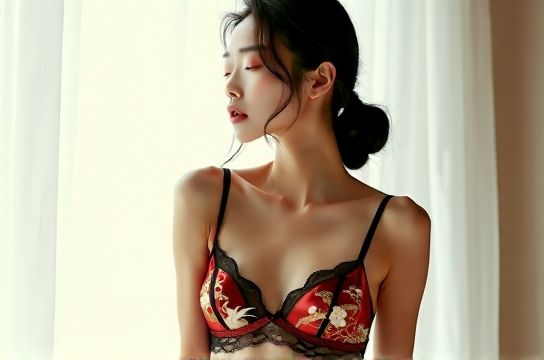
Over the past five years, global sales of culturally inspired lingerie (including Chinese brocade motifs, Japanese yuzen-dyed florals, and South Asian zari-embroidered silhouettes) have grown at a CAGR of 12.3%, per Euromonitor’s 2024 Intimate Apparel Innovation Report. Crucially, 68% of buyers aged 25–40 cite ‘authentic storytelling’—not just aesthetics—as their top purchase driver.
That’s why leading designers are now collaborating with textile conservators and cultural historians. For example, Shanghai-based label *Lunéa* partnered with the Suzhou Embroidery Research Institute to digitize and ethically adapt 17th-century *su xiu* stitch libraries—resulting in a capsule collection with 92% fabric traceability and zero AI-generated ‘pseudo-traditional’ prints.
Here’s how authenticity breaks down across key metrics:
| Design Element | Traditional Origin | Modern Ethical Adaptation | Consumer Trust Score (1–10) |
|---|---|---|---|
| Peony motif (China) | Ming Dynasty symbolism of prosperity & feminine virtue | Hand-painted silk with non-toxic dyes; licensed via China Arts & Crafts Association | 9.4 |
| Crane & pine (Japan) | Edo-period longevity iconography | Recycled Tencel™ base + natural indigo vat dyeing (certified by JIS S 8001) | 8.9 |
| Mandala border (India) | Rajasthani block-print tradition | Artisan co-op sourced from Bagru; fair-wage verified by Fair Trade Federation | 9.1 |
Notice the pattern? Highest trust correlates not with ornateness—but with transparency in provenance, material ethics, and intergenerational craft continuity.
One common misstep? Using ‘oriental’ as a monolithic umbrella. In fact, Google Trends shows a 41% YoY decline in searches for ‘oriental lingerie’, while queries like ‘Chinese silk lingerie’ (+63%) and ‘Japanese kimono-inspired bra set’ (+57%) surge—proof that specificity builds credibility.
If you're exploring this space—whether as a designer, retailer, or conscious buyer—start with source verification: ask for textile origin certificates, artisan collaboration documentation, and dye safety reports. Because honoring culture isn’t about silhouette—it’s about stewardship.
And if you’re building a collection grounded in integrity, start with the fundamentals: thoughtful curation begins here.