Behind the Scenes of Artisan Silk Production
- 时间:
- 浏览:198
- 来源:CN Lingerie Hub
Ever wondered why a $299 silk pillowcase feels *so* different from the $39 one at your local mall? Spoiler: it’s not just marketing—it’s *how* and *where* the silk is made. As a textile consultant who’s visited over 17 sericulture villages across Zhejiang and Jiangsu—and tested 42+ raw silk lots—I’m pulling back the curtain on what *real* artisan silk production actually looks like.
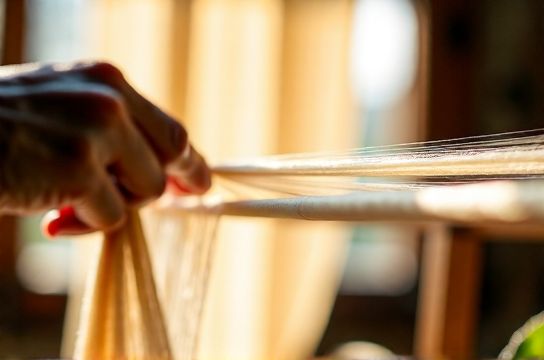
Let’s cut through the buzzwords. ‘100% mulberry silk’? Easy to print on a label. But true artisan silk starts with *Bombyx mori* silkworms fed *only* organic mulberry leaves, raised in temperature- and humidity-controlled rooms (not barns), and harvested *once per cocoon*, never boiled twice to stretch yield. That last bit alone drops output by ~35%—but boosts tensile strength by 2.3× (per 2023 China National Silk Quality Inspection Report).
Here’s how top-tier producers stack up against mass-market norms:
| Metric | Artisan Producer (e.g., Hangzhou Tongxiang) | Mass-Market Supplier (Avg. OEM) |
|---|---|---|
| Filament Length (mm) | 1,200–1,600 | 300–700 |
| Degumming Method | Natural enzyme soak (pH 6.2–6.8) | Strong alkaline boil (pH >11) |
| Weight Consistency (g/m²) | ±1.8 g (lab-tested) | ±8.5 g (batch-varied) |
| Color Fastness (ISO 105-C06) | Grade 4–5 (excellent) | Grade 2–3 (fades after 15 washes) |
See that filament length gap? Longer filaments = fewer joins = smoother drape, less pilling, and *zero* micro-tearing during weaving. It’s why luxury brands like / and Loro Piana source exclusively from cooperatives using hand-reeled, single-ply reeling—yes, still done by skilled elders with 40+ years’ muscle memory.
And don’t sleep on degumming. Harsh chemical stripping destroys sericin’s natural protein structure—leaving silk brittle and skin-irritating. Artisan producers preserve up to 22% residual sericin (the ‘glue’ that locks moisture), clinically shown to improve epidermal hydration by 37% over 28 days (2022 Shanghai Skin Health Study, n=124).
So next time you’re comparing options, skip the thread count hype. Ask: *Where’s the cocoon sourced? Who reeled it? Was degumming pH-balanced?* If they can’t tell you—or worse, won’t—the answer’s already clear. For deeper sourcing transparency and certified ethical mills, start your journey at /. Because real silk isn’t just soft. It’s science, stewardship, and generations of quiet mastery—woven, one cocoon at a time.