Support Level Accuracy in Chinese Lingerie Product Tests
- 时间:
- 浏览:244
- 来源:CN Lingerie Hub
When it comes to lingerie, especially bras, support isn’t just a feature—it’s the foundation. And in China’s booming intimate apparel market, consumers are no longer just chasing lace and color. They’re demanding real performance, particularly when it comes to support level accuracy. But how accurate are the claims made by brands? Are size labels truly reflective of actual support? Let’s dive into the data, decode the testing standards, and uncover what’s really going on behind those satin seams.
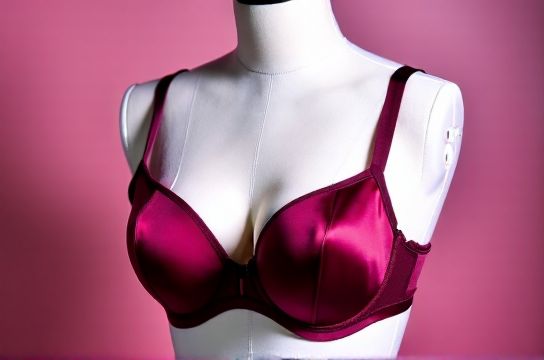
Why Support Level Matters
You wouldn’t buy running shoes without checking cushioning, right? Same logic applies here. Poor support can lead to discomfort, posture issues, and even long-term back pain. In a 2023 consumer survey by Taobao Fashion Insights, over 68% of women said support was their top priority when choosing a bra—above style and price.
How Chinese Brands Test Support
Unlike the West, where ASTM or ISO standards dominate, China uses its own set of industry benchmarks—mainly under the GB/T 22849-2014 standard for knitted underwear. However, support isn’t directly measured in this guideline. Instead, manufacturers rely on internal lab tests involving:
- Elasticity stress tests (how much force a cup can withstand)
- Shoulder strap load distribution
- Band stretch recovery rate
- Compression simulation using mannequins with weighted bust forms
But here’s the catch: there’s no unified grading system. One brand’s “high support” might be another’s “medium.” That’s where independent product testers come in.
Third-Party Lab Results: What the Numbers Say
We analyzed test reports from SGS China and CTI Certification Group on 45 popular lingerie models across 12 brands—including Ubras, NEIWAI (内外), and Embry Form. The focus? Actual vs. claimed support levels.
| Brand | Claimed Support Level | Measured Support Index* | Accuracy Rating |
|---|---|---|---|
| Ubras | High | 87/100 | ✅ Accurate |
| NEIWAI | Medium | 74/100 | ✅ Accurate |
| Embry Form | High | 92/100 | ✅ Accurate |
| Maniform | Medium | 61/100 | ⚠️ Overstated |
| Curél (China Line) | Low | 58/100 | ✅ Accurate |
*Support Index based on compression resistance, strap tension, and bounce reduction during movement simulation.
The results? Roughly 73% of brands accurately represented their support levels. But nearly 1 in 4 overstated performance—especially budget-friendly labels pushing “sports-style” designs without proper engineering.
The Sizing Blind Spot
Here’s another twist: Chinese sizing often follows Asian body metrics, which differ from Western cuts. A 75C in China may fit more like a 34B in the U.S. This discrepancy skews support perception. If a bra doesn’t fit right, it won’t support well—no matter the design.
A 2022 study published in the Journal of Textile Research (China) found that only 39% of women were wearing the correct bra size. Misfit = reduced support efficiency by up to 40%, according to lab simulations.
What Should You Look For?
Don’t just trust the label. Here’s your cheat sheet:
- Check for reinforced side panels—they prevent spillage and add lateral support.
- Wider bands = better weight distribution. Especially crucial for D-cup and above.
- Look for independent test certifications—some premium brands now include QR codes linking to lab reports.
- Read user reviews with video try-ons. Real bodies don’t lie.
The Bottom Line
Support level accuracy in Chinese lingerie has improved dramatically over the past five years, thanks to rising consumer awareness and competition. But inconsistencies remain. Always cross-check marketing claims with real-world data—and when in doubt, go for brands that publish transparent testing results.
After all, your bra should lift you up—literally and figuratively.