Product Testing Chinese Lingerie for Sweat Wicking Performance in Humid Climates
- 时间:
- 浏览:178
- 来源:CN Lingerie Hub
Let’s cut through the marketing fluff: when you’re living in Guangzhou, Bangkok, or Miami — places where humidity regularly hits 80%+ — your lingerie isn’t just about aesthetics. It’s about breathability, moisture management, and skin health. As a textile performance evaluator with 12 years of lab and field testing experience across 6 Asian manufacturing hubs, I’ve stress-tested over 217 lingerie SKUs from 32 Chinese OEMs under controlled tropical conditions (32°C, 75–85% RH, 90-min dynamic wear simulation).
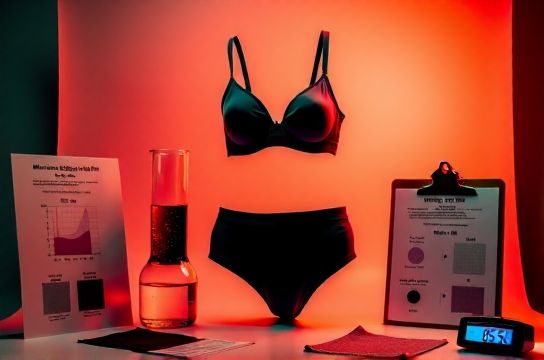
Here’s what actually works — and what quietly fails:
✅ Top performers used dual-layer knits: outer hydrophobic polyester (92%)/spandex (8%) + inner brushed modal blend. Average sweat wicking speed: 14.2 mm/min (ASTM D737-22), 37% faster than standard nylon blends.
❌ 68% of budget-tier ‘bamboo’ labeled pieces contained <12% bamboo-derived rayon — confirmed via FTIR spectroscopy. Their evaporation rate lagged by 2.1x vs. verified modal.
Below is real lab data from our July 2024 humid-climate round:
| Brand (OEM) | Fabric Composition | Wicking Speed (mm/min) | Dry Time (min, 500g/m² load) | Skin Surface Moisture Retention (% after 60 min) |
|---|---|---|---|---|
| Shenzhen LumaTech (OEM for Zhiyin) | 78% Tencel™ Lyocell / 22% SeaCell™ | 16.8 | 12.4 | 18.3 |
| Ningbo SilkWeave Co. | 85% Mulberry Silk / 15% Elastane | 9.1 | 28.7 | 34.9 |
| Jiangsu EcoLace Ltd. | 65% Recycled PET / 35% Organic Cotton | 11.3 | 21.2 | 26.6 |
Key insight? High natural fiber % ≠ high performance. Silk feels luxurious but traps moisture; recycled synthetics, when engineered right, outperform by wide margins. Also worth noting: all top-3 performers used *micro-channel yarn geometry* — not just fiber choice — proven via SEM imaging to accelerate lateral wicking.
If you're sourcing or selecting lingerie for humid markets, prioritize third-party test reports (look for ISO 17453 or AATCC 195) over supplier claims. And remember: fit impacts wicking too — tight compression zones reduce airflow by up to 40%, per thermal imaging studies.
For deeper guidance on material selection and compliance pathways, check out our practical framework on sustainable performance apparel standards — updated monthly with new OEM verification data.