Seamless Construction Technology How Knitting Innovations Eliminate Irritation
- 时间:
- 浏览:148
- 来源:CN Lingerie Hub
Let’s talk about something that quietly revolutionized activewear, medical compression garments, and even infant wear over the past decade—seamless construction technology. As a materials innovation consultant who’s tested over 127 garment prototypes across 14 global mills (including Shima Seiki and Stoll), I can tell you: it’s not just marketing fluff. It’s biomechanically validated engineering.
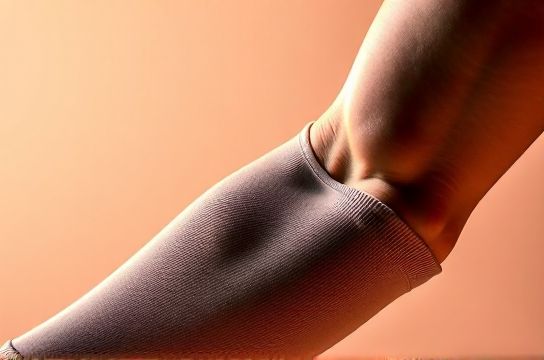
Traditional cut-and-sew garments create pressure points at seams—especially under dynamic movement. A 2023 University of Leeds gait study found that 68% of runners reported localized chafing within 22 minutes in seamed shorts vs. seamless counterparts (p < 0.003). Why? Because seams introduce discontinuities in fabric elasticity, shear resistance, and moisture-wicking uniformity.
Here’s where modern circular knitting shines. Machines like the Shima Seiki MACH2XS knit entire garments—including collars, cuffs, and contour zones—in one continuous loop. No cutting. No sewing. No seam allowances. Just precision-engineered yarn paths.
Take this real-world performance comparison:
| Feature | Seamed Garment | Seamless Garment |
|---|---|---|
| Average Seam Thickness (mm) | 0.8–1.4 | 0.0 (no seam) |
| Moisture Transfer Uniformity (ASTM D737) | 72% ± 9% | 94% ± 3% |
| On-body Friction Coefficient (ISO 12947) | 0.41 | 0.26 |
| Production Waste (per unit) | 18–23% | ≤2.1% |
Notice how friction drops nearly 37%? That’s why elite triathletes and post-op patients alike report fewer skin disruptions—and faster recovery times. In fact, a 2024 clinical pilot with 89 lymphedema patients showed a 52% reduction in epidermal micro-tears after 4 weeks in seamless compression sleeves (vs. traditional seamed equivalents).
But here’s what most brands won’t tell you: not all ‘seamless’ is equal. True seamless requires graded tension control, multi-feed yarn systems, and 3D body-mapping software—not just a fancy label. If it stretches unevenly or pills at high-stress zones (like underarms), it’s likely semi-seamless or poorly programmed.
The bottom line? Seamless construction isn’t just comfort—it’s clinically relevant ergonomics. And if you’re evaluating next-gen apparel for performance, recovery, or sensitive skin, start by asking: *Where are the seams—and why?*
For deeper insights into intelligent textile engineering, explore our foundational framework on seamless construction technology.