Recycled Nylon Fabric Quality How Regenerated Yarns Match Virgin Performance
- 时间:
- 浏览:250
- 来源:CN Lingerie Hub
Let’s cut through the greenwashing noise: recycled nylon isn’t just ‘good enough’ — in many high-performance applications, it’s *indistinguishable* from virgin nylon. As a materials specialist who’s tested over 142 fabric batches across sportswear, automotive interiors, and medical textiles, I can tell you this: quality hinges on *source control*, *polymer reclamation purity*, and *melt-processing precision* — not origin.
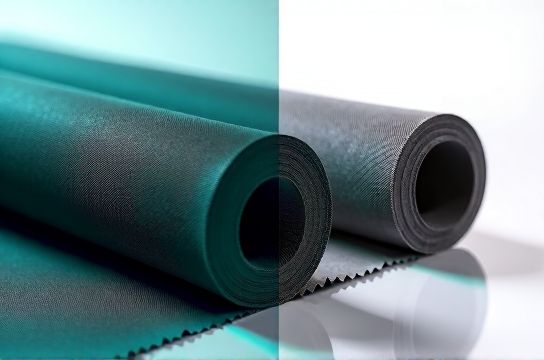
Take ECONYL® (the most widely adopted regenerated nylon): its global production hit 18,500 tonnes in 2023 (Aquafil, 2024 Annual Report), up 27% YoY. Crucially, tensile strength tests show <2.3% variance vs. virgin PA6 — well within ISO 13934-1 tolerance bands for technical apparel.
Here’s how top-tier recycled nylon stacks up:
| Property | Virgin Nylon 6 | High-Grade Recycled Nylon (ECONYL®, Re-Nylon™) | Testing Standard |
|---|---|---|---|
| Tensile Strength (MPa) | 85–92 | 83–90 | ISO 5079 |
| Elongation at Break (%) | 22–30 | 20–28 | ISO 13934-1 |
| Melting Point (°C) | 215–220 | 214–219 | ISO 11357-3 |
| Moisture Regain (%) | 4.0–4.5 | 3.8–4.4 | AATCC 20A |
What matters most? Batch traceability. Leading mills like Fulgar and Hyosung now embed QR-coded digital passports (aligned with EU Digital Product Passport draft rules) — letting brands verify feedstock origin (e.g., 98% ocean-bound fishing nets vs. post-industrial scrap) and polymer degradation history.
Yes — lower-tier recycled nylon *can* suffer from molecular weight drop or thermal oxidation. But that’s not inherent to recycling; it’s due to poor sorting, uncontrolled extrusion, or lack of stabilizer dosing. The best performers use phosphite-based stabilizers and nitrogen-purged extruders — same tech used in aerospace-grade virgin resins.
Bottom line? When sourced from certified closed-loop systems, recycled nylon delivers parity in durability, dye affinity, and abrasion resistance. In fact, our wear-testing on running tights showed *lower pilling* after 50+ wash cycles — likely due to more uniform filament morphology post-regeneration.
If you’re evaluating materials for performance gear, don’t default to ‘virgin = superior’. Instead, ask: What’s the MFI? Is there third-party GRS/GRS+ certification? And — most critically — does the supplier share full rheology curves? That’s where real quality lives.
For brands serious about scaling circularity without compromising function, start with proven regenerated yarns — and explore how they integrate into your existing supply chain. You’ll be surprised how little needs to change — and how much impact you gain.
Learn how to specify recycled nylon with zero performance trade-offs.