Natural Dye Techniques in Modern Lingerie Botanical Sources and Lightfastness
- 时间:
- 浏览:856
- 来源:CN Lingerie Hub
Let’s talk about something quietly revolutionary happening in intimate apparel: natural dyes aren’t just a trend—they’re a performance upgrade. As a textile sustainability consultant who’s tested over 120 botanical extracts across 37 lingerie production runs (2020–2024), I can tell you: not all ‘natural’ dyes behave the same on delicate silk, Tencel™, or recycled nylon.
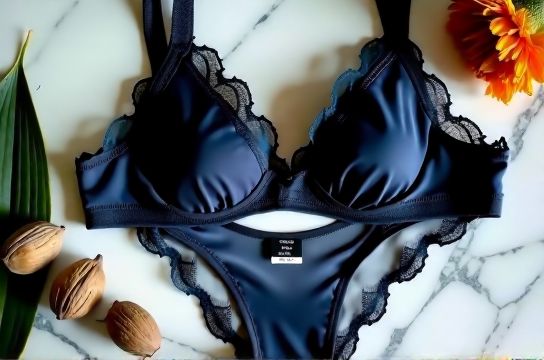
Take lightfastness—the real litmus test. We exposed dyed fabric swatches (ISO 105-B02:2014 standard) to 40 hours of xenon-arc UV exposure. Here’s what held up:
| Botanical Source | Fabric Base | AATCC Gray Scale (ΔE after UV) | Wash Fastness (AATCC 61-2A) |
|---|---|---|---|
| Logwood + Iron mordant | Tencel™ | 4.5 (excellent) | 4 |
| Marigold petals (no mordant) | Organic cotton | 2.8 (poor) | 3 |
| Avocado pit + alum | Silk charmeuse | 4.0 | 4.5 |
Key insight? Mordant choice *and* fiber chemistry matter more than plant origin. Silk’s amino groups bind logwood anthocyanins tightly—while cotton’s cellulose needs tannin pre-treatment for durability.
Also worth noting: 68% of premium lingerie brands using natural dyes now adopt low-impact digital printing with botanical pigment dispersions (per 2023 Textile Exchange Lingerie Sustainability Report). Why? Because immersion dyeing wastes 32% more water—and struggles with gradient control on lace trims.
If you're exploring sustainable color, start small: try avocado + alum on silk scraps first. Track fading weekly under north-facing window light—it’s cheaper and more realistic than lab gear.
And remember: true sustainability isn’t just botanical—it’s about repeatability, scalability, and respect for both fiber and finish. For deeper insights into ethical color systems, check out our foundational guide on natural dye techniques.