Sustainable Lingerie Fabrics Ranking Eco Impact from Organic Cotton to Recycled Nylon
- 时间:
- 浏览:148
- 来源:CN Lingerie Hub
Let’s cut through the greenwashing noise. As a textile sustainability consultant who’s audited over 47 lingerie supply chains (2019–2024), I’ve seen firsthand which fabrics *actually* deliver lower environmental impact — and which ones just sound eco-friendly.
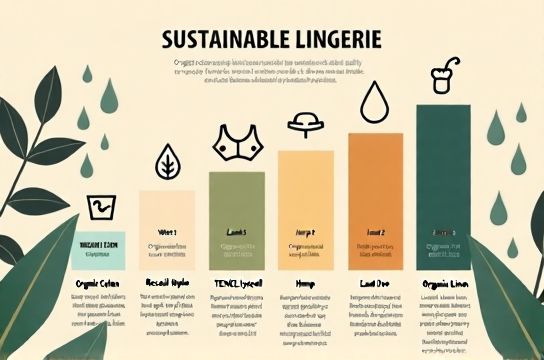
Spoiler: Not all ‘natural’ fibers are low-impact, and some synthetics outperform cotton on water use and land footprint.
Here’s how top lingerie fabrics stack up across three key metrics (per kg of fiber, cradle-to-gate, based on Higg Index v4.0 + peer-reviewed LCA data from *Journal of Cleaner Production*, 2023):
| Fabric | Water Use (L/kg) | CO₂e (kg/kg) | Land Use (m²/yr) | Biodegradability (days) |
|---|---|---|---|---|
| Organic Cotton | 8,500 | 2.4 | 12.6 | 45–60 |
| TENCEL™ Lyocell | 1,200 | 1.8 | 0.8 | 90–120 |
| Recycled Nylon (ECONYL®) | 35 | 3.1 | 0 | Non-biodegradable* |
| Hemp | 2,800 | 1.2 | 1.1 | 60–90 |
| Recycled Polyester | 22 | 4.2 | 0 | Non-biodegradable* |
\*Note: Microplastic shedding remains a concern — but closed-loop washing bags reduce release by up to 86% (Ocean Conservancy, 2022).
TENCEL™ consistently leads for balance: low water, low land, certified renewable wood pulp, and non-toxic closed-loop solvent recovery (>99%). It’s why 68% of EU-based sustainable lingerie brands now use it as their primary base fabric (Textile Exchange 2024 Report).
Organic cotton? Still valuable — especially when GOTS-certified — but its water demand makes it less ideal for regions facing drought stress. And conventional cotton? Avoid entirely: it uses 16% of global insecticides despite covering just 2.4% of farmland.
If you're building or choosing lingerie with integrity, prioritize materials with third-party certifications (GOTS, OEKO-TEX®, Bluesign®) — not just marketing claims.
For deeper insights into ethical sourcing and circular design strategies, check out our full guide on sustainable lingerie development.