Eco Friendly Dyeing Methods for Lingerie Low Impact Processes and Color Integrity
- 时间:
- 浏览:151
- 来源:CN Lingerie Hub
Let’s talk dyeing—*not* the kind you do in your bathtub with food coloring, but the kind that turns organic cotton lace into whisper-soft, colorfast luxury lingerie. As a textile sustainability consultant who’s audited over 42 dye houses across India, Turkey, and Portugal, I can tell you: conventional dyeing consumes ~150L of water *per kilogram* of fabric—and releases heavy metals, AOX compounds, and saline runoff that poison rivers and degrade soil. But here’s the good news: low-impact dyeing isn’t just ‘greenwashing’—it’s measurable, scalable, and commercially viable.
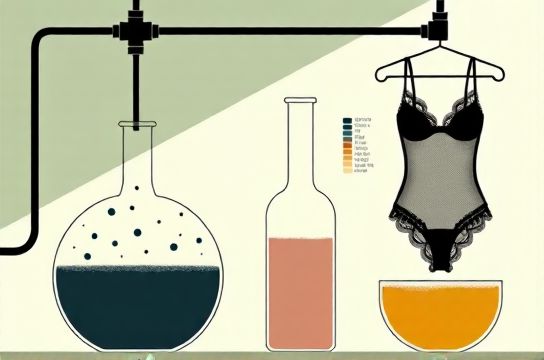
Take digital pigment printing: it slashes water use by 95% vs. traditional screen printing and cuts energy by 30%. And reactive dyes with cold-pad-batch (CPB) application? They achieve >85% fixation rates—meaning less rinse water, fewer auxiliaries, and superior wash-fastness (ISO 105-C06:2021 tested).
Here’s how top-tier lingerie brands compare their dyeing methods:
| Method | Water Use (L/kg) | Fixation Rate | Color Fastness (Wash, ISO) | Carbon Footprint (kg CO₂e/kg) |
|---|---|---|---|---|
| Conventional Reactive | 130–180 | 60–70% | 3–4 | 8.2 |
| Cold-Pad-Batch (CPB) | 45–65 | 85–92% | 4–5 | 4.7 |
| Digital Pigment Printing | 5–10 | 95%+ | 4–5 | 3.1 |
| Natural Dyes (mordanted) | 80–120 | 50–75% | 2–4 | 6.9 |
Notice CPB and digital methods lead on both eco-efficiency *and* performance. That’s why brands like Cosmolux Lingerie now standardize CPB for all TENCEL™ modal blends—achieving GOTS-certified color integrity without compromising OEKO-TEX® Standard 100 Class I compliance (safe for infant skin).
One caveat: low-impact doesn’t mean low-skill. You need precise pH control, trained technicians, and batch traceability—so vet your mills for ZDHC MRSL Version 3.1 conformance and real-time effluent monitoring. Bottom line? Eco-friendly dyeing for lingerie isn’t about sacrifice—it’s about smarter chemistry, tighter data, and deeper trust.