Labeling Requirements for International Lingerie Sales
- 时间:
- 浏览:266
- 来源:CN Lingerie Hub
If you're selling lingerie internationally, one thing can make or break your brand: labeling compliance. As a fashion e-commerce blogger who’s helped over 50 indie brands go global, I can tell you—getting labels wrong is the #1 reason products get held at customs—or worse, banned from platforms like Amazon or Zalando.
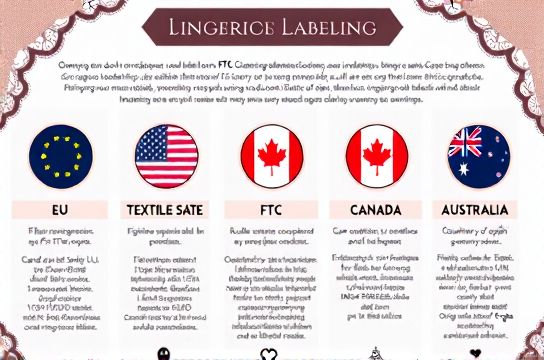
Here’s the real tea: Every country has its own rules for fiber content, care symbols, and even font size on labels. Skip this, and you’re not just risking fines—you’re risking customer trust.
Why Labeling Rules Vary (And Why You Should Care)
The EU, US, Canada, and Australia all have different standards. For example, the European Union requires care labels in the local language(s) of the destination country. Sell in France? That means French. In Belgium? You might need Dutch, French, AND German.
The US, under the FTC’s Textile Rules, mandates fiber content, country of origin, and care instructions—but only in English. Still, if you ship via major retailers, they often enforce stricter internal policies.
Key Labeling Requirements by Region
Let’s break it down with hard facts:
| Region | Fiber Content | Care Instructions | Language | Penalty for Non-Compliance |
|---|---|---|---|---|
| EU | Required (by weight %) | ISO care symbols + text | Local language | Up to €10,000 fine per batch |
| USA | Required (FTC Rule) | Written instructions | English only | Product seizure + $15k fine |
| Canada | Required (bilingual) | Text in EN/FR | English & French | $2,500 CAD per violation |
| Australia | AS 2399 compliant | AS/NZS 1957:2014 | English | Recall + AUD $8k fine |
See that? The EU hits hardest on fines. Canada’s bilingual rule trips up so many US-based brands. And Australia? They’ll recall your entire shipment if one label’s off.
Pro Tips from Real Experience
I worked with a sustainable lingerie startup last year. They launched in Germany but forgot to translate care instructions into German. Result? 3,000 units stuck in customs for six weeks. Lost sales: ~$90k. Don’t be that brand.
- Use permanent labels—woven or printed directly on fabric. Hang tags aren’t enough in the EU.
- Update labels per market. One-size-fits-all doesn’t work. Use modular labeling systems.
- Hire a local compliance checker. Even Zalando uses third-party auditors before accepting new vendors.
And here’s a secret: Some brands use QR codes on labels that link to digital care guides in multiple languages. It’s sleek, saves space, and keeps you compliant—if the physical label still has core info.
In short: Never treat labeling as an afterthought. Whether you're a small designer or scaling globally, smart international lingerie sales start with the right label. Do it once, do it right—and avoid the costly drama.