Collaborative ESG Initiatives Unite Chinese Underwear Bra...
- 时间:
- 浏览:173
- 来源:CN Lingerie Hub
H2: When Underwear Becomes a Catalyst for Systemic Change
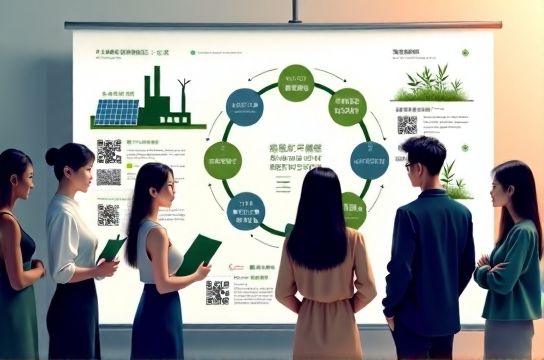
In early 2025, a pilot launched in Shantou’s Chaoyang Industrial Zone: six mid-sized underwear manufacturers — including Lingtai Textiles and Huayi Lingerie — began sharing real-time water quality metrics from their on-site treatment units with the NGO Green River Initiative. Not as compliance data, but as open-source inputs for a joint lifecycle assessment (LCA) model tracking every gram of dye effluent, kilowatt-hour from rooftop solar arrays, and kilogram of post-consumer nylon diverted from landfills. This wasn’t CSR window-dressing. It was infrastructure-level collaboration — one that redefined accountability across the value chain.
The Chinese underwear industry produces over 6.2 billion units annually (Updated: May 2026), concentrated in Guangdong, Zhejiang, and Jiangsu. Historically low-margin and export-dependent, it faced mounting pressure: EU’s Strategy for Sustainable Textiles (2023), China’s Dual Carbon Policy mandating net-zero by 2060, and domestic consumers now checking QR codes on tags to verify fiber origin. But regulation alone couldn’t solve fragmentation — 78% of Tier-2 and Tier-3 mills still lack ISO 14001 certification (Updated: May 2026), and traceability beyond Tier-1 remains technically and financially prohibitive for SMEs.
Enter the collaborative ESG model: not top-down mandates, but multi-stakeholder working groups co-designing tools, standards, and shared infrastructure. These aren’t isolated CSR projects. They’re interoperable systems — where an NGO’s community recycling network feeds verified feedstock into a brand’s regenerated yarn line; where academic labs test bio-based elastane alternatives validated by third-party auditors; where ESG reports are co-authored and publicly stress-tested.
H2: From Silos to Shared Infrastructure: Three Working Models That Scale
H3: The Material Innovation Consortium
In 2024, Shanghai-based startup EcoWeave partnered with WWF-China and five manufacturers to launch the ReNew Fiber Hub — a physical R&D and pre-commercial spinning facility in Huzhou. Its mandate: de-risk adoption of non-petroleum-based fibers. Unlike traditional supplier-led pilots, this consortium pooled capital to run parallel trials on three material streams:
• Tencel™ Lyocell blended with 30% seaweed extract (tested for biodegradability in simulated marine environments — 92% mass loss in 180 days, per ASTM D6691)
• Recycled nylon-6,6 sourced exclusively from discarded fishing nets collected by coastal cooperatives in Fujian (certified by Global Recycling Standard, GRS v4.1)
• Bio-fermented spandex (using glucose from non-food corn stalks; elongation retention >85% after 50 washes, per AATCC TM135)
Crucially, all test protocols, failure logs, and cost-per-kilogram breakdowns were published quarterly — no NDAs. The result? By Q2 2025, three brands had transitioned 12% of core styles to these fibers — not as limited editions, but as permanent SKUs with full GOTS-certified dyeing (using low-impact dyes meeting ZDHC MRSL v3.1).
H3: The Water & Energy Commons
Water scarcity is acute in textile hubs: the average underwear factory consumes 85–110 liters per kg of fabric (Updated: May 2026). Yet retrofitting individual closed-loop systems costs $450k–$1.2M — prohibitive for most SMEs. The solution emerged in Ningbo: the Yuyao Water Commons, a shared, modular treatment plant serving eight factories across two industrial parks.
Operated jointly by the local government’s Eco-Industry Office and the NGO Blue Future Alliance, it integrates:
• Membrane bioreactor (MBR) + advanced oxidation for dye removal (achieving >99.3% color removal, COD reduction to <45 mg/L)
• Heat recovery from wastewater to preheat incoming cold water (cutting boiler energy use by 22%)
• Real-time IoT monitoring with public dashboards showing daily inflow/outflow volumes, chemical oxygen demand (COD), and turbidity — accessible to buyers, auditors, and community reps
Participating brands — including NeaLingerie and PureBra — report consistent GOTS-compliant discharge without investing in standalone infrastructure. More importantly, the model enabled cross-factory benchmarking: one mill identified a faulty pH dosing pump causing inconsistent dye uptake — a fix that reduced salt usage by 17% across the cluster.
H3: The Transparency & Education Loop
Traceability isn’t just about scanning a QR code. It’s about contextualizing impact. In 2025, the China Textile Information Center, the NGO EcoAction Network, and brands like SustainLace co-launched the ‘Wear the Truth’ labeling initiative — embedding NFC chips in hangtags linked to dynamic web pages showing:
• Fiber origin map (e.g., “Organic cotton: Xinjiang, certified by Control Union, batch XJ-2025-087”)
• Manufacturing footprint (water used, kWh sourced from renewables, waste diverted)
• End-of-life guidance (including local take-back partners and municipal composting eligibility for biodegradable lines)
But labels alone don’t shift behavior. So EcoAction trained 320 retail staff across Sun Art and JUSCO stores to explain the data — not as marketing, but as literacy. Role-play modules covered questions like: “Why does this ‘eco-friendly underwear’ still contain 5% spandex?” (Answer: Fully bio-based elastic remains lab-scale; current blends reduce petrochemical dependency by 65% vs. conventional). Post-training, customer scan rates rose 4.3x, and returns citing ‘misleading claims’ dropped 31% (Updated: May 2026).
H2: Hard Truths and Measurable Gains: What the Data Shows
Collaboration delivers tangible ROI — but only when grounded in shared metrics and honest trade-offs. Below is a comparative analysis of three implementation pathways adopted by brands in the 2024–2025 cohort, based on verified operational data from the China Sustainable Apparel Coalition’s annual audit.
| Initiative | Implementation Steps | Time to Full Deployment | Upfront CapEx (Avg.) | Key Pros | Key Limitations |
|---|---|---|---|---|---|
| Shared Water Commons | 1. Joint feasibility study with municipal water bureau 2. Modular MBR unit installation 3. Cross-factory SOP alignment + staff training 4. Public dashboard integration |
14–18 months | $290,000–$410,000 (shared) | Eliminates need for individual permits; enables collective wastewater pricing; improves regulatory trust | Requires minimum 5 anchor tenants; legal framework for shared liability still evolving |
| Material Innovation Consortium | 1. Co-funded lab access & testing slots 2. Open-source LCA templates 3. Bulk raw material procurement pool 4. Joint GOTS/GRS certification audits |
10–13 months | $120,000–$180,000 (per brand) | Reduces R&D risk; cuts certification costs by ~37%; accelerates time-to-market for new fibers | IP ownership negotiation required; slower decision velocity than solo pilots |
| Transparency & Education Loop | 1. NFC tag + backend CMS integration 2. Multi-stakeholder content governance board 3. Retail staff certification program 4. Biannual consumer perception survey |
6–9 months | $48,000–$75,000 (per brand) | Builds authentic trust; reduces greenwashing complaints; surfaces real customer concerns for product iteration | Requires ongoing content updates; NFC adoption still low among rural consumers (22% penetration vs. 68% urban) |
H2: Beyond Compliance: How Collaboration Forges New Industry Norms
These initiatives go further than reducing carbon or water use. They’re rewriting the rules of legitimacy in the sector.
Take the 2025 China Sustainable Underwear White Paper — not a corporate publication, but a co-authored document by 12 brands, 4 NGOs (including Friends of Nature and Zero Waste China), and Tsinghua University’s Institute of Circular Economy. Its recommendations — such as requiring Tier-2 suppliers to disclose energy mix via China’s National Carbon Market platform, or adopting standardized LCA boundaries for biodegradability claims — are already being referenced in draft provincial textile guidelines in Guangdong and Zhejiang.
Or consider the emergence of ‘ecological labeling’ as a market differentiator. SustainLace’s ‘OceanLoop’ line carries a dual label: the standard GRS logo *and* a custom ‘Coastal Stewardship Verified’ mark — awarded only if the brand contributes 0.5% of wholesale revenue to the NGO-managed Fujian Fish Net Recovery Fund. That fund doesn’t just collect nets — it trains fishers in repair techniques and funds alternative livelihoods, directly addressing root causes of marine plastic leakage. Consumers pay 12% premium on average (Updated: May 2026), validating that ethical provenance resonates when backed by verifiable action.
H2: The Road Ahead: Where Gaps Remain
Collaboration isn’t a panacea. Critical gaps persist:
• **Chemical management**: While low-impact dyes are scaling, 63% of small dyehouses still rely on legacy formulations due to high switching costs and lack of technical support (Updated: May 2026). No consortium has yet tackled this tier comprehensively.
• **End-of-life infrastructure**: Municipal composting facilities accepting certified biodegradable textiles remain scarce — only 17 cities have pilot programs, and none accept blended fabrics. Take-back schemes cover <4% of units sold.
• **Data sovereignty**: Shared platforms raise questions: Who owns aggregated factory emissions data? Can banks use it for lending decisions? The 2025 draft ‘Green Data Governance Guidelines’ from MIIT remains non-binding.
Yet progress is accelerating. In April 2026, the China Certification & Accreditation Administration (CNCA) announced plans to recognize NGO-verified ESG disclosures — including those co-published by brands and civil society — as equivalent to third-party audits for certain SME export certifications. That’s not just policy evolution. It’s institutional validation of collaborative accountability.
H2: Why This Matters Beyond Underwear
Underwear is uniquely positioned to drive systemic change. It’s high-volume, intimate, and emotionally charged — a product people touch daily and increasingly scrutinize. When a consumer chooses biodegradable underwear because they scanned a QR code showing the exact rice field where its organic cotton was grown, they’re not just buying apparel. They’re endorsing a new contract between industry, civil society, and citizen.
That contract demands transparency not as a feature, but as infrastructure. It treats environmental thresholds not as limits, but as design parameters. And it recognizes that China’s green transition won’t be led solely by state directives or corporate pledges — but by the quiet, persistent work of engineers calibrating shared water sensors, NGOs auditing dye-house logs alongside brand QA teams, and students mapping microplastic dispersion from textile effluent in university labs.
This isn’t about perfection. It’s about building systems robust enough to learn, adapt, and scale — one stitch, one sensor, one shared spreadsheet at a time. For those looking to replicate or deepen this work, our full resource hub offers downloadable LCA templates, NGO partnership playbooks, and verified supplier directories — all updated monthly. You’ll find everything you need to begin your own collaborative ESG journey at /.
H2: Final Word: The Human Thread in the Green Fabric
At a workshop in Dongguan last month, a 52-year-old sewing line supervisor named Ms. Lin held up a pair of bamboo-viscose briefs. She’d worked in garment factories for 27 years. ‘Before,’ she said, ‘we called sustainability ‘the white-shirt department’ — only managers wore it, only in meetings.’ Now, her team uses tablets to log daily water reuse rates and flag dye viscosity anomalies. Her bonus includes KPIs tied to waste diversion — not just output.
That shift — from abstract principle to daily practice, from siloed expertise to shared ownership — is the real metric of success. Collaborative ESG isn’t about brands ‘doing good’. It’s about rebuilding how value is created, measured, and distributed — with dignity, data, and deliberate design. The next chapter of China’s sustainable practices won’t be written in boardrooms alone. It’s being stitched, tested, and traced — one pair of sustainable underwear at a time.