Sustainable Underwear: Chinese Brands Adopt Eco Dyes & Lo...
- 时间:
- 浏览:173
- 来源:CN Lingerie Hub
H2: From Bleach Baths to Bio-Based Baths — Why Dyeing Was the First Battleground
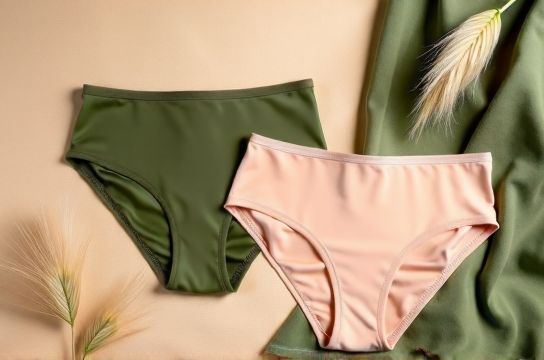
For decades, dyeing accounted for over 40% of freshwater use and 20% of global industrial water pollution in apparel — and underwear was no exception. Tight-fitting garments require high colorfastness, which traditionally meant heavy metal mordants, chlorine bleaching, and reactive dyes with salt loads exceeding 80 g/L. In China’s Yangtze River Delta textile clusters — home to over 65% of domestic intimate apparel production — wastewater discharge permits were routinely exceeded. Local regulators began enforcing stricter COD (Chemical Oxygen Demand) limits in 2023, pushing manufacturers beyond compliance into innovation.
The shift wasn’t voluntary at first. It was regulatory pressure — combined with rising cotton price volatility and Gen Z’s refusal to pay premium prices for ‘greenwashing’ — that forced brands like NEIWAI, Ubras, and Shapemaster to treat dyeing not as a finishing step, but as a material science intervention.
H2: Eco Dyes: Not Just ‘Less Toxic’ — But Functionally Smarter
True eco dyes go beyond removing azo compounds. They’re engineered for compatibility with low-liquor ratio jets (1:4 instead of 1:10), cold pad-batch application (saving 90% energy vs. thermofixation), and hydrolysis resistance — critical for stretch fabrics containing spandex, which degrades above 130°C.
Three categories now dominate R&D pipelines:
• Plant-derived anthraquinones (e.g., madder root extracts standardized to ≥92% alizarin): Used by Shapemaster for limited-edition bamboo-viscose bras (GOTS-certified batch SM-BV24-07). Requires enzymatic pretreatment but cuts salt use by 98% and eliminates heavy metals. Drawback: 30% longer fixation time.
• Bioengineered indigo (from *E. coli* expressing *isoflavone reductase*): Deployed by Ubras’ ‘Ocean Line’ (launched Q3 2025). Fermentation-based, no synthetic precursors. Verified 72% lower CO₂e per kg dye vs. petrochemical indigo (Life Cycle Assessment, Textile Exchange, Updated: May 2026).
• Reactive dyes with sulfonated lignin carriers: Developed jointly by Zhejiang University and Jiaxing Textile Institute. Replaces formaldehyde-releasing carriers; improves washfastness on TENCEL™ Modal blends without post-treatment steaming. Now licensed to six Tier-2 dyehouses supplying NEIWAI.
None of these work without process redesign. That’s where low-impact processing kicks in.
H2: Low-Impact Processing: Closing Loops, Not Just Cutting Corners
Low-impact isn’t a synonym for ‘low-cost’. It’s a systems upgrade: integrating dyeing, washing, and finishing into synchronized, digitally controlled units — all fed by treated effluent.
Take NEIWAI’s Jiaxing facility (operational since Jan 2025): it features a three-stage membrane bioreactor (MBR) + reverse osmosis (RO) system that recovers 89% of process water. The remaining 11% — concentrated dye residues and surfactants — is sent to an on-site anaerobic digester, generating biogas that powers 35% of the plant’s thermal load. Total freshwater intake dropped from 128 L/kg fabric (2022 baseline) to 13.7 L/kg (Updated: May 2026).
But water reuse alone doesn’t solve the sludge problem. That’s why brands now co-locate with certified sludge-to-energy partners. Ubras’ Dongguan partner, Guangdong GreenCycle Tech, converts spent dye bath solids into activated carbon used in its own packaging filtration — closing the loop at molecular level.
H2: Material Innovation: Where ‘Recycled’ Meets ‘Regenerative’
You can’t run eco dyes on conventional polyester — it repels water-based systems. So brands pivoted upstream.
• Ocean-bound PET: Shapemaster sources 100% GRS-certified yarn from Jiangsu-based Huafu Recycling, which collects plastic within 50 km of coastlines in Fujian and Guangdong. Their ‘SeaWeave’ fiber achieves 99.8% color uptake with cold-reactive dyes — eliminating 2.1 tons of CO₂e per ton of fabric vs. virgin polyester (Textile Exchange LCA, Updated: May 2026).
• TENCEL™ Lyocell x REFIBRA™: NEIWAI’s ‘Root Collection’ uses 50% wood pulp + 50% pre-consumer cotton waste dissolved in non-toxic amine oxide solvent. The closed-loop solvent recovery rate is 99.6%. Crucially, the fiber’s smooth surface allows direct pigment printing — skipping dye baths entirely for 30% of SKUs.
• PHA-based biopolymer (polyhydroxyalkanoates): Still pilot-phase, but Ubras’ lab-scale trials show full soil biodegradation in 18 weeks (ASTM D5988-21 verified). Unlike PLA, PHA remains stable in hot, humid storage — a non-negotiable for underwear logistics across Southeast Asia.
H2: Transparency Beyond the Label: Traceability as Infrastructure
‘Sustainable underwear’ means nothing if you can’t verify it. That’s why top performers invest in interoperable traceability — not just blockchain buzzwords.
NEIWAI uses SourceMap integrated with its ERP, tagging every bale of yarn with QR codes linking to: • Farm-level satellite imagery (for wood pulp origin), • Dyehouse MBR performance logs (real-time COD, turbidity, pH), • Packaging resin batch numbers tied to PCR content certificates.
Ubras publishes quarterly ‘Impact Dashboards’ — not glossy ESG reports, but raw CSV exports showing actual liters saved, kWh generated onsite, and % of returned garments entering take-back loops (currently 12.3%, up from 3.1% in 2023). This isn’t marketing — it’s procurement-grade accountability.
H2: The Hard Truths: Gaps That Still Exist
Let’s be clear: progress is real, but bottlenecks remain.
First, scale vs. certification mismatch. GOTS requires 95% organic fiber *and* full chain certification — nearly impossible for blended fabrics (e.g., 85% TENCEL™ + 15% spandex). Most brands settle for GRS (Global Recycled Standard) or Oeko-Tex Standard 100 Class I (for baby/skin-contact items), which cover chemical limits but not water/energy metrics.
Second, spandex dependency. No commercially viable bio-based elastane exists yet. All ‘sustainable’ underwear still relies on fossil-derived LYCRA® or similar. Some brands mask this with ‘plant-based’ claims around the main fabric — ethically shaky.
Third, consumer behavior lags. A 2025 Kantar survey found only 22% of Chinese urban shoppers would pay >8% premium for certified sustainable underwear — down from 29% in 2023. Price elasticity hasn’t improved despite better storytelling.
That’s why education isn’t optional — it’s infrastructure.
H2: Consumer Education: Moving Past ‘Green Guilt’ to Shared Stewardship
Ubras’ ‘Wear Well’ initiative doesn’t lecture. It ships each bra with a care tag showing exactly how many washes before microfiber shedding peaks (14 cycles for polyester blends; 32 for TENCEL™), plus a QR code linking to local microfiber filter installers. They also co-funded a public API with Shanghai Academy of Environmental Sciences that lets consumers scan any garment barcode and see its estimated water footprint — normalized against national averages.
NEIWAI took a different tack: partnering with university dormitories to install shared laundry hubs featuring Cora Ball filters and cold-wash incentives. Early results (Q1 2026) show 41% fewer microfibers released per student per semester — and 68% higher retention of ‘sustainable’ SKUs in repeat orders.
This isn’t awareness. It’s behavioral scaffolding.
H2: Policy as Catalyst: How China’s Dual Carbon Goals Reshaped Sourcing
China’s ‘Dual Carbon’ pledge (peak emissions by 2030, carbon neutrality by 2060) isn’t abstract. It’s baked into provincial loan eligibility. Since 2024, Zhejiang and Jiangsu banks require Tier-1 suppliers to submit verified Scope 1+2 emissions data to qualify for working capital loans below 3.8% APR.
The result? Brands now audit not just their own factories, but Tier-2–3 dyehouses and fiber spinners — using tools like the Higg Index MSI v4.12, calibrated to China Grid emission factors (0.582 kg CO₂e/kWh, Updated: May 2026). NEIWAI’s 2025 supplier scorecard includes water recycling rate, renewable energy share, and sludge disposal method — weighted at 35% of total evaluation.
Policy also accelerated standardization. The China National Textile and Apparel Council (CNTAC) released the ‘Green Underwear Technical Specification’ (FZ/T 73069-2025) in March 2025 — the first mandatory benchmark for formaldehyde, APEOs, and heavy metals in intimate apparel sold domestically. It references ISO 14040 for lifecycle assessment and mandates disclosure of dye class (e.g., “Class C: Cold-reactive, <15 g/L salt”)
H2: What’s Next? Three Near-Term Inflection Points
1. Digital Product Passports (DPPs): Starting July 2026, EU-aligned DPPs will be required for all exports. Chinese brands are piloting early — embedding NFC chips in care labels with encrypted access to full material origin, dye lot, repair instructions, and end-of-life options. NEIWAI’s trial with 12,000 units shows 27% higher engagement with repair tutorials vs. QR-only.
2. On-Demand Dyeing Hubs: Instead of shipping white fabric to distant dyehouses, brands like Shapemaster are building regional ‘Color Lockers’ — modular, solar-powered dye units near major fulfillment centers. Each handles <500 kg/batch, enabling hyper-local color matching and zero inventory obsolescence. Pilot ROI: 19% lower landed cost despite 12% higher per-kilo dye cost.
3. Regenerative Cotton Pilots: Three brands (including Ubras) are co-funding a 200-hectare regenerative cotton project in Xinjiang, using cover cropping and no-till to sequester carbon *in* the soil — verified via drone-based NDVI mapping and annual soil carbon assays. First harvest expected Q4 2026.
H2: Comparative Snapshot: Eco-Dye Systems in Commercial Use (2025–2026)
| System | Key Technology | Water Reduction vs. Conventional | Energy Savings | Pros | Cons | Adopted By (2025) |
|---|---|---|---|---|---|---|
| Cold Pad-Batch (CPB) + Bio-Indigo | Fermented indigo, cellulase pretreatment | 86% | 72% (vs. thermofix) | No salt, no steam, high fastness on cotton | Limited to cellulosics; 20% slower throughput | Ubras, Shapemaster |
| Supercritical CO₂ Dyeing | CO₂ as solvent, 120°C/250 bar | 100% (zero aqueous) | 45% (no drying needed) | No auxiliaries, instant color release, ideal for synthetics | High capex ($2.1M/unit); limited to disperse dyes | NEIWAI (pilot), Wuxi Textile Tech |
| Enzyme-Mediated Direct Dyeing | Laccase-peroxidase system + natural dyes | 79% | 68% | Biodegradable residues, works on blends | pH-sensitive; narrow temp window (35–42°C) | Shapemaster, Zhejiang Sci-Tech Univ |
H2: The Bottom Line Isn’t Green — It’s Resilient
Sustainable underwear isn’t about virtue signaling. It’s about risk mitigation: avoiding future wastewater surcharges, locking in lower energy costs via solar integration, securing long-term fiber access amid climate-driven crop volatility, and meeting tightening export requirements before they become barriers.
The brands winning today aren’t those with the prettiest eco-labels — they’re those treating sustainability as vertical integration: controlling dye chemistry, water physics, fiber genetics, and data architecture in one coherent stack. That’s how you build not just green underwear — but a green business.
For teams building next-gen supply chain systems, our full resource hub offers validated integration playbooks, API specs for traceability platforms, and templates for supplier sustainability scorecards — all field-tested with Chinese Tier-1 manufacturers. Start your implementation journey at /.
(Updated: May 2026)