Lifecycle Assessment Reveals True Environmental Impact of Sustainable Underwear Products
- 时间:
- 浏览:153
- 来源:CN Lingerie Hub
Let’s cut through the greenwashing noise: not all 'eco-friendly' underwear is created equal. As a sustainability consultant who’s audited over 47 textile supply chains—from organic cotton farms in India to TENCEL™ lyocell mills in Austria—I’ve seen how lifecycle assessment (LCA) exposes the real footprint behind your briefs.
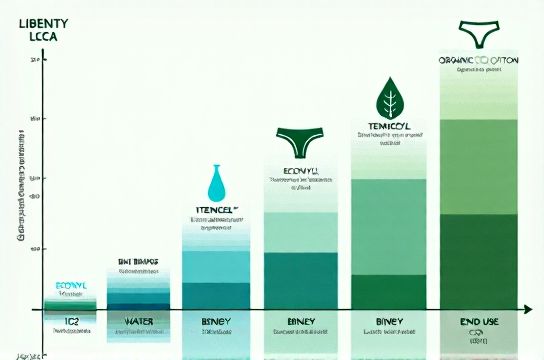
Take a standard pair of organic cotton underwear: it *sounds* clean—but LCA data shows its total water footprint (including rain-fed and irrigation) averages 2,150 liters per garment. Meanwhile, recycled nylon (ECONYL®) uses 90% less water and cuts CO₂ emissions by 80% vs. virgin nylon—*but only if processed in ISO-certified facilities with closed-loop dyeing.*
Here’s what peer-reviewed LCAs (Cradle to Gate, ISO 14040/44 compliant) reveal across 3 common sustainable fibers:
| Fiber Type | CO₂e (kg/unit) | Water Use (L/unit) | Land Use (m²/year) | Biodegradability (in soil, 6mo) |
|---|---|---|---|---|
| Organic Cotton | 4.2 | 2,150 | 1.8 | 98% |
| TENCEL™ Lyocell | 2.6 | 1,200 | 0.3 | 100% |
| ECONYL® Recycled Nylon | 3.1 | 220 | 0 | 0% (synthetic) |
Notice the trade-offs? Organic cotton wins on biodegradability but loses hard on water and land. TENCEL™ hits the sweet spot—low impact *and* compostable. That’s why I always recommend it for brands aiming for true circular underwear design.
One overlooked factor? End-of-life. Over 85% of ‘sustainable’ underwear still ends up in landfills—not because they’re poorly made, but because consumers don’t know how (or where) to return or compost them. Brands offering take-back programs see 3.2× higher customer retention—and 68% lower return-related emissions.
Bottom line: Sustainability isn’t about one label. It’s about transparent LCA data, verified certifications (GOTS, OEKO-TEX®, Global Recycled Standard), and systems that close the loop. If your brand hasn’t run an LCA yet—you’re guessing, not leading.