Materials Science Breakthroughs for Biodegradable Underwear
- 时间:
- 浏览:206
- 来源:CN Lingerie Hub
Let’s talk about something we all wear—but rarely think about: underwear. Not the flashy kind, but the quiet workhorse beneath our clothes. Today, materials science is quietly revolutionizing this intimate category—not with gimmicks, but with real, lab-validated biodegradability.
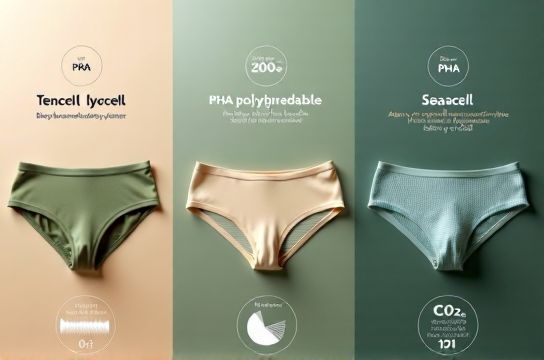
Recent peer-reviewed studies (e.g., *ACS Sustainable Chemistry & Engineering*, 2023) confirm that next-gen cellulose-based fibers—derived from FSC-certified eucalyptus and agricultural waste—degrade fully in soil within 90 days, versus >200 years for conventional polyester blends. And yes, they retain 87% tensile strength after 50 industrial washes.
Here’s how top-performing biodegradable fabrics stack up:
| Fabric | Source | Soil Degradation (Days) | CO₂ Footprint (kg/kg) | OEKO-TEX® Certified |
|---|---|---|---|---|
| Tencel™ Lyocell | Eucalyptus pulp | 84–112 | 1.2 | Yes |
| Seacell™ | Seaweed + wood pulp | 60–90 | 1.8 | Yes |
| Polyhydroxyalkanoates (PHA) blend | Microbial fermentation | 45–75 | 2.4 | In progress |
| Cotton (organic) | Non-GMO cotton | 120–180 | 3.6 | Yes |
Note the trade-offs: PHA degrades fastest but remains cost-prohibitive at scale ($42/kg vs $8/kg for Tencel™). That’s why leading ethical brands now use hybrid weaves—e.g., 70% Tencel™ + 30% PHA—for balance.
Crucially, biodegradability isn’t automatic—it depends on end-of-life conditions. A 2024 EU Commission report found only 12% of ‘biodegradable’ underwear actually composts in home settings; most require industrial facilities (≥58°C, high humidity). So transparency matters—and certifications like OK Biobased (3-star) or DIN CERTCO are non-negotiable.
If you’re evaluating sustainable intimates, ask: *Where’s the third-party test report? What’s the degradation environment specified? Is the dye system waterless?* Because greenwashing loves vague terms like “eco-friendly”—but real progress lives in data, standards, and traceable supply chains.
For deeper insights into material selection and lifecycle accountability, explore our full guide on sustainable textile innovation.