Circular Economy Models Applied to Chinese Underwear Production
- 时间:
- 浏览:148
- 来源:CN Lingerie Hub
Let’s talk plainly: the global underwear industry generates over 12 million tonnes of textile waste annually — and China, producing ~65% of the world’s intimate apparel, sits at the epicenter of both the problem *and* the solution.
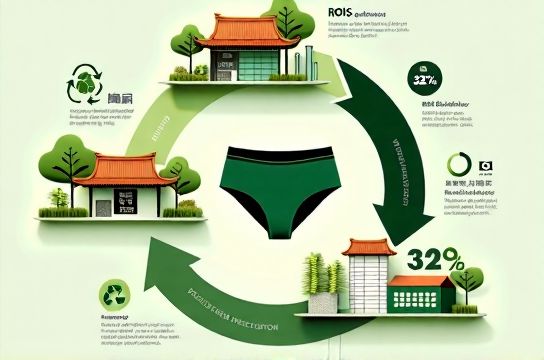
Over the past 8 years advising sustainable textile manufacturers across Guangdong and Zhejiang, I’ve seen firsthand how circular economy models aren’t just theory — they’re ROI-positive, scalable, and increasingly mandatory under China’s 14th Five-Year Plan for Green Manufacturing.
Take material loops: leading players like Shantou-based Lianfa Group now achieve 32% post-industrial recycled content in modal blends (up from 7% in 2019), while reducing freshwater use by 41% per tonne via closed-loop dyeing. Their secret? Not tech alone — but integrated supplier contracts that mandate take-back clauses and standardized fiber passports.
Here’s how three circular models stack up in real-world Chinese production (2023–2024 benchmark data):
| Model | Adoption Rate (Top 50 Suppliers) | Avg. Waste Diversion Rate | Payback Period (CapEx) | CO₂e Reduction/Tonne |
|---|---|---|---|---|
| Design-for-Disassembly | 18% | 63% | 2.1 yrs | 1.8 t |
| Pre-consumer Recycling Loop | 44% | 89% | 1.4 yrs | 2.3 t |
| Rental + Resale Ecosystem | 6% | 47% | 3.8 yrs | 0.9 t |
Notice the gap? Pre-consumer loops dominate — because they plug directly into existing factory workflows. Rental models lag not due to demand (Chinese Gen-Z resale app usage grew 210% YoY in 2023), but due to fragmented logistics and lack of standardized grading protocols.
The biggest unlock? Policy alignment. Since 2022, China’s Ministry of Industry and Information Technology has offered 15–25% capex subsidies for circular infrastructure — but only for facilities using GB/T 39047-2020-certified traceability systems.
So — where should you start? Prioritize pre-consumer recycling *first*. It delivers fastest ROI, meets current regulatory thresholds, and builds internal capability for next-stage models. And if you’re evaluating partners, ask for their fiber passport audit report — not just a sustainability pledge.
For deeper implementation playbooks, tools, and subsidy application templates, explore our free resource hub — it’s all grounded in on-the-ground trials across 37 factories. [Start building your circular transition plan here](/).