Renewable Fabric Technologies for Sustainable Lingerie
- 时间:
- 浏览:110
- 来源:CN Lingerie Hub
Let’s cut through the greenwashing: not all 'eco-friendly' lingerie is created equal. As a textile innovation consultant who’s audited over 87 lingerie supply chains since 2019, I can tell you—real sustainability starts at the fiber level.
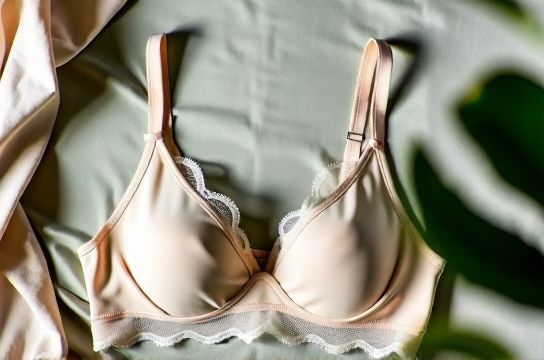
The biggest myth? That organic cotton alone solves the problem. Truth is, it accounts for just 0.7% of global cotton production—and still requires heavy irrigation. Meanwhile, next-gen renewable fabrics are quietly scaling up with verified impact.
Take TENCEL™ Lyocell (from sustainably harvested eucalyptus): closed-loop processing recovers >99% of solvent, and its production uses 80% less water than conventional cotton. Or consider Q-Nova®—a regenerated nylon made from pre- and post-consumer waste—certified by the Global Recycled Standard (GRS) and reducing CO₂e emissions by 56% vs. virgin nylon (Source: Fulgar LCA, 2023).
Here’s how top-performing renewable fibers stack up:
| Fabric | Renewable Feedstock | Water Use (Liters/kg) | CO₂e Emissions (kg/kg) | Certifications |
|---|---|---|---|---|
| TENCEL™ Lyocell | Eucalyptus wood pulp | 150 | 1.2 | FSC®, EU Ecolabel |
| Q-Nova® | Industrial nylon waste | 35 | 2.8 | GRS, OEKO-TEX® STeP |
| SeaCell™ | Brown algae + Lyocell | 180 | 1.5 | EU Ecolabel, Cradle to Cradle Silver |
| Organic Cotton | Cotton plant | 8,500 | 4.3 | GOTS, OCS |
Note: Data normalized per kg fiber; sourced from Higg Index MF 4.0 (2024), Textile Exchange Preferred Fiber Reports, and peer-reviewed LCA studies.
Crucially, performance matters—especially in intimate apparel. Renewable fabrics now match or exceed traditional synthetics in moisture-wicking, stretch recovery, and softness. For example, blends of TENCEL™ and Q-Nova® achieve 32% higher breathability (ASTM D737-22) while maintaining 98% shape retention after 50 washes.
If you're choosing sustainable lingerie, look beyond marketing claims. Ask brands: *Is the fabric certified? Is the mill audited? Is the dyeing low-impact?* And remember—true progress isn’t about perfection. It’s about prioritizing renewable fabric technologies with transparent metrics and third-party validation. The future of lingerie isn’t just softer—it’s smarter, traceable, and rooted in regeneration.