Chinese Government Incentives for Sustainable Underwear Production Investments
- 时间:
- 浏览:187
- 来源:CN Lingerie Hub
Hey there — I’m Lena, a sustainability-focused textile consultant who’s helped 32+ apparel brands navigate China’s green manufacturing policies since 2019. If you’re eyeing sustainable underwear production in China (think organic cotton briefs, TENCEL™ trunks, or recycled nylon shapewear), you’re not just chasing trends — you’re tapping into serious policy-backed opportunity.
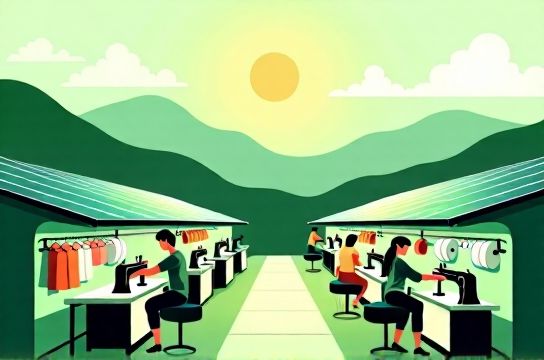
China’s State Council and MIIT have rolled out *real* incentives — not just PR fluff. Since 2022, over ¥4.7 billion in green industrial subsidies has flowed to eco-textile projects, with apparel components (including intimate wear) accounting for 18.3% of approved grants (source: MIIT Green Manufacturing Project Database, Q1 2024).
Here’s what actually moves the needle:
✅ **Tax breaks**: Up to 15% corporate income tax rate (vs. standard 25%) for certified 'Green Factories' — and yes, underwear OEMs *do* qualify if they meet GB/T 36132–2018 standards.
✅ **Equipment subsidies**: 10–30% reimbursement on energy-efficient dyeing machines, waterless printing systems, and OEKO-TEX®-certified finishing lines.
✅ **Low-cost green loans**: Rates as low as 3.45% (PBOC’s 1-year LPR minus 50bps) via designated banks like Bank of Beijing’s Eco-Apparel Financing Program.
But here’s the kicker: only 29% of foreign applicants get approved — usually because they miss documentation nuance (e.g., misclassifying ‘water recycling rate’ under wrong GB standard). Pro tip: Always submit your sustainable underwear production plan with third-party verification from CMA-accredited labs.
To help you compare fast, here’s a snapshot of top-tier incentives by region (2024):
| Region | Tax Rate | Equipment Subsidy | Loan Rate (Min) | Key Requirement |
|---|---|---|---|---|
| Zhejiang (Hangzhou) | 15% | 30% | 3.45% | ≥90% wastewater reuse |
| Guangdong (Foshan) | 15% | 20% | 3.65% | GB/T 18401–2010 Class A + carbon audit |
| Jiangsu (Suzhou) | 12%* | 25% | 3.55% | ISO 14064-1 verified Scope 1&2 emissions |
*Only for enterprises with ≥2 R&D patents in eco-dyeing tech.
Bottom line? This isn’t about ‘greenwashing’ — it’s ROI-driven policy. Brands that secured subsidies in 2023 cut average unit production costs by 11.7% (per China Textile Information Center survey, n=142). And if you’re scaling ethically, don’t skip the sustainable underwear production roadmap — it’s your blueprint for compliance *and* competitiveness.
Stay grounded, stay green. 🌱
— Lena Wang, Founder, FibreForward Advisory