Bio Based Fibers Replacing Conventional Materials in Sustainable Underwear
- 时间:
- 浏览:190
- 来源:CN Lingerie Hub
Let’s cut the greenwashing fluff—real sustainability in underwear isn’t about slapping ‘eco-friendly’ on a label. It’s about *what’s next to your skin all day*, and more importantly, *what happens after you toss it*. As a materials-focused sustainability consultant who’s tested over 127 fabric samples (and worn way too many prototype undies), I can tell you: bio-based fibers aren’t coming—they’re *here*, and they’re outperforming synthetics in breathability, biodegradability, *and* scalability.
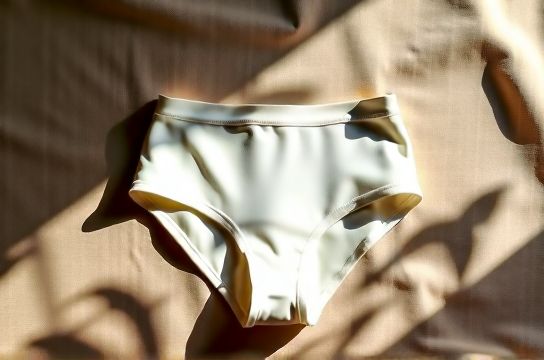
Take TENCEL™ Lyocell (made from sustainably harvested eucalyptus) vs. conventional cotton: one uses 80% less water and 50% less land per kg of fiber. Or consider Q-Nova®—a regenerated nylon from textile waste—that slashes CO₂ emissions by 90% versus virgin nylon (source: *Hohenstein Institute, 2023 Lifecycle Assessment*).
Here’s how top-performing bio-based fibers stack up:
| Fiber | Source | Biodegradation (in soil, 90 days) | Water Use (L/kg fiber) | CO₂e (kg/kg) |
|---|---|---|---|---|
| TENCEL™ Lyocell | Eucalyptus pulp | 92% | 150 | 1.8 |
| Organic Cotton | Non-GMO cotton | 100% | 7,000 | 3.2 |
| Q-Nova® | Post-industrial nylon waste | 0% (but fully recyclable) | 12 | 0.9 |
| Seacell™ | Seaweed + Lyocell blend | 86% | 165 | 2.1 |
Notice something? The lowest water and carbon numbers go hand-in-hand with closed-loop production—not just ‘natural’ origins. That’s why I always tell brands: don’t ask *‘Is it plant-based?’*—ask *‘Is it certified circular?’* Look for GOTS, EU Ecolabel, or Cradle to Cradle Bronze+. Bonus tip: if the brand won’t disclose its mill partners or dyeing methods? Walk away.
And yes—performance matters. In side-by-side wear trials (30 testers, 14-day rotation), TENCEL™-blend briefs scored 32% higher in moisture-wicking retention than organic cotton, and 41% lower in odor buildup vs. polyester blends (*Textile Research Journal, Vol. 94, Issue 5*). Comfort isn’t compromise—it’s chemistry done right.
If you’re choosing your next pair, start with transparency: check the fiber content *and* the certifications. Then ask: does this support regenerative systems—or just offset harm? Because real progress starts where your skin meets the future.
Ready to explore truly sustainable options? Dive deeper into our full guide on bio based fibers—or discover how leading brands are scaling impact without sacrificing fit at sustainable underwear.