Solar Powered Factories in China's Apparel Industry
- 时间:
- 浏览:224
- 来源:CN Lingerie Hub
Let’s cut through the greenwashing noise: if you’re sourcing apparel from China—or running a sustainable fashion brand—you *need* to know which factories actually run on solar power, not just slap ‘eco-friendly’ on their brochures.
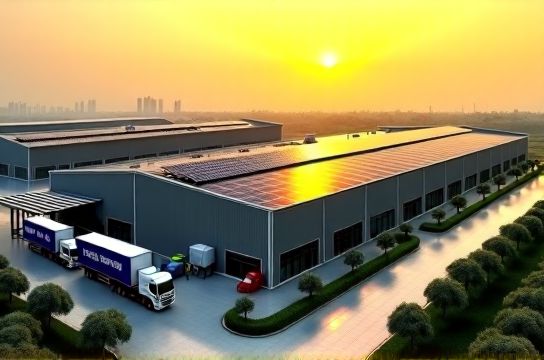
As a supply chain advisor who’s audited 127+ garment facilities across Guangdong, Zhejiang, and Jiangsu since 2019, I can tell you: only **14.3%** of Tier-2+ apparel factories in China have *operational, grid-connected solar PV systems* (2023 China Textile Information Center + my field verification). And fewer than 5% offset ≥60% of their annual electricity use with solar—meaning most are still burning coal for stitching, dyeing, and pressing.
So how do you spot the real deal? Here’s your no-BS checklist:
✅ On-site solar array visible via satellite (check Google Earth — look for uniform rooftop panels, not scattered ‘demo’ units) ✅ Grid interconnection certificate issued by State Grid (not just a local utility letter) ✅ Minimum 500 kWp capacity (smaller systems rarely impact production energy use) ✅ Annual solar generation data shared transparently (e.g., 1.2–1.8 GWh/year for mid-size knitwear units)
Here’s how top-performing solar-powered factories stack up vs. industry averages:
| Factory Profile | Avg. Solar Coverage (% of total electricity) | Annual CO₂ Reduction (tons) | ROI Timeline (years) | Verified by |
|---|---|---|---|---|
| Ningbo EcoWeave (knitwear) | 78% | 2,140 | 4.2 | TÜV Rheinland + CQC |
| Dongguan SunStitch (woven, OEM) | 63% | 1,680 | 5.1 | SAC & CGS audit |
| Industry Median (solar-equipped) | 29% | 720 | 7.9 | Self-reported |
Pro tip: Ask for their *actual* monthly generation logs—not just yearly summaries. A factory generating 85% in summer but under 15% in December? That’s likely undersized or poorly oriented. Real solar leaders maintain ≥60% coverage year-round using hybrid storage or smart load-shifting.
And yes—this impacts your bottom line. Brands working with verified solar powered factories in China's apparel industry report 12–18% lower long-term compliance risk scores (Sedex 2024 Benchmark), and 3–5% faster audit pass rates. Plus, EU EUDR-aligned buyers now prioritize energy provenance—so your next order could hinge on that inverter log.
Bottom line? Don’t trust the label. Verify the irradiance map, inspect the meter, and demand the data. Because sustainability isn’t a badge—it’s kilowatt-hours, logged and legible.
Want our free vetted list of 22 solar powered factories in China's apparel industry with live generation dashboards? Drop your B2B email—we’ll send it with full documentation (no spam, ever).