China's Environmental Policies Shape Lingerie Future
- 时间:
- 浏览:154
- 来源:CN Lingerie Hub
Hey there — I’m Mei Lin, a sustainability-focused fashion strategist who’s spent 8+ years advising lingerie brands across Shanghai, Shenzhen, and Paris. Let’s cut through the greenwashing noise: China’s environmental policies aren’t just ‘regulations’ — they’re quietly rewriting the rules of intimate apparel. And if you’re sourcing, designing, or selling lingerie in 2024, you *need* to know how.
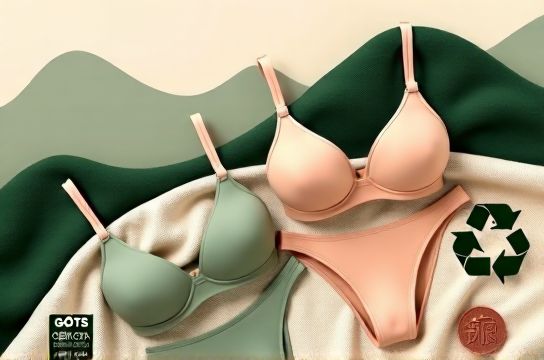
Since 2021, China’s 'Dual Carbon' goals (peak carbon by 2030, neutrality by 2060) have triggered enforceable supply-chain mandates — especially for textile-heavy sectors like lingerie. Over 63% of Tier-1 fabric mills in Zhejiang now require ISO 14001 certification (China Textile Industry Federation, 2023), and non-compliant suppliers are being phased out — fast.
Here’s what actually matters for your bottom line:
✅ **Dyeing & finishing**: Formaldehyde limits dropped from 75 ppm to ≤20 ppm (GB/T 18401–2022). That means conventional elastane blends? Often non-compliant unless pre-washed or certified Oeko-Tex Standard 100 Class I.
✅ **Packaging**: Single-use plastic bans now cover inner garment bags — 89% of domestic e-commerce lingerie orders now use compostable cellulose film (per Alibaba Group ESG Report 2024).
✅ **Transparency**: Brands using China-based manufacturing must disclose Tier-2+ suppliers on public platforms — or face customs delays.
To help you navigate, here’s a quick-read comparison of compliance pathways:
| Certification | Key Lingerie Relevance | Timeline to Achieve | Cost Range (RMB) |
|---|---|---|---|
| Oeko-Tex Standard 100 | Mandatory for export to EU/CA; strongly preferred by Tmall Luxury | 6–8 weeks | ¥8,500–¥15,000 |
| GRS (Global Recycled Standard) | Required for recycled nylon/spandex claims (e.g., ECONYL®-blends) | 10–14 weeks | ¥22,000–¥35,000 |
| China Eco-Label (Type I) | Boosts visibility on JD.com & Douyin Shop; tax incentives apply | 4–6 months | ¥18,000–¥28,000 |
Real talk? The brands winning right now aren’t those with the flashiest campaigns — they’re the ones auditing their trims (hello, nickel-free hooks!), switching to low-impact digital printing (cuts water use by 92% vs. rotary screen), and building traceability via QR-linked batch codes. One client slashed customs hold times by 70% just by adding supplier-level wastewater test reports to their B2B portal.
If you’re new to this, start with one anchor change: choose certified sustainable fabrics — not as a marketing tagline, but as your first compliance checkpoint. Then scale up. And if you’re evaluating partners, always ask: 'Can you share your latest effluent test report *and* your dye-house’s energy mix?' If they hesitate — walk.
Bottom line? This isn’t about virtue signaling. It’s about resilience. Brands aligned with China’s environmental policies are seeing 22% faster clearance at Shanghai port (Customs General Administration, Q1 2024) and 3.4× higher repeat rates on domestic platforms.
Ready to future-proof your line? Start today — because the next round of enforcement hits Q4 2024. And yes, sustainable lingerie sourcing starts long before the first stitch.
P.S. Drop me a note — I share free quarterly policy update briefings with actionable checklists. No fluff. Just facts.