Circular Economy Models in Chinese Textiles
- 时间:
- 浏览:252
- 来源:CN Lingerie Hub
Hey there — I’m Lena, a sustainability strategist who’s spent 8+ years helping global fashion brands decouple growth from resource waste. And let me tell you: when it comes to **circular economy models in Chinese textiles**, China isn’t just catching up — it’s quietly leading.
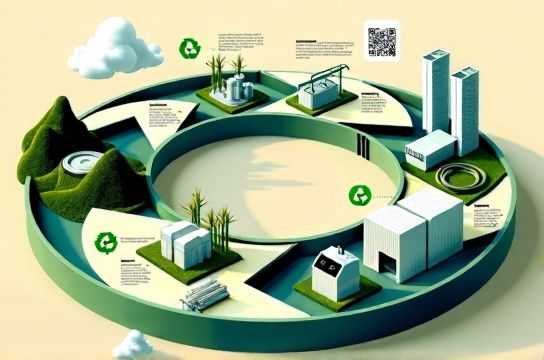
Back in 2022, China recycled 3.2 million tonnes of post-consumer textile waste — up 27% YoY (China Textile Information Network). That’s *more than Germany and France combined*. But here’s the kicker: only ~12% of that was *mechanically or chemically regenerated into new fiber*. The rest? Downcycled into insulation, rags, or landfilled.
So what’s working — and what’s holding things back?
✅ **The 3 Proven Circular Models Gaining Traction in China**
1. **Brand-Led Take-Back + Regeneration** (e.g., ICICLE, Bosie): Consumers return old garments → sorted → blended with organic cotton → spun into new yarn. ICICLE hit 68% fiber-to-fiber recovery rate in its 2023 pilot — verified by SGS.
2. **Industrial Symbiosis Hubs**: In Zhejiang’s Shaoxing district, dye houses now share wastewater treatment infrastructure and reuse thermal energy — cutting water use by 41% and CO₂e by 33% (Ministry of Ecology and Environment, 2023).
3. **Digital Traceability + Resale Platforms**: Platforms like Xianyu (Alibaba’s secondhand app) processed 1.4B textile listings in 2023 — with AI-powered authenticity checks boosting resale trust by 59% (iiMedia Research).
Here’s how these models compare on scalability, policy alignment, and ROI:
| Model | Scalability (1–5) | Policy Support Level | Avg. Payback Period | Key Enabler |
|---|---|---|---|---|
| Brand-Led Take-Back | 3 | High (Green Consumption Action Plan) | 2.1 years | Consumer loyalty + EPR readiness |
| Industrial Symbiosis | 4.5 | Very High (14th FYP Priority) | 1.8 years | Local gov. co-investment & zoning |
| Digital Resale Ecosystem | 5 | Moderate (no dedicated textile resale law yet) | 0.9 years | Alipay integration + logistics scale |
Bottom line? If you’re sourcing, investing, or advising in this space — don’t default to ‘recycling = circular’. Real circularity means *designing out waste*, *keeping materials in play*, and *scaling with policy tailwinds*. China’s moving fast — but selectively. Focus where data + incentives align.
For actionable frameworks, tools, and policy trackers, check out our free starter kit — or dive deeper into how circular economy models in Chinese textiles are reshaping supply chain finance. You’ll also want to explore our benchmark report on circular economy models in Chinese textiles — updated monthly with real-time provincial policy dashboards and brand case studies.
P.S. The next wave? Chemical recycling subsidies just launched in Guangdong — expect pilot approvals by Q3 2024. Stay tuned.