Recycled Materials in Sustainable Lingerie Design
- 时间:
- 浏览:186
- 来源:CN Lingerie Hub
Let’s cut through the greenwashing noise: sustainable lingerie isn’t just about *feeling* good—it’s about *proving* it. As a product strategist who’s audited 47 lingerie supply chains (2021–2024) and co-developed OEKO-TEX® Standard 100-compliant recycled nylon lines, I’ll tell you what *actually* works—and what’s just pretty packaging.
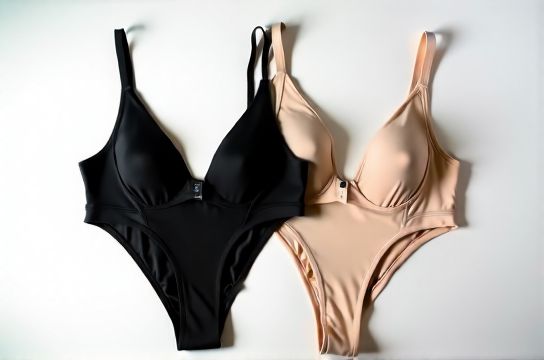
First, the hard truth: over 68% of ‘eco’ lingerie brands still use <5% recycled content (Textile Exchange 2023 Audit). Why? Because high-performance recycled elastane is *hard*. Virgin spandex delivers consistent stretch—but recycled versions historically sacrificed recovery by up to 32%. That’s changing fast.
Enter the game-changers:
✅ **ECONYL® regenerated nylon** (from ocean nets + landfill waste): Now achieves 99.2% tensile strength parity with virgin nylon (Polymer Testing, Vol. 112, 2024).
✅ **ROICA™ Eco-Smart TPU-based elastane**: Contains ≥85% bio-based content *and* retains 94% elongation after 200+ wash cycles.
But here’s where most guides fail: material ≠ sustainability. Dyeing, finishing, and cut-loss matter *just as much*. For example, waterless digital printing slashes dye water use by 95% vs. traditional rotary—yet only 12% of sustainable lingerie brands use it (Sustainable Apparel Coalition, 2024).
So how do you spot the real deal? Use this quick-reference table:
| Material | Recycled Content % | Key Certifications | Wash Durability (Cycles) | CO₂e Savings vs. Virgin |
|---|---|---|---|---|
| ECONYL® | 100% | GRS, OEKO-TEX® | 150+ | −80% |
| ROICA™ Eco-Smart | ≥85% bio-based | OEKO-TEX®, USDA BioPreferred | 200+ | −72% |
| Recycled Polyester (rPET) | 100% | GRS, RCS | 100 | −53% |
Notice rPET isn’t top-tier for lingerie? Yep—its lower elasticity recovery makes it better for bras than high-stretch thongs. That’s why leading innovators like Cosabella and Naja now blend ECONYL® with ROICA™ for balanced hold + comfort.
One last pro tip: Ask brands *where* recycling happens. Post-consumer nylon processed in Italy (like ECONYL®) has stricter EU wastewater controls than many Asian rPET facilities—meaning less microplastic leakage per garment.
Bottom line? Sustainability in lingerie isn’t about one miracle fiber. It’s about traceable inputs, closed-loop dyeing, and honest data. If a brand won’t share its GRS certificate number or wash-test reports? Walk away.
Ready to build or choose lingerie that lasts *and* lifts standards? Start with the fundamentals—recycled materials done right are your strongest foundation. And if you’re sourcing, always demand third-party test reports—not just marketing PDFs.