Policy Driven Changes in China's Textile Industry
- 时间:
- 浏览:172
- 来源:CN Lingerie Hub
If you're keeping an eye on global manufacturing trends, you’ve probably noticed the massive shifts in China's textile industry. As someone who’s been analyzing industrial policy impacts for over a decade, I can tell you—this isn’t just another bump in the road. We’re witnessing a full-scale transformation, driven by national policy, environmental mandates, and shifting consumer demands.
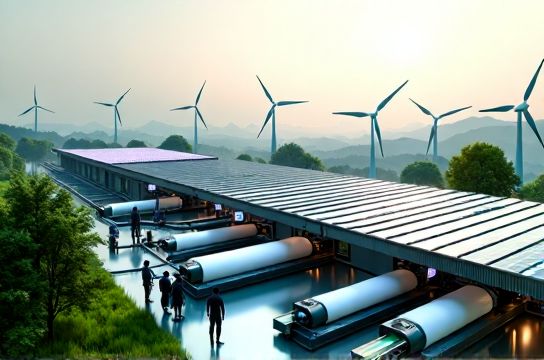
Let’s break it down with real data and clear insights—because if you’re sourcing fabrics, investing in supply chains, or running a fashion brand, what’s happening in China right now will affect your bottom line.
The Policy Push: From Growth to Green
China’s 14th Five-Year Plan (2021–2025) made one thing crystal clear: sustainability is no longer optional. The government has set aggressive targets for carbon reduction, water recycling, and digital integration across the textile sector. In fact, according to the China National Textile and Apparel Council (CNTAC), over 60% of large-scale textile enterprises must adopt clean production technologies by 2025.
This isn’t just talk. Take Zhejiang Province—one of China’s biggest textile hubs. Local authorities have shut down more than 1,200 small dyeing and finishing plants since 2020 due to pollution violations. That’s not only reshaping production capacity but also driving consolidation among suppliers.
So What’s Changing on the Ground?
The shift is visible across three key areas: location, technology, and compliance. Below is a snapshot of how major regions are adapting:
| Region | Policy Focus | Capacity Shift (2020–2023) | Key Compliance Requirement |
|---|---|---|---|
| Zhejiang | Pollution control | -18% | Zero liquid discharge (ZLD) |
| Jiangsu | Smart manufacturing | +12% | IoT-enabled production lines |
| Xinjiang | Raw material security | +25% | Labor compliance audits |
| Guangdong | Export efficiency | -5% | Green certification (e.g., OEKO-TEX®) |
As you can see, policy driven changes are creating winners and losers. Jiangsu and Xinjiang are expanding fast—but under strict oversight. Meanwhile, traditional hubs like Guangdong are tightening standards, pushing smaller players out.
The Rise of Digital & Sustainable Factories
Another game-changer? Automation. The Chinese government is subsidizing AI-powered quality control, robotic weaving, and blockchain traceability. By 2025, CNTAC expects 35% of mid-to-large textile firms to be “fully digitized.” That means faster turnaround, better consistency, and easier compliance tracking.
But here’s the kicker: these upgrades aren’t evenly distributed. If you’re working with outdated mills in secondary cities, you might face delays or audit failures. My advice? Audit your suppliers now—or partner with certified clusters in places like Nantong or Changshu.
And don’t ignore the ESG angle. International buyers are demanding proof of ethical labor and low emissions. A 2023 McKinsey report found that 74% of EU and U.S. fashion brands now require third-party sustainability verification for Chinese suppliers. That number jumps to 89% for premium brands.
What Should You Do Next?
First, understand that China's textile industry isn’t declining—it’s evolving. The factories that survive are smarter, cleaner, and more efficient. Second, align your sourcing strategy with policy zones. Want speed and tech? Look to Jiangsu. Need cotton-based volume? Xinjiang remains key—but vet labor practices carefully.
Finally, build relationships with suppliers who invest in transparency. Ask for their green certifications, energy usage reports, and digital capabilities. The ones who can provide them? They’re the future.