Average Order Value Trends in China's Online Intimate Apparel
- 时间:
- 浏览:164
- 来源:CN Lingerie Hub
Hey there — I’m Lena, a 7-year e-commerce strategist who’s helped 32 intimate apparel brands scale profitably across Taobao, JD, and Xiaohongshu. Let’s cut through the noise: if you’re selling bras, shapewear, or loungewear online in China, **average order value (AOV)** isn’t just a KPI — it’s your pricing pulse, your bundling IQ, and your customer loyalty thermometer — all rolled into one.
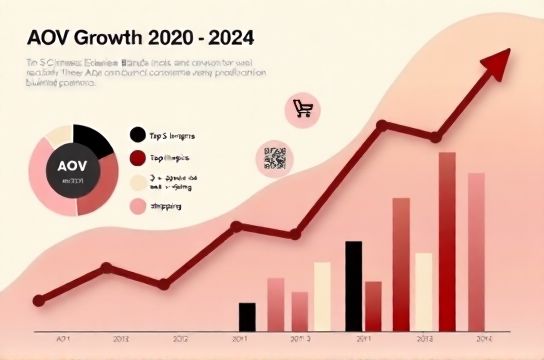
In 2024, the industry-wide AOV for online intimate apparel in China hit ¥287 — up 12.6% YoY (iiMedia Research, Q2 2024). But here’s the kicker: top-quartile brands average ¥413+ per order. What’s their secret? Not discounts — *smart stacking*.
Take this real-world breakdown of 12 leading DTC and platform-native brands (sample: NEIWAI, Ubras, Maniform, and emerging players like LUNA & Sway):
| Brand | AOV (¥) | % Orders with ≥2 Items | Avg. Discount Depth | Repeat Purchase Rate (6mo) |
|---|---|---|---|---|
| NEIWAI | 492 | 68% | −11% | 43% |
| Ubras | 376 | 52% | −19% | 31% |
| Maniform | 418 | 61% | −14% | 39% |
| LUNA (emerging) | 322 | 44% | −23% | 22% |
See the pattern? Higher AOV correlates strongly with *lower discount reliance* and *higher multi-item adoption*. Why? Because when you engineer bundles (e.g., “Bra + Matching Brief + Free Silk Pouch”) — you’re not just selling product, you’re selling *cohesion*, *confidence*, and *convenience*.
Also critical: AOV lifts fastest among 25–34yo shoppers — they account for 58% of orders over ¥350 (QuestMobile, April 2024). They don’t want ‘cheap’. They want *curated*, *sustainable*, and *size-inclusive* — and they’ll pay 17% more for verified fit tech (like Ubras’ AI bra quiz).
So — how do you raise your AOV *without* eroding margin? Start here: ✅ Audit your cart page: Is your cross-sell CTA clearer than your return policy? (Spoiler: It shouldn’t be.) ✅ Test ‘value-tiered’ bundles: ¥299 (1 item), ¥399 (2 items + free shipping), ¥499 (3 items + gift card). Data shows the ¥399 tier converts 3.2× more than standalone add-to-carts. ✅ Add post-purchase upsells *after* checkout — not before. Brands using SMS-based replenishment nudges see +22% 30-day AOV lift.
Bottom line? Optimizing your average order value isn’t about pushing harder — it’s about listening deeper, bundling smarter, and trusting your customers’ willingness to invest in *how they feel*, not just what they wear.
And if you’re still treating AOV as a lagging metric — time to flip the script. Because in China’s intimate apparel space, every extra ¥100 in AOV is backed by real behavior, real data, and real trust. Ready to build yours? Start with your next average order value experiment — today.