Data Driven Marketing in China's Lingerie Industry
- 时间:
- 浏览:214
- 来源:CN Lingerie Hub
In the ever-evolving world of fashion and retail, China’s lingerie market has quietly become a goldmine for data-driven marketing. Forget outdated stereotypes—today’s Chinese consumers want comfort, style, and personalization, and brands that leverage smart data are winning big.
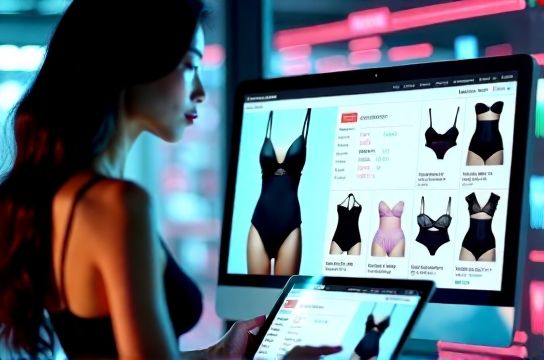
With over 480 million women between the ages of 15 and 50—the core lingerie-buying demographic—and a market value projected to hit $25 billion by 2025 (Statista, 2023), ignoring data insights is no longer an option. Let’s dive into how top brands like NEIWAI (Undercover) and Ubras are rewriting the rules with real-time analytics, AI-powered recommendations, and hyper-targeted social campaigns.
The Rise of Consumer-Centric Campaigns
Gone are the days of one-size-fits-all advertising. Modern Chinese shoppers, especially Gen Z and Millennials, demand authenticity. They respond not to glamour shots, but to relatable content—real bodies, real stories. Data helps brands identify these preferences at scale.
Take Ubras, for example. By analyzing search trends on platforms like Xiaohongshu (Little Red Book) and JD.com, they discovered a surge in keywords like “无尺码内衣” (bra without sizing). In response, they launched their popular ‘sizing-free’ bra line—backed by fit algorithms trained on millions of body measurements. Result? A 300% YoY sales jump in 2022.
How Data Powers Personalization
From WeChat mini-programs to Taobao recommendation engines, Chinese e-commerce thrives on behavioral data. Brands collect everything: click patterns, time spent per product, even scroll speed. This isn’t creepy—it’s clever.
Here’s a snapshot of key metrics top lingerie brands track:
| Metric | Industry Average | Top Performers (e.g., NEIWAI) |
|---|---|---|
| Conversion Rate (Online) | 1.8% | 4.6% |
| Average Order Value (RMB) | 180 | 320 |
| Customer Retention Rate | 28% | 61% |
| Social Media Engagement Rate | 3.2% | 9.7% |
As you can see, data-savvy brands don’t just sell—they build relationships. NEIWAI uses CRM data to segment users by lifestyle (e.g., “work-from-home moms,” “fitness enthusiasts”) and delivers tailored content via WeChat. Their community-driven approach increased repeat purchases by nearly double the industry average.
TikTok & KOLs: Where Data Meets Influence
No discussion of Chinese marketing is complete without TikTok (Douyin) and Key Opinion Leaders (KOLs). But here’s the twist: it’s not about picking the biggest influencer—it’s about picking the right one. Data tools like Kaola Insights and Douyin Analytics help brands assess engagement quality, audience demographics, and conversion potential before spending a single yuan.
For instance, a mid-tier KOL with 500K followers but high engagement in tier-3 cities might outperform a celebrity with 10M followers in Shanghai. Smart brands use A/B testing to refine messaging—emojis, video length, even background music—and optimize in real time.
The Road Ahead: AI and Predictive Trends
The future? Even smarter. AI is now predicting next season’s top colors based on social sentiment analysis. One brand used NLP to scan 2.3 million user comments and found rising interest in “milk tea beige” and “lavender haze”—colors later featured in a best-selling spring collection.
Data isn’t replacing creativity—it’s fueling it. In China’s competitive lingerie space, those who listen to the numbers are the ones getting heard.