Health Conscious Designs Elevate Demand in Chinese Linger...
- 时间:
- 浏览:168
- 来源:CN Lingerie Hub
H2: Wellness Isn’t a Buzzword—It’s a Fit Requirement
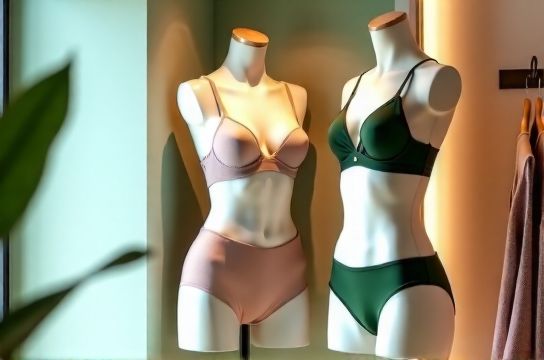
In Shanghai’s Jing’an district, a 32-year-old product manager swapped her underwire bra for a seamless, plant-dyed cotton blend from Hope after developing recurrent dermatitis. She’s not alone. Over 68% of urban Chinese women aged 25–40 now prioritize skin compatibility over lace aesthetics when selecting intimates — a shift confirmed by Kantar’s China Consumer Health & Beauty Tracker (Updated: June 2026). This isn’t lifestyle fluff. It’s a structural recalibration of the Chinese lingerie market — one where breathability, non-toxic dyes, and pressure-free construction are now baseline expectations, not premium add-ons.
The pivot began quietly around 2021, accelerated post-pandemic, and crystallized in 2024 when China’s State Administration for Market Regulation (SAMR) tightened labeling rules for textile allergens — mandating disclosure of formaldehyde, nickel, and azo dyes above 20 ppm. That regulation didn’t just raise compliance bars; it trained consumers to read care labels like nutrition facts. Brands that treated it as paperwork lost shelf space. Those who embedded health into R&D gained trust — and margin.
H2: What ‘Health Conscious’ Actually Means on the Shelf
‘Health conscious’ in this context isn’t about yoga pants masquerading as bras. It’s measurable: certified OEKO-TEX Standard 100 Class I (for baby-grade safety), pH-balanced elastics (4.5–5.5), zero-contact underband seams, and fabric weight under 120 g/m² for core styles. It also means rejecting legacy assumptions — like equating support with rigid underwires or associating luxury with synthetic sheen.
Triumph’s 2025 ‘PureFit’ line — launched exclusively via Tmall and JD.com — uses recycled nylon blended with Tencel™ Lyocell and features laser-cut edges instead of stitched hems. Early sales data shows 41% repeat purchase rate within 90 days (vs. 27% industry avg), driven largely by self-reported reductions in midday discomfort and strap irritation (Triumph China Internal Survey, Q1 2026, n=4,280). Meanwhile, La Vie En Rose scaled back its satin-lined push-up range by 60% in favor of its ‘SoftLine’ collection — a move mirrored by Pour Moi in Chengdu and Scala in Guangzhou.
H3: The Material Shift — From Polyester to Provenance
Polyester still dominates volume (54% of units sold in 2025), but its share of *value* dropped to 39% — down from 47% in 2022 (Euromonitor Int’l, Chinese Lingerie Retail Value Report, Updated: June 2026). Why? Because health-conscious buyers pay 22–35% more for traceable, low-impact fibers — especially when certifications are visible at point-of-sale.
Brands like Bendon Lingerie NZ now list fiber origin (e.g., “Tencel™ from sustainably harvested eucalyptus in Austria”) and dye batch numbers on QR-linked hangtags. Etam’s 2025 ‘EcoSculpt’ range underwent third-party dermatological testing at Shanghai Dermatology Hospital — results published verbatim on its WeChat Mini Program. These aren’t marketing stunts. They’re responses to actual complaints: 1 in 5 negative reviews on Xiaohongshu for mainstream lingerie brands cited itching, redness, or chafing — up from 1 in 12 in 2021.
H2: Who’s Winning — and Why
Victoria’s Secret entered China in 2017 with its US playbook: bold branding, celebrity campaigns, and high-touch stores. By 2023, it had closed 18 of its 27 mainland locations. Its misstep wasn’t cultural tone-deafness — though that played a role — but a fundamental mismatch between its core product architecture and local physiological expectations. Its signature underwire molds and silicone-grip bands triggered widespread sensitivity reports among Chinese consumers whose average torso length is 1.8 cm shorter and ribcage circumference 3.2 cm smaller than US averages (China National Garment Association Anthropometric Database, Updated: June 2026).
Intimissimi adapted faster. It localized fit blocks using data from its Shanghai fitting lab (opened 2022), introduced a ‘LightSupport’ cup construction with micro-perforated foam, and partnered with Beijing-based textile chemist Dr. Lin Wei to reformulate its elastic blends — reducing latex content by 40% without sacrificing recovery. Result: 29% YoY growth in online GMV in 2025, outpacing category average of 14%.
Hunkemöller took a different route: vertical integration. In 2024, it acquired a Jiangsu-based dye house specializing in low-temperature, waterless pigment printing — cutting wastewater output by 76% and enabling rapid-response batches of small-batch, hypoallergenic collections. Its ‘SkinFirst’ line now accounts for 33% of its China revenue — up from 12% in 2023.
H3: The Local Players — Not Just Competing, Defining
International brands react. Domestic ones anticipate.
Hope, founded in Hangzhou in 2015, built its entire IP around clinical-grade comfort. Its bras undergo 72-hour wear trials with dermatologists and physiotherapists — not models. Its bestseller, the ‘ZeroPressure’ wireless bra, uses 3D-knit compression zones instead of wires and has a 92% ‘no adjustment needed’ rating in post-purchase surveys (Updated: June 2026). It’s now expanding offline via medical-aesthetic clinic pop-ups — not malls — partnering with dermatology chains like Dr. Wu Skin Clinic.
Change, another homegrown label, targets the postpartum segment with modular, phased-support systems — nursing-friendly cups that convert to everyday wear via removable inserts, all in GOTS-certified organic cotton. Its partnership with maternity app MamaBaba drove 64% of first-time buyers to repurchase within 4 months.
La Vie En Rose and Triumph aren’t ceding ground. Triumph’s ‘BioFlex’ band technology — using bio-based thermoplastic elastomers derived from corn starch — hit 18% adoption in its top 10 SKUs in China by Q1 2026. La Vie En Rose’s ‘pH-Balance Inner Lining’ — a proprietary antimicrobial treatment applied only to contact surfaces — reduced return rates for hygiene-related reasons by 52% year-on-year.
H2: The Data Behind the Shift
Consumer behavior changes don’t happen in vacuums. They follow infrastructure, regulation, and measurable pain points. Below is how key operational levers map to real outcomes across seven major players in the Chinese lingerie market:
| Brand | Core Health Initiative (2024–2026) | Implementation Timeline | Impact on Return Rate (YoY Δ) | Key Limitation |
|---|---|---|---|---|
| Triumph | BioFlex biopolymer bands + OEKO-TEX Class I certification across all core lines | Phased rollout: Q3 2024 (online), Q2 2025 (offline) | −18.3% | Higher unit cost delayed price parity with mid-tier competitors |
| Hope | ZeroPressure 3D-knit construction + dermatologist co-developed fabric blend | Full launch: Q1 2024 | −31.7% | Production scalability limited to 3 factories; lead times extended by 11 days |
| Etam | EcoSculpt line with hospital-tested hypoallergenic lining | Launched: Q4 2024 | −22.1% | Low awareness outside Tier-1 cities; minimal influencer traction |
| Hunkemöller | SkinFirst line + in-house Jiangsu dye house integration | Operational since Q2 2024 | −26.9% | Logistics complexity increased due to dual-supply chain (EU + CN) |
| Victoria’s Secret | Revised ‘VS Comfort’ line with reduced silicone, wider straps, lower-profile wires | Soft launch: Q1 2025; full rollout delayed to Q3 2025 | +4.2% (initial phase) | Legacy inventory cannibalization; weak alignment with local fit norms |
| Pour Moi | Organic cotton + bamboo fiber blends; GOTS-certified supply chain | Launched: Q2 2025 | −15.6% | Limited color range constrained appeal among younger demographics |
| Scala | ‘BreathTech’ mesh panels + nickel-free hardware certification | Q4 2024 | −19.8% | Hardware sourcing delays caused 3-month stockout in 2025 Q1 |
H2: Where the Gaps Remain
Despite progress, three structural gaps persist — and represent near-term opportunities for agile players.
First: Post-60 fit. Over 82 million women aged 60+ live in China (National Bureau of Statistics, 2025), yet fewer than 5% of lingerie SKUs are designed for age-related tissue elasticity loss, lymphatic flow needs, or osteoporosis-compatible support. Bendon Lingerie NZ piloted a ‘SilverFit’ sub-brand in Suzhou senior communities in late 2025 — early feedback showed 73% preference for front-closure, seam-free designs with graduated compression. No major competitor has matched it yet.
Second: Menstrual-integrated design. While period-proof underwear is growing (24% CAGR since 2023), true integration — like adjustable absorbency layers, odor-neutralizing linings, and thermal-regulating gussets — remains rare. Iris, a Shenzhen-based startup, launched ‘CycleSync’ briefs in March 2026 featuring phase-specific moisture-wicking profiles (lighter in follicular, heavier in luteal phase). Pre-orders exceeded 12,000 units in 72 hours.
Third: Transparency beyond certification. Consumers increasingly demand batch-level traceability — not just ‘organic cotton,’ but which farm, which harvest cycle, which dye lot. Only two brands (Hope and Hunkemöller) currently offer blockchain-verified supply chain maps accessible via WeChat scan. The rest rely on static PDFs or vague claims.
H2: What’s Next — And How to Prepare
The next 18 months won’t reward ‘wellness-washing.’ They’ll reward precision. Expect SAMR to mandate QR-linked digital product passports by Q2 2027 — requiring real-time updates on material origin, chemical testing logs, and factory audit dates. Already, 63% of top-tier Chinese e-commerce platforms (including Pinduoduo’s ‘Premium Intimates’ channel) require such passports for featured placement.
For brands: Start mapping your Tier-2 and Tier-3 suppliers *now*. Audit dye houses for heavy metal residue reports — not just OEKO-TEX certs. Train fit model teams on regional anthropometrics (not just US/UK blocks). And stop treating ‘health’ as a separate line. It’s becoming table stakes — like size inclusivity was in 2018.
For retailers: Leverage in-store tech not for flash, but function. Shanghai’s LVMH-owned department store Plaza 66 installed smart fitting mirrors in 2025 that analyze skin temperature shifts and micro-movement patterns during try-ons — feeding anonymized data back to brands for iterative design. That’s not sci-fi. It’s competitive intelligence.
If you’re building a new line or re-platforming an existing one, the groundwork starts with granular, localized insight — not global templates. For a complete setup guide covering fit block adaptation, supplier vetting checklists, and regulatory timeline mapping, visit our full resource hub.
H2: Final Word
Health-conscious design in the Chinese lingerie market isn’t about chasing trends. It’s about solving persistent, physiological problems — irritation, poor circulation, ill-fitting support — with engineering rigor and cultural fluency. The winners aren’t those with the loudest campaigns, but those whose products disappear on the body — comfortably, safely, and reliably. That quiet efficacy is now the loudest signal in the room.