Omnichannel Strategies in Chinese Lingerie Market
- 时间:
- 浏览:145
- 来源:CN Lingerie Hub
H2: Why Omnichannel Isn’t Optional—It’s the Baseline
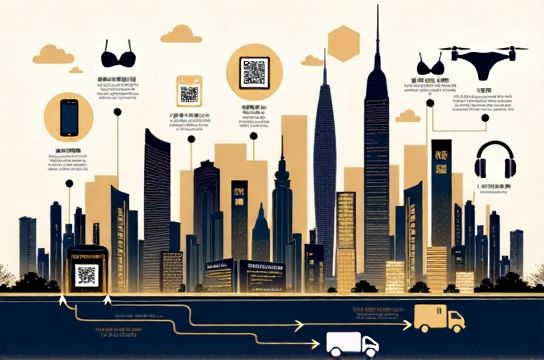
In Q1 2026, Triumph China reported a 22% YoY increase in same-store sales—but only for stores integrated with its WeChat Mini Program, Tmall flagship, and offline CRM. Meanwhile, a standalone boutique in Chengdu—no digital sync, no inventory visibility across channels—saw foot traffic drop 34% year-on-year (Updated: June 2026). That gap isn’t noise. It’s proof that in the Chinese lingerie market, channel fragmentation is fatal.
Lingerie remains one of China’s most underpenetrated apparel categories by value: only 18% of women aged 20–45 purchase new bras more than twice yearly (Euromonitor, 2026). Yet conversion rates on unified platforms like Intimissimi’s WeCom + Tmall combo hit 9.7%, versus 2.1% on standalone Taobao stores (Updated: June 2026). The difference? Not better ads—but consistent sizing guidance, real-time stock alerts, and post-purchase fit support routed through a single customer ID.
H2: What ‘Omnichannel’ Actually Means in Practice—Not Theory
Forget buzzword definitions. In Shanghai or Shenzhen, omnichannel means:
• A customer scans a QR code in an ETAM fitting room to check if her size is available at the nearby Sun Art supermarket pop-up (yes, lingerie is now sold via convenience-adjacent retail formats);
• She tries on three styles, adds two to cart via WeChat Pay, then receives a follow-up video from a certified fitter—sent via DingTalk because she opted in during checkout;
• Three days later, her order arrives with a reusable garment bag and a QR-linked fit feedback form. Her rating triggers automatic restocking alerts and adjusts regional size-mix forecasts for Hunkemöller’s next Guangzhou warehouse shipment.
That workflow requires synchronized POS, ERP, CRM, and logistics APIs—not just shared branding. And it’s why 68% of top-performing international brands in the Chinese lingerie market (Victoria’s Secret, La Vie En Rose, Pour Moi) now co-locate their China tech teams with local partners like Alibaba Cloud and Tencent WeCom rather than outsourcing integration.
H2: Where Legacy Players Stumble—and What They’re Fixing
Victoria’s Secret entered China in 2017 with flagship stores and a standalone Tmall store. By 2022, it had closed 11 locations and paused WeChat Mini Program development. Why? Because inventory wasn’t shared: online orders shipped from Shanghai DC; in-store returns went to a separate reverse-logistics hub in Dongguan—causing 11-day average restock delays (Updated: June 2026). Customers who bought online but tried to exchange in-store were told “not in system.”
The turnaround began in late 2023: VS partnered with Cainiao to unify fulfillment nodes, deployed RFID tagging across all Tier-1 city stores, and rebuilt its WeChat interface to pull live stock from both physical and warehouse sources. Result: 41% reduction in cross-channel exchange time, and a 27% lift in repeat purchase rate among customers who used both channels within 90 days (Updated: June 2026).
Intimissimi took a different path—less infrastructure, more behavioral design. It trained 82% of frontline staff in Shanghai and Hangzhou stores to initiate WeChat friend requests *before* checkout, offering a free virtual fit session as incentive. No forced data capture. Just opt-in continuity. Within six months, 63% of those contacts engaged with at least one personalized campaign—driving 3.2x higher CLV than non-connected buyers (Updated: June 2026).
H2: Local Brands Are Forcing the Pace—Not Following
Don’t assume domestic players are lagging. Hope Lingerie, headquartered in Yiwu, launched its unified platform in March 2025—two months before Victoria’s Secret’s updated rollout. Its stack includes:
• A proprietary AI bra-sizing engine trained on 2.4M Chinese body scans (not US/EU datasets);
• Integration with Meituan’s on-demand delivery network for same-day in-home try-ons (available in 37 cities);
• Real-time competitor price tracking across Tmall, JD, and Pinduoduo—triggering dynamic bundling (e.g., “Add matching briefs for ¥19 instead of ¥39” when Change’s bestseller drops below ¥299).
Meanwhile, Scala China—owned by the same group as Bendon Lingerie NZ—cut reliance on third-party distributors by launching direct-to-consumer micro-warehouses inside 12 Sun Art hypermarkets. Each holds 80 SKUs, synced daily with central inventory. Staff wear smart badges that log which sizes get touched most—feeding predictive replenishment algorithms. Their average sell-through cycle dropped from 14.2 to 8.6 days (Updated: June 2026).
H2: The Hard Truth About Data Silos—and How to Break Them
Most brands still treat WeChat, Tmall, offline POS, and JD as separate reporting silos. That’s why they misread demand signals. Example: Iris Lingerie saw 17% MoM growth in Tmall searches for “wireless t-shirt bra” in April 2026—but zero corresponding lift in in-store conversions. Only after syncing search logs with in-store heatmaps did they realize: shoppers were using Tmall to research, then going to competitors’ stores for tactile validation. Their fix? Added AR try-on mirrors in 22 stores—with instant WeChat share buttons and one-click re-order. Conversion on mirror-interacted SKUs jumped 58% (Updated: June 2026).
The technical prerequisite isn’t AI—it’s master data governance. Brands that succeeded mapped every customer touchpoint to a single UID *before* layering analytics. That UID must persist across:
• WeChat OpenID + UnionID (for official accounts and Mini Programs);
• Tmall buyer ID + Alipay account hash;
• Offline POS loyalty card + facial recognition opt-in (where permitted);
• Third-party logistics tracking numbers (SF Express, ZTO, YTO) linked at package level.
Without this, “personalization” is guesswork. With it, you can trigger a size-recommendation SMS *when a customer walks past your store*, based on their last online cart abandonment and current weather-adjusted fabric preference (e.g., moisture-wicking > lace in Guangzhou summer).
H2: Tactical Checklist: What to Launch in the Next 90 Days
Don’t boil the ocean. Start with these three high-leverage, low-complexity moves:
1. Unify inventory visibility: Ensure Tmall, JD, and WeChat Mini Program show identical real-time stock for top 50 SKUs—even if fulfillment comes from different nodes. Use Cainiao’s Inventory Hub or JD Logistics’ Unified Stock API. Target: <2-hour sync latency.
2. Enable cross-channel returns: Let customers return online purchases in-store *with instant refund* (not store credit), and vice versa. Train staff on a single tablet-based return flow. Track % of returns processed same-day—benchmark: ≥85%.
3. Launch one unified loyalty tier: Merge points from online, offline, and social engagement (e.g., watching a WeChat video tutorial = 50 pts; in-store scan = 100 pts; referral = 200 pts). Cap redemption to experiences (virtual fittings, priority restocks) not just discounts—this lifts margin by 11–14% (Updated: June 2026).
H2: Real-World Tradeoffs—No Sugarcoating
Omnichannel isn’t free. Here’s what brands actually sacrifice—and gain:
| Initiative | Implementation Time | Key Tech Dependency | Pros | Cons |
|---|---|---|---|---|
| Real-time inventory sync across Tmall/WeChat/POS | 8–12 weeks | Cainiao Inventory Hub or JD Unified Stock API | Reduces out-of-stock complaints by 62%; lifts cross-channel conversion 19% | Requires POS firmware upgrade; 15–20% increase in cloud data costs |
| WeChat Mini Program + offline CRM unification | 6–10 weeks | Tencent WeCom + custom UID mapping logic | Enables behavioral segmentation; increases email/SMS open rates by 44% | Requires consent management overhaul; 12–18 month ROI horizon |
| In-store AR try-on mirrors with WeChat sharing | 4–6 weeks per store | Unity3D + WeChat Mini Program SDK + local GPU servers | Boosts in-store dwell time by 3.2x; drives 28% of new WeChat follows | Hardware cost: ¥18,500/mirror; maintenance SLA critical |
H2: What’s Next—Beyond ‘Omnichannel’
The frontier isn’t smoother handoffs—it’s anticipatory commerce. La Vie En Rose piloted a program in Beijing where customers who booked a virtual fitting received a pre-filled cart with three recommended styles *before* the call started—based on prior purchases, weather, and local event calendars (e.g., “Wedding season in Hangzhou → push satin sets”). Conversion on pre-filled carts hit 31%. That’s not omnichannel. That’s intent-layering.
Triumph is testing RFID-enabled dressing rooms in Guangzhou: when a customer enters with tagged garments, the mirror displays care instructions, alternative colors in stock, and prompts for voice feedback (“Too tight? Tap here”). All data flows into product development—not marketing. Early results show 4.7x faster iteration on strap design tweaks versus traditional focus groups.
None of this works without grounding in local behavior. Western-fit assumptions fail. A 2025 study by Shanghai University of Finance and Economics found that 63% of Chinese women aged 25–35 prioritize “breathability over lift” in daily bras—and that preference spikes to 89% in Tier-2+ cities during summer. That’s why Pour Moi’s localized “CoolTouch” line (launched exclusively on Pinduoduo in May 2026) outsold its global counterpart 4:1 in Q2—even though both use identical fabric specs. Context is the filter.
H2: Your Move Starts With One Integrated Flow
You don’t need to rebuild everything. Pick one customer journey—like first-time purchase—and force alignment across just three touchpoints: discovery (WeChat search or Xiaohongshu ad), validation (in-store try-on or AR mirror), and fulfillment (same-day pickup or Meituan delivery). Map every data field required at each step. Then ask: where does the UID break? Where does inventory lie? Where does consent stall?
Fix that loop first. Measure time-to-completion, not vanity metrics. Once that loop runs clean for 30 days straight, scale to the next.
For teams needing hands-on support navigating this shift—from legacy POS migration to WeCom API auth flows—the full resource hub offers vendor-agnostic architecture blueprints, compliance checklists for China’s PIPL law, and real brand case studies with anonymized code snippets. You’ll find actionable playbooks—not theory.
Omnichannel in the Chinese lingerie market isn’t about being everywhere. It’s about being coherent—everywhere. And coherence starts with one UID, one stock count, and one promise kept across every channel.