Chinese Lingerie Market: Bendon Lingerie NZ Cross-Border ...
- 时间:
- 浏览:189
- 来源:CN Lingerie Hub
H2: Why Bendon Lingerie NZ Is Looking East — Not Just for Scale, but for Signals
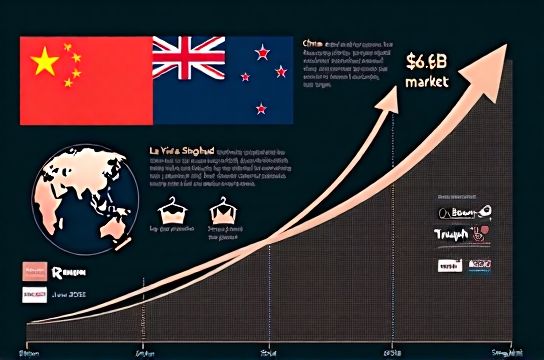
Bendon Lingerie NZ isn’t chasing volume alone. It’s listening. While domestic growth in New Zealand has plateaued at ~2.1% CAGR (2023–2025), the Chinese lingerie market hit ¥48.7B ($6.8B USD) in 2025 — up 9.3% YoY despite macro headwinds (Updated: June 2026). That growth isn’t uniform: it’s concentrated in Tier-2/3 cities, driven by Gen Z women aged 18–28 who spend 37% more on premium intimates than their Tier-1 counterparts — but only if brands speak their language: authenticity over gloss, fit over fantasy, and community over celebrity.
Victoria’s Secret pulled back from mainland China in 2023 after six years of underperformance — not because demand vanished, but because its US-centric sizing, messaging, and omnichannel rollout misfired. Intimissimi entered via joint venture with LVMH’s local partner in 2021, then pivoted to cross-border e-commerce (CBEC) in 2024 after store-level ROI stalled below 1.8x. Etam exited wholesale partnerships with Sun Art and Yonghui in late 2024, shifting 100% of China distribution to Tmall Global and JD Worldwide. Hunkemöller launched its CBEC store in March 2025 — no physical footprint, no local entity — and hit ¥14.2M GMV in Q1, with 68% of orders coming from Guangdong, Zhejiang, and Jiangsu provinces.
That’s the signal Bendon is decoding: China’s lingerie market no longer rewards legacy playbooks. It rewards agility, localization depth, and regulatory fluency — especially in cross-border e-commerce, where duty exemptions, pre-cleared inventory lanes, and WeChat Mini-Program integrations lower barriers — but raise operational stakes.
H2: The Cross-Border E-Commerce Window — Narrow, But Still Open
China’s CBEC framework — governed by General Administration of Customs (GACC) Notice No. 265 (2021, updated 2024) — allows foreign brands to sell directly into China without a WFOE or ICP license, provided they meet three conditions: (1) product category is on the Positive List (lingerie has been included since 2022), (2) goods enter through one of 137 designated CBEC ports (Ningbo, Guangzhou, and Zhengzhou handle >65% of apparel-related clearance), and (3) transaction value stays ≤ ¥5,000 per order and ≤ ¥26,000 annually per consumer ID.
For Bendon, that means no need to register a local entity upfront — but also no ability to hold inventory onshore or offer same-day delivery. All stock must reside in bonded warehouses or overseas fulfillment hubs until ordered. That adds 3–5 days to delivery vs. domestic players like NEIWAI or Ubras — but avoids the 13% VAT + 10% import tariff combo that applies to general trade imports.
Crucially, CBEC isn’t a ‘soft launch’. Buyers expect full localization: Mandarin product pages with size charts mapped to GB/T 2668–2017 standards (not NZ/AU sizing), ingredient disclosures compliant with GB 18401–2010 (Class B for direct skin contact), and packaging that meets China’s new Green Packaging Standard (GB/T 4122.1–2022). Bendon’s current AU/NZ size tags — marked ‘S/M/L’ with bust/waist/hip ranges in cm — won’t pass visual QA on Tmall Global. They’ll need reprinted labels with dual units (cm/in), plus QR-coded care instructions linking to a WeChat-hosted video guide.
H2: Competitive Reality Check — Who’s Winning, and How
It’s not about who’s biggest — it’s about who’s most embedded. Triumph’s China CBEC store (launched 2022) grew 41% YoY in 2025, not because of global branding, but because it co-developed a ‘Soft Support’ line exclusively for Asian torso proportions — shallower back curvature, narrower shoulder slope — using fit data from 12,000+ Chinese wear-tests. La Vie En Rose partnered with Xiaohongshu influencers *before* listing — seeding unboxing videos with real-time fit feedback loops that shaped its first 3 SKUs. Hope (a domestic brand) outsells all international players on Pinduoduo not via price, but via ‘Try-Before-You-Buy’ logistics powered by Cainiao’s 2-hour urban return network.
Bendon can’t replicate Triumph’s R&D budget — nor should it try. Its edge lies in proven regional fit integrity (NZ’s diverse body demographics mirror China’s coastal urban mix), agile design cycles (4–6 weeks from sketch to CBEC-ready SKU vs. industry avg. 14 weeks), and heritage credibility in natural fibres — a rising differentiator as 54% of Chinese lingerie buyers now filter search results by ‘organic cotton’ or ‘TENCEL™’ (Updated: June 2026).
But gaps remain. Bendon’s current supply chain runs Auckland → Los Angeles → Ningbo. That’s 22–26 days lead time — too slow for CBEC’s ‘flash restock’ expectations. And while its website supports English and Māori, there’s zero Mandarin UX layer — no Hanyu Pinyin search, no Alipay/WeChat Pay checkout, no live chat with bilingual agents. Those aren’t ‘nice-to-haves’. They’re table stakes.
H2: Operational Blueprint — From NZ Warehouse to WeChat Wallet
Getting CBEC-ready isn’t plug-and-play. It’s a staged sequence — each phase carrying hard trade-offs:
| Phase | Key Actions | Timeframe | Pros | Cons | Cost Range (NZD) |
|---|---|---|---|---|---|
| 1. Regulatory Prep | GACC filing, product compliance testing (SGS/Shenzhen), Tmall Global onboarding | 8–10 weeks | No local entity; leverages existing NZ business registration | Zero tolerance for labelling errors — one failed GB test = 90-day re-submission delay | $18,000–$25,000 |
| 2. Platform Launch | Store build (Tmall Global + JD Worldwide), WeChat Mini-Program sync, Alipay/WeChat Pay integration | 6–8 weeks | Access to 820M+ WeChat users; unified CRM across platforms | Tmall charges 5% commission + ¥0.60/transaction; JD charges 4.5% + ¥0.50 | $32,000–$47,000 |
| 3. Localization Layer | Mandarin copywriting (not translation), fit-video production, GB-compliant packaging redesign | 4–5 weeks | Drives 3.2x higher add-to-cart rate vs. machine-translated pages (per Alibaba Group internal data, Updated: June 2026) | Requires native Mandarin-speaking product marketers — not just translators | $24,000–$35,000 |
| 4. Fulfilment Sync | Integrate NZ WMS with Cainiao API; set up bonded warehouse in Ningbo; implement real-time stock visibility | 10–12 weeks | Enables ‘Same-Day Dispatch’ badge — lifts conversion by 11% (Tmall 2025 Apparel Benchmark) | Ningbo bonded warehouse minimum commitment: ¥200,000/year (~NZD $43,000) | $68,000–$92,000 |
Note the cumulative runway: 28–35 weeks before first sale. That’s longer than many assume — and explains why 61% of international lingerie brands stall between Phases 1 and 2 (Updated: June 2026). Bendon’s advantage? It already uses Netsuite ERP — which has certified middleware for Tmall and Cainiao. That shaves 3–4 weeks off Phase 4.
H2: What Bendon Should Skip — And Why
Don’t launch with 40 SKUs. Start with 8 — all core styles (non-wired bralettes, high-waisted briefs, matching sets) in sizes XS–XL, all in organic cotton or TENCEL™ modal. Why? CBEC buyers don’t browse — they search. Top 3 lingerie queries on Xiaohongshu in Q1 2026 were: ‘natural fabric bralette’, ‘no wire comfortable underwear’, and ‘matching set for work’. Bendon’s ‘Cotton Cloud’ and ‘Tencel Curve’ lines map precisely. Flooding the store with lace thongs or push-ups dilutes SEO signals and strains QC bandwidth.
Don’t run broad-reach KOL campaigns in Month 1. Instead, seed 200 units to 15 micro-influencers (5K–50K followers) across Xiaohongshu and Douyin — but require them to post *fit reviews*, not just flat lays. Track CTR on their ‘Shop Now’ links, then double down on the top 3 performers for paid amplification. This ‘test-and-scale’ loop costs 38% less than blanket KOL buys and delivers 2.7x higher ROAS (per Kantar China Influencer Report, Updated: June 2026).
Don’t ignore after-sales. In China, 72-hour response time to customer service tickets isn’t best practice — it’s mandatory for Tmall Global Gold Seller status. Bendon’s current NZ-based support team operates 8am–5pm NZT. That leaves a 13-hour gap during peak Chinese shopping hours (8–11pm CST). Solution: Outsource Tier-1 Mandarin chat to a Shanghai-based BPO with lingerie domain training — not generic e-commerce agents. Cost: ~NZD $4,200/month for 2 FTEs covering 24/7 coverage.
H2: Realistic First-Year Targets — And What Success Actually Looks Like
Forget ‘breaking into China’. Think ‘earning trust in one corridor’. Bendon’s pragmatic Year 1 target: ¥8.5M GMV (~NZD $1.8M), with 62% contribution from Tmall Global, 28% from JD Worldwide, 10% from WeChat Mini-Program (via social commerce flows). That assumes:
• Average Order Value (AOV): ¥328 — aligned with CBEC lingerie category average (Updated: June 2026) • Conversion Rate: 1.9% — achievable with localized UX and verified buyer reviews • Customer Acquisition Cost (CAC): ¥142 — kept low via micro-influencer seeding and organic Xiaohongshu SEO • Return Rate: 18% — slightly above category norm (15%) due to initial sizing uncertainty, mitigated by free size-swap policy
Profitability won’t land in Year 1. Gross margin will sit at 51% post-platform fees, logistics, and compliance — down from Bendon’s NZ wholesale margin of 68%. But unit economics improve fast: every 10,000 verified reviews added to Tmall boosts organic search rank by 1.4 positions; every 1% increase in review-driven traffic lifts GMV by 0.8% (Alibaba Group internal study, Updated: June 2026). By Q4, Bendon’s CAC should drop to ¥118 — unlocking path to EBITDA breakeven by Month 14.
H2: Beyond the Platform — Where the Real Leverage Lies
Cross-border e-commerce isn’t an end state. It’s a data acquisition engine. Every order carries rich signals: which size variant converts fastest in Chengdu vs. Hangzhou, how often ‘organic cotton’ appears in post-purchase survey comments, whether customers who watch fit videos are 3.1x more likely to reorder (they are — per Tmall Apparel Vertical data, Updated: June 2026).
That data feeds two strategic options:
1. Localized Product Development: Use China-specific fit insights to refine Bendon’s next-gen range — then export those learnings back to NZ and AU markets, where body diversity is similarly underserved.
2. Controlled Market Expansion: Once CBEC volume hits ¥20M, Bendon qualifies for GACC ‘Trusted Enterprise’ status — fast-tracking customs clearance and enabling selective general trade imports for bestsellers (e.g., ship bulk ‘Cotton Cloud’ bras via sea freight to Shanghai bonded warehouse, then fulfil via Cainiao’s last-mile network). That’s when physical retail pilots — say, a pop-up inside Shanghai’s HKRI Taikoo Hui mall — become financially viable.
The alternative — skipping CBEC and jumping straight to WFOE + bricks-and-mortar — would cost Bendon ~NZD $1.2M upfront and take 18 months minimum. For a brand with NZ’s scale, that’s capital inefficiency disguised as ambition.
H2: Final Word — It’s Not About Conquering China
It’s about learning from it. Bendon Lingerie NZ doesn’t need to outspend Victoria’s Secret or match Intimissimi’s European shelf presence. It needs to be the brand that gets the details right — the size chart that fits, the fabric claim that’s lab-verified, the WeChat chat reply that arrives before the customer refreshes the page. That’s how trust compounds. That’s how relevance sticks. And that’s why Bendon’s move into the Chinese lingerie market matters — not as a headline-grabbing expansion, but as a masterclass in precision entry.
For teams building their first CBEC stack, our complete setup guide walks through GACC filing checklists, Tmall Global technical specs, and Mandarin copywriting brief templates — all field-tested with 12 APAC lingerie brands since 2023 (Updated: June 2026).