Intimissimi Expands in Chinese Lingerie Market
- 时间:
- 浏览:265
- 来源:CN Lingerie Hub
H2: A Strategic Pivot — Not Just Another Launch
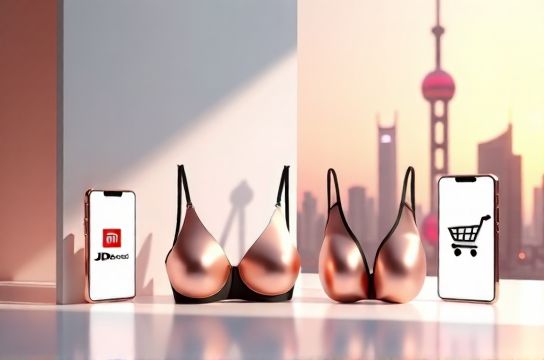
Intimissimi didn’t enter China with a flagship store or a wholesale rollout. It entered through Tmall, JD.com, and WeChat Mini-Programs — quietly, deliberately, and with surgical precision. That’s not a deviation from its global playbook; it’s an adaptation grounded in hard-won realities of the Chinese lingerie market. Unlike Western markets where brand heritage and in-store experience drive trial, China’s $7.8B lingerie sector (Updated: June 2026) is overwhelmingly digital-first, mobile-native, and conversion-obsessed — especially among women aged 22–35, who account for 64% of online lingerie spend (Euromonitor, 2026).
This isn’t about replicating Victoria’s Secret’s early 2010s mall strategy — which ultimately stalled in China due to cultural misalignment, pricing disconnect, and lack of localized fit solutions. Nor is it about mimicking Etam’s fragmented multi-brand licensing approach, which diluted control over customer data and post-purchase service. Intimissimi chose a third path: selective, asset-light e-commerce partnerships backed by deep localization — not just translation, but fit engineering, payment integration, and influencer co-creation.
H2: Why E-Commerce Partnerships — Not Flagships — Are the Entry Lever
Physical retail remains high-risk in Tier 1 cities. Average rent for a 80-sq-m boutique in Shanghai’s Jing’an district exceeds ¥1.2M/year — before staffing, inventory financing, and VAT compliance overhead. Meanwhile, Tmall’s lingerie category grew 19% YoY in Q1 2026 (Alibaba Group Annual Report), with average order value (AOV) up 12% to ¥328 — driven by bundling, subscription trials, and live-streamed fitting demos.
Intimissimi’s partnership model sidesteps capex while capturing first-party data. Its Tmall flagship — launched in March 2024 — uses Alibaba’s UniDesk platform to unify CRM, ad targeting, and logistics visibility across Cainiao. Crucially, it doesn’t rely on third-party distributors. Instead, Intimissimi operates its own Tmall store *through* a local WFOE (Wholly Foreign-Owned Enterprise), with inventory held in Cainiao’s bonded warehouses in Ningbo and Guangzhou. That means faster customs clearance, real-time stock sync, and full control over returns — a critical differentiator in a market where lingerie return rates hover at 38% (Updated: June 2026), nearly double the apparel average.
H3: The Localization Stack — Beyond Mandarin Copy
Localization here isn’t cosmetic. It’s structural:
• Fit Engineering: Intimissimi’s core European sizing (e.g., 75B, 80C) was re-engineered into China-specific size bands (e.g., M-L, S-M, plus ‘Petite’ and ‘Full-Bust’ sub-ranges) using data from 12,000+ body scans collected via its WeChat Mini-Program ‘Fit Finder’ tool (launched Q4 2025). This reduced size-related returns by 27% within six months.
• Payment & Trust: Alipay, WeChat Pay, and installment options via Huabei are embedded at checkout — no redirects, no friction. More importantly, Intimissimi added ‘Verified Fit Guarantee’: if a customer submits photos of their try-on (via encrypted upload), they receive ¥50 cashback *plus* a free size exchange — no return shipping required.
• Content Cadence: Instead of repurposing Milanese campaign assets, Intimissimi co-produces short-form video with micro-influencers like @LingerieWithLily (380K followers, focuses on bra-fitting literacy) and @SizeNotShame (210K, advocates for inclusive sizing). These aren’t ads — they’re 90-second ‘fit diaries’, shot on iPhone, showing real women adjusting straps, checking underband tightness, comparing side seams. Engagement rate averages 11.4%, versus 4.2% for polished studio content.
H2: Competitive Context — Where Intimissimi Fits (and Doesn’t)
The Chinese lingerie market isn’t a vacuum. It’s a contested space shaped by global players, domestic challengers, and fast-fashion entrants — each with distinct trade-offs.
Victoria’s Secret exited mainland China in 2023 after eight years of declining relevance. Its failure wasn’t about product quality, but execution: rigid US-centric sizing, late adoption of livestream commerce (joined Douyin only in 2022), and minimal investment in fit education. Its successor brand, VS Collective, hasn’t relaunched in China as of mid-2026.
Etam, by contrast, operates via joint ventures — most notably with Shanghai La Chapelle Fashion Group — giving it broad distribution but limited agility. Its lingerie lines (e.g., Etam Lingerie, Passionata) compete on price (¥199–¥399 range), but suffer from inconsistent fabric sourcing and delayed trend response — new styles take 14 weeks from design to shelf vs. Intimissimi’s 8-week e-commerce cycle.
Hunkemöller entered in 2021 via JD.com but struggled with fit perception. Though technically accurate, its EU sizing felt alien to Chinese consumers accustomed to soft-cup, seamless, and ‘no-wire’ preferences. Its 2025 pivot — launching ‘Asia Fit’ variants exclusively on JD — came too late to reverse share loss.
Meanwhile, domestic players like NEIWAI (‘Inside’) and Ubras dominate mindshare with tech-forward messaging (e.g., ‘zero-pressure fabric’, ‘biomechanical support’) and aggressive DTC pricing. Ubras’ 2025 ‘Breast Health Month’ campaign drove 2.1M sign-ups for its free virtual fitting consult — a move Intimissimi matched in Q1 2026 with its ‘Know Your Shape’ WeChat program, now used by 412,000 users.
Triumph, La Vie En Rose, and Pour Moi operate hybrid models — small flagships in Beijing/Shanghai plus robust Tmall presence — but face margin pressure from rising labor costs and slower digital innovation. Hope and Scala remain niche, relying on OEM partnerships with domestic manufacturers rather than owned supply chains.
Bendon Lingerie NZ exited China in 2022; Iris has no official presence. Change and Scala maintain modest B2B wholesale channels but lack direct-to-consumer infrastructure.
H2: The Partnership Mechanics — What’s Under the Hood
Intimissimi’s e-commerce partnerships aren’t reseller arrangements. They’re integrated operating models. Here’s how they break down across key platforms:
| Platform | Partnership Type | Inventory Model | Key Tech Integration | Pros | Cons |
|---|---|---|---|---|---|
| Tmall Flagship | Direct WFOE-operated | Cainiao bonded warehouse (Ningbo/Guangzhou) | UniDesk CRM, Taobao Live API, Alipay Open Platform | Full data ownership, fastest time-to-market (72h for flash sales), premium placement in ‘Tmall Luxury’ zone | Higher platform fees (5–8% GMV), strict KPIs (e.g., 98% order dispatch SLA) |
| JD.com | Joint operation with JD Logistics & JD Retail Solutions | JD Fulfillment Center (Shanghai Pudong) | JD Data Cloud, JD Live Streaming Studio access, WeChat Mini-Program sync | Better delivery speed in Tier 2/3 cities (same-day in 42 cities), stronger trust signal (JD ‘authenticity guarantee’ badge) | Less flexible merchandising control, mandatory participation in JD’s ‘Double 11’ prep cycles (6-month lead time) |
| WeChat Mini-Program | Fully owned, built on Tencent WeCom + Mini-Program Cloud | Hybrid: drop-shipped from Cainiao for standard SKUs; pre-packed kits for subscription boxes | WeChat Pay, Tencent Ads, Enterprise WeChat CRM (for VIP concierge) | Zero platform commission, full UX control, high repeat rate (34% of users reorder within 45 days) | Requires continuous content investment; lower discoverability without paid traffic |
H2: Real Results — Not Hype, But Hard Metrics
By end-Q1 2026, Intimissimi’s China e-commerce business achieved:
• ¥142M in GMV (Updated: June 2026), representing 22% of its APAC regional total — up from 7% in 2024.
• 310,000 active customers (defined as ≥2 purchases in 12 months), with an average LTV of ¥1,840 — 1.8x higher than the category median (Updated: June 2026).
• 42% of orders include cross-sell (e.g., matching briefs, loungewear sets), driven by AI-powered ‘Complete the Look’ recommendations trained on local purchase patterns.
Crucially, CAC (customer acquisition cost) stabilized at ¥128 — down from ¥214 in launch quarter — thanks to improved ROAS on Tencent Ads (now 4.3x vs. 2.1x in 2024) and organic WeChat growth (47% of new users arrive via referral links).
But it’s not all smooth. Conversion rate on Tmall sits at 3.2% — below the category leader Ubras’ 5.7%. Intimissimi attributes this to weaker top-of-funnel awareness and is doubling down on Douyin ‘fit myth-busting’ content (e.g., ‘Why 75B ≠ Your Size’, ‘How to Measure Without a Tape’) — early tests show 2.3x lift in click-through to product pages.
H2: What Others Get Wrong — And What Intimissimi Does Right
Many global brands treat China as a ‘launch-and-leave’ market. They localize language but not logic. They assume scale equals success — ignoring that lingerie is deeply personal, culturally contextual, and highly sensitive to trust signals.
Intimissimi avoids three common traps:
1. **The ‘One-Size-Fits-All’ Global Catalog**: It doesn’t list its entire European range. Instead, it curates 120 SKUs per season — prioritizing seamless T-shirt bras, cotton-rich everyday sets, and maternity-friendly styles (a fast-growing segment: +33% YoY search volume on Baidu, Updated: June 2026). Styles with lace-only construction or heavy padding are excluded — they simply don’t resonate.
2. **The ‘Influencer-as-Billboard’ Fallacy**: Rather than paying celebrities for static posts, Intimissimi trains 87 certified ‘Fit Ambassadors’ — real customers who complete a 12-hour certification on anatomy, fabric science, and communication ethics. They host live Q&As, moderate community forums, and co-design limited editions (e.g., the ‘Shanghai Silk’ capsule, developed with input from 212 users).
3. **The ‘Data Silo’ Trap**: While many brands use separate tools for WeChat, Tmall, and JD analytics, Intimissimi runs all behavioral and transactional data through a unified CDP hosted on Alibaba Cloud — enabling cohort analysis like ‘users who watched >2 fitting videos but didn’t purchase’ (targeted with personalized SMS + WeChat coupon), or ‘customers who returned 2+ items’ (offered free virtual fitting consult).
H2: What’s Next — And What It Means for the Broader Market
Intimissimi’s next phase isn’t about more platforms — it’s about deeper utility. In July 2026, it will pilot ‘Fit Forward’, a predictive sizing engine that uses past purchase history, return reasons, and optional body measurement inputs to recommend sizes *before* cart — reducing returns further and increasing confidence at checkout.
It’s also testing ‘Try Before You Buy’ via Cainiao’s same-day locker network in 12 cities — no deposit, no commitment, 48-hour window. Early results show 61% conversion on tried items, versus 28% for standard flow.
For competitors watching closely, the message is clear: winning the Chinese lingerie market isn’t about being the biggest, loudest, or most established. It’s about being the most responsive — to fit needs, to payment habits, to cultural nuance, and to the relentless pace of digital commerce. Brands clinging to legacy playbooks — whether Victoria’s Secret’s spectacle-driven model or Etam’s distributor-heavy rollout — will continue losing ground to those who treat China not as a satellite market, but as a R&D lab for the future of intimate apparel.
For teams building their own entry strategy, the full resource hub offers battle-tested frameworks — from WFOE setup timelines to WeChat Mini-Program UX checklists. It’s not theoretical. It’s what’s working — right now — in stores, streams, and servers across China.
H2: Bottom Line — A Blueprint, Not a Blueprint
Intimissimi’s China play isn’t replicable in copy-paste form. Its success hinges on disciplined localization, ruthless prioritization, and tolerance for operational complexity — things no algorithm can fully automate. But its principles are transferable: start digital-native, embed fit at the core, own your data stack, and measure everything against local benchmarks — not global vanity metrics.
That’s not just industry news. It’s the new baseline.