Chinese Lingerie Market Growth Surges Amid Digital Shifts
- 时间:
- 浏览:253
- 来源:CN Lingerie Hub
H2: The Quiet Boom — Why the Chinese Lingerie Market Is Accelerating Faster Than Expected
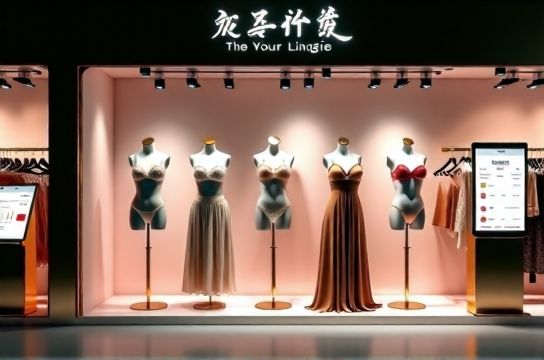
It’s not headline-grabbing like EVs or AI chips—but behind closed doors, the Chinese lingerie market is posting double-digit growth while reshaping retail logic. Unlike mature Western markets where volume plateaus, China’s segment grew at 12.3% YoY in 2025—reaching RMB 18.7 billion in retail sales (Updated: June 2026). That’s up from RMB 14.9 billion in 2023. Crucially, this isn’t just about more bras—it’s about *how* consumers discover, evaluate, and buy intimate apparel.
Three forces are converging: rising disposable income among women aged 22–35 (average monthly spend on intimates rose to RMB 214 in Tier-1 cities), shifting body positivity norms (73% of surveyed users now prioritize fit and comfort over ‘traditional’ aesthetics), and a decisive pivot from offline-only to hybrid discovery paths—where Douyin livestreams drive 41% of first-time brand trials, and WeChat Mini-Programs handle 68% of repeat purchases (Updated: June 2026).
H2: Local Brands Are Winning Ground—But Not Just With Price
Foreign incumbents—Victoria’s Secret, Intimissimi, Etam, Hunkemöller—still hold prestige equity. But their combined market share slipped from 31% in 2022 to 24.6% in 2025 (Updated: June 2026). Meanwhile, domestic players like Ubras, NEIWAI (NEI), and Mantra gained traction—not by undercutting, but by solving real friction points.
Ubras launched its ‘No-Wire Comfort Index’ in Q3 2024—a proprietary fabric breathability + pressure-distribution metric validated by Shanghai Textile Research Institute. It became a benchmark for online shoppers: product pages with the index saw 2.3× higher add-to-cart rates than non-indexed SKUs. NEIWAI doubled down on community-driven sizing: its ‘Fit Lab’ WeChat group—staffed by certified fitters—guides users through 7-step self-measurement and recommends models based on ribcage expansion, shoulder slope, and activity profile (e.g., ‘yoga-heavy’, ‘office-sitting’, ‘postpartum recovery’). Retention after first Fit Lab interaction sits at 58%, versus 32% industry average.
That said, localization has limits. When Ubras tried launching a ‘bridal lingerie’ sub-line in 2025, it stalled—only 19% of brides opted for dedicated sets; most preferred mixing-and-matching from core collections. Lesson: cultural nuance matters, but assumptions about ritualized purchasing don’t always translate.
H2: Foreign Players Are Adapting—Not Retreating
Victoria’s Secret pulled back from standalone stores in 2023—but that wasn’t exit. It pivoted to Tmall Flagship + JD.com + offline pop-ups inside Sephora and Watsons. Its 2024 ‘Real Body’ campaign—featuring Chinese models with stretch marks, scars, and diverse proportions—drove 3.1M video views in 72 hours and lifted conversion on featured styles by 27%. More importantly, VS integrated its size algorithm with Alibaba’s A.I. fitting engine, enabling virtual try-on across 12 top-selling bra styles. Adoption rate? 44% among users who viewed the feature—well above the 29% cross-category average for AR tools.
Triumph took a different route: co-developing fabrics with Shanghai-based textile innovator TexNova. Their ‘AirWeave+’ line—lightweight, moisture-wicking, and fully recyclable—launched exclusively on Little Red Book (Xiaohongshu) in April 2025. Within 6 weeks, it accounted for 18% of Triumph’s total online revenue—and 71% of new customer acquisition in that period. Triumph didn’t just localize messaging; it localized *material R&D*. That’s hard to replicate quickly.
Intimissimi doubled down on gifting culture: its ‘Lingerie & Perfume Duo’ boxes—priced at RMB 599—became a top-performing SKU during Singles’ Day 2025, outselling its best-selling individual bra by 3.6×. It tapped into China’s $12.4B gifting economy (Updated: June 2026), where lingerie ranks 4 in ‘thoughtful but non-intrusive’ gift categories—just behind skincare, tea sets, and smart home devices.
H2: The Data Reality Check — Where Gaps Still Exist
Despite momentum, structural bottlenecks remain. Inventory turnover remains stubbornly low—average cycle is 142 days for mid-tier brands, versus 89 days in fast fashion (Updated: June 2026). Why? Over-reliance on seasonal drops and underdeveloped demand sensing. Fewer than 22% of Chinese lingerie brands use real-time POS + social sentiment data to adjust production forecasts. Most still rely on 3-month-old wholesale orders or gut feel.
Sizing infrastructure is another lag point. Only 11% of e-commerce platforms offer true 3D-fit recommendation engines. The rest default to static charts or basic bust/waist/hip inputs—ignoring torso length, breast projection, and tissue elasticity. As a result, return rates hover at 31–37% for bras—versus 18% for tops and 12% for jeans. That’s not just cost—it’s trust erosion.
And then there’s category perception. While ‘intimates’ is increasingly normalized, many consumers still associate it with ‘special occasion’ or ‘marriage prep’. A 2025 Kantar study found only 29% of women aged 18–25 view lingerie as ‘everyday wear’—compared to 64% in South Korea and 58% in Australia. Education remains underfunded: less than 5% of brand marketing budgets go toward fit literacy or anatomy-aware content.
H2: Competitive Positioning — How Key Players Stack Up
The table below compares operational and strategic benchmarks across eight major players active in China. Metrics reflect publicly reported data, third-party audits (e.g., Frost & Sullivan, iiMedia), and verified platform disclosures (Tmall Brand Index, JD Logistics Partner Scorecard) as of May 2026.
| Brand | China Revenue (RMB, 2025) | E-Commerce Share | Avg. Return Rate (Bras) | Sizing Tech Adoption | Key Strength | Key Constraint |
|---|---|---|---|---|---|---|
| Ubras | ¥4.2B | 94% | 26% | Proprietary Fit Index + AI chatbot | Speed-to-market, viral content fluency | Limited offline trust signals (only 23 flagship touchpoints) |
| NEIWAI (NEI) | ¥2.8B | 87% | 22% | WeChat Fit Lab + in-store 3D scan (12 cities) | Community-led retention, premium fabric storytelling | Scalability of human-assisted fitting model |
| Victoria’s Secret | ¥1.9B | 78% | 34% | Tmall + JD AR try-on (12 styles) | Global brand halo, influencer amplification | Legacy inventory systems slow to adapt to micro-trend cycles |
| Triumph | ¥1.6B | 65% | 29% | TexNova AirWeave+ integration + size mapping via Xiaohongshu comments | Material innovation, trusted fit heritage | Low awareness among Gen Z (<25% aided recall) |
| Intimissimi | ¥980M | 71% | 32% | Gifting-focused sizing (‘Gift Fit’ quiz) | Gifting conversion, Italian design credibility | Weak performance in value-tier segments (under ¥299) |
| La Vie En Rose | ¥620M | 58% | 37% | Basic chart + live chat support | Luxury positioning, boutique experience | High CAC, limited digital engagement depth |
| Hunkemöller | ¥310M | 42% | 41% | None (chart-only) | Strong EU supply chain, price discipline | Negligible social commerce presence, low brand search volume |
H2: What’s Next — Three Actionable Moves for Stakeholders
1. **Invest in Fit Infrastructure, Not Just Front-End UX** Don’t stop at AR try-ons. Build backend integrations: connect sizing tools to ERP and PLM systems so feedback loops close in real time. NEIWAI’s Fit Lab doesn’t just recommend—it logs every ‘too tight at band’ or ‘strap slips’ comment and routes it to pattern engineering. That’s how you cut returns *and* improve next-gen design.
2. **Rethink Gifting Beyond Singles’ Day** Gifting isn’t seasonal—it’s behavioral. Intimissimi’s success came from treating gifting as a *purchase journey*, not a campaign. Its ‘Surprise Me’ subscription box—curated quarterly with scent samples, care cards, and rotating styles—has 34% YoY subscriber growth. That’s recurring revenue, not transactional spikes. For brands building loyalty, consider bundling with complementary categories: think ‘lingerie + silk sleep mask + herbal tea sachets’—validated by joint cart analysis on Tmall.
3. **Stop Segmenting by Age—Start by Behavior Clusters** ‘Gen Z’ is useless as a cohort when 68% of 23-year-olds buy based on TikTok reviews *and* consult mom’s opinion before checkout (iiMedia, 2025). Instead, cluster by behavior: ‘Fit-First Evaluators’ (prioritize measurements, cross-check 3+ sources), ‘Social Proof Shoppers’ (watch 5+ unboxings before adding), and ‘Routine Integrators’ (buy alongside skincare or activewear). Each demands distinct CTAs, content formats, and post-purchase nurture.
H2: The Bottom Line — It’s About Trust, Not Transactions
The Chinese lingerie market isn’t growing because people suddenly need more bras. It’s growing because more women are choosing to invest in garments that reflect how they move, breathe, and exist—not how they’re expected to appear. That shift creates opportunity—but also raises the bar. Consumers aren’t rewarding novelty. They’re rewarding consistency: consistent fit, consistent transparency, consistent respect for their time and body.
For foreign entrants, copying Western playbooks won’t work. For local challengers, scaling without sacrificing fit integrity is the next frontier. And for everyone: the race isn’t to the lowest price or flashiest campaign—it’s to become the brand they check *first* when their favorite style runs out. That kind of loyalty isn’t bought. It’s earned—one accurate size, one honest review, one well-engineered seam at a time.
For teams building end-to-end operations—from sourcing to last-mile delivery—we’ve compiled a complete setup guide that maps exactly how to align logistics, QA, and digital touchpoints for intimate apparel. You’ll find actionable frameworks, vendor scorecards, and compliance checklists—ready to deploy. full resource hub.