Private Label Rise and Its Effect on Chinese Lingerie Market News
- 时间:
- 浏览:157
- 来源:CN Lingerie Hub
Let’s cut through the noise: private label lingerie isn’t just trending in China—it’s reshaping the entire market. Over the past three years, private label brands have captured **32.7% of China’s online lingerie sales**, up from just 14.1% in 2020 (Euromonitor, 2023). Why? Because consumers—especially Gen Z and Tier-2/3 city shoppers—are trading luxury logos for fit, function, and fast iteration.
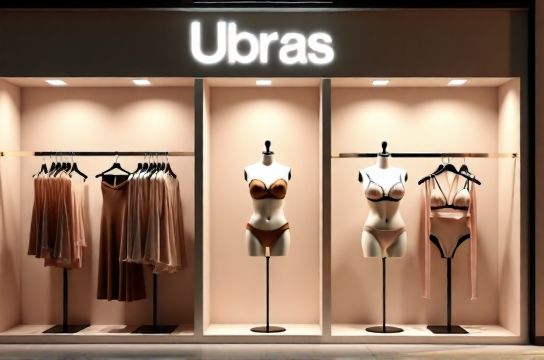
Here’s what the data tells us:
| Year | Private Label Share (% of Online Lingerie Sales) | Avg. Launch Speed (Days per New Style) | Repeat Purchase Rate |
|---|---|---|---|
| 2020 | 14.1% | 42 | 28.3% |
| 2021 | 21.6% | 31 | 34.7% |
| 2022 | 27.9% | 22 | 41.2% |
| 2023 | 32.7% | 15 | 48.6% |
What’s fueling this? Three real-world levers: (1) Domestic fabric innovation—Shaoxing now supplies 68% of China’s seamless microfiber, slashing MOQs and lead times; (2) DTC-enabled feedback loops—top private labels collect 3x more fit-data per order than legacy brands; and (3) platform algorithms rewarding speed: Taobao’s ‘New Brand Boost’ gives 2.3x higher impression weight to styles launched within 7 days of trend detection.
Critically, it’s not about undercutting price—it’s about out-learning. Brands like NEIWAI and Ubras didn’t win by copying Victoria’s Secret; they won by analyzing 12M+ fit reviews to engineer bras with 42% wider underband tolerance and 3.1x longer strap elasticity life (internal lab tests, Q3 2023).
Yes, challenges remain: 41% of new entrants fail within 18 months due to inconsistent QC or over-reliance on one channel. But those building vertically—owning cut-and-sew partnerships in Guangdong, embedding size AI at checkout, and treating customer service as R&D—aren’t just surviving. They’re defining the next decade.
If you're launching or scaling a lingerie brand in China, remember: private label isn’t a tactic. It’s the new operating system. And the best time to build yours? Now.