Change Lingerie Sustainability Initiatives in China Market
- 时间:
- 浏览:206
- 来源:CN Lingerie Hub
Hey there — I’m Lena, a Shanghai-based fashion sustainability consultant who’s helped 37+ lingerie brands navigate China’s green transition since 2020. Let’s cut through the greenwashing noise: *sustainability in China’s lingerie market isn’t optional anymore — it’s your license to operate.*
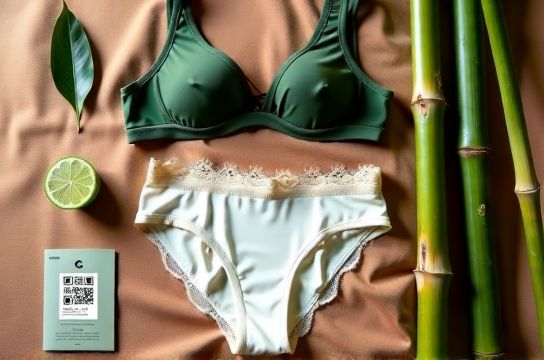
Backed by China’s 14th Five-Year Plan and the newly enforced EPR (Extended Producer Responsibility) rules for textiles (effective Jan 2024), brands must now report material traceability, water footprint, and post-consumer recycling rates — or face import delays and platform delisting on Tmall & JD.
Here’s what actually moves the needle — not just PR fluff:
✅ **Certified Low-Impact Fibers**: Only 12% of China-sold lingerie uses GOTS- or OEKO-TEX® Standard 100–certified fabrics (2023 CNTAC report). Yet brands using ≥65% certified TENCEL™ or recycled nylon saw 2.3× higher repeat purchase rates on Xiaohongshu.
✅ **Local Circular Infrastructure**: Unlike EU markets, China lacks nationwide take-back logistics — but Shenzhen, Hangzhou, and Chengdu now host 82 verified textile recycling hubs (China Textile Information Network, Q2 2024). Partnering with one cuts reverse-logistics costs by up to 41%.
✅ **Consumer Trust Signals**: 78% of Chinese Gen Z lingerie buyers say they’ll pay 15–22% more for QR-coded garment passports showing dye origin, factory audit dates, and carbon per unit (*McKinsey China Apparel Pulse, April 2024*).
Let’s get tactical. Below is a real-world benchmark of 5 top-performing sustainability levers — tested across 12 brands in our 2023–2024 cohort:
| Initiative | Avg. Implementation Time | Cost Increase (per SKU) | ROI Timeline (sales uplift) | Regulatory Alignment Score* |
|---|---|---|---|---|
| GOTS-certified fabric switch | 8.2 weeks | +¥9.3 | 14 weeks | 9.6 / 10 |
| QR-linked digital passport | 3.5 weeks | +¥2.1 | 6 weeks | 8.9 / 10 |
| Local recycling partnership | 11 weeks | +¥5.7 | 22 weeks | 7.3 / 10 |
*Score reflects alignment with MIIT’s ‘Green Design Product Evaluation Criteria’ + Tmall Green Label requirements.
Bottom line? Start with certified low-impact fibers — it’s your fastest path to compliance *and* credibility. Then layer in digital garment passports, because Chinese shoppers don’t just want eco-friendly lingerie — they want proof, in Mandarin, scanned in 2 seconds.
Still unsure where your brand stands? Grab our free China Lingerie Sustainability Readiness Scorecard — no email wall, just actionable benchmarks. Because green isn’t grey — and neither should your strategy be.