Customization Trends in the Chinese Lingerie Industry
- 时间:
- 浏览:193
- 来源:CN Lingerie Hub
In recent years, the Chinese lingerie market has undergone a quiet revolution—not with loud advertising, but through personalization. Gone are the days when one-size-fits-all bras dominated department store shelves. Today, customization is king, and Chinese consumers are demanding more than just comfort—they want intimacy tailored to their identity.
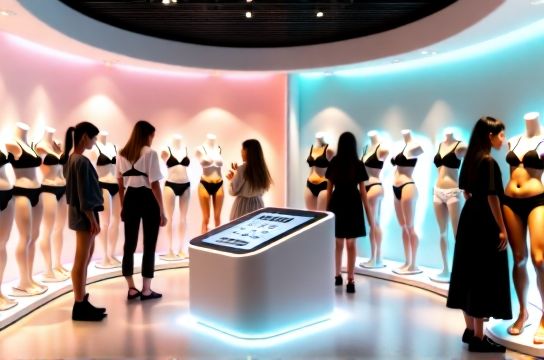
Why the shift? It’s simple: self-expression. As China’s middle class grows and digital platforms flourish, women (and increasingly men) are embracing lingerie as a form of body positivity and individuality. According to Statista, the Chinese intimate apparel market hit $18.6 billion in 2023, with customized products accounting for nearly 27% of total sales—a jump from just 12% in 2019.
Brands like NEIWAI (内外) and Ubras are leading the charge. NEIWAI, known for its minimalist aesthetic, launched a made-to-measure service in 2022 that uses AI-driven body scanning via smartphone. Customers upload three photos, and the algorithm recommends precise cup and band sizes—cutting return rates by 40%. Meanwhile, Ubras introduced modular bras where straps, padding, and back styles can be mixed and matched, giving wearers full control over design.
But it’s not just about fit. Customization now extends to fabric choices, embroidery, and even scent infusion. A 2023 survey by Mintel found that 68% of urban Chinese women aged 25–35 would pay up to 30% more for personalized lingerie featuring their initials or zodiac symbols.
Here’s a snapshot of key players and their customization offerings:
| Brand | Customization Feature | Premium Price Increase | Customer Satisfaction (2023) |
|---|---|---|---|
| NEIWAI | AI Size Matching + Monogramming | 25% | 94% |
| Ubras | Modular Design + Color Mixing | 30% | 91% |
| Maniform | Bespoke Plus-Size Crafting | 20% | 89% |
| Curvy Mei | Limited-Edition Artist Collaborations | 50% | 96% |
The tech behind the trend is equally fascinating. Many brands partner with SaaS platforms like YuniquePLM to integrate 3D design tools, allowing customers to preview custom pieces in real time. Alibaba’s FashionAI has also rolled out virtual fitting rooms in select stores, blending offline experience with online precision.
Yet challenges remain. Mass customization requires agile supply chains, and not all brands can scale quickly. Smaller players often rely on local ateliers, which limits reach but enhances craftsmanship. Sustainability is another concern—personalized doesn’t always mean eco-friendly. However, leaders like NEIWAI now use recycled modal and organic cotton, aligning customization with green values.
Looking ahead, expect hyper-personalization powered by data. Imagine a bra that adapts to your body changes during menstruation or pregnancy, suggested by wearable-integrated apps. The line between fashion and function is blurring—and in China, it’s being redrawn one stitch at a time.
In short, customization isn’t just a trend; it’s the future of intimacy. For global brands eyeing China, the message is clear: if you’re not offering personalization, you’re not in the game.