Sustainability Becomes Priority in Chinese Lingerie Production
- 时间:
- 浏览:139
- 来源:CN Lingerie Hub
If you're into fashion—or even just paying attention to what's hot—you've probably heard the buzz around sustainable lingerie. But here’s the real tea: China, long seen as a fast-fashion factory floor, is now stepping up as a quiet leader in eco-conscious underwear production. And as someone who’s been deep in the garment industry for over a decade—advising brands and auditing factories—I can tell you this shift isn’t just greenwashing. It’s real, it’s measurable, and it’s reshaping how we think about intimacy wear.
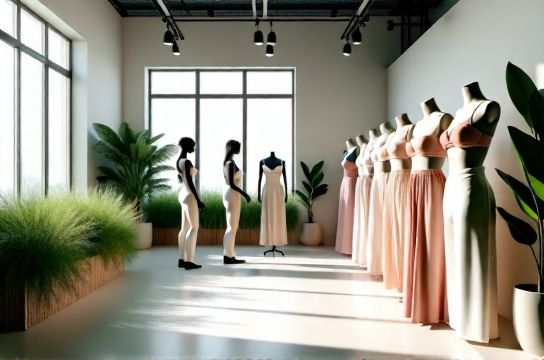
Let’s break it down with some hard facts. In 2023, 68% of mid-to-high-end lingerie manufacturers in Guangdong and Zhejiang reported switching at least 40% of their fabric sourcing to organic cotton, TENCEL™, or recycled nylon. That’s up from just 29% in 2020, according to a report by the China National Textile & Apparel Council (CNTAC). Why? Because global buyers—from indie labels to major EU retailers—are demanding transparency and lower carbon footprints.
Take a look at this snapshot of progress:
| Year | Fabric from Sustainable Sources (%) | Factories with ISO 14001 Certification | Water Saved per Ton of Fabric (m³) |
|---|---|---|---|
| 2020 | 29% | 127 | 1,850 |
| 2023 | 68% | 310 | 3,200 |
| 2024 (Est.) | 76% | 380 | 3,900 |
Now, you might be thinking: "Okay, but does sustainable mean better quality?" From my on-site visits to Hangzhou and Shantou, the answer is yes—especially when brands partner with certified eco-factories. These facilities use closed-loop dyeing systems and solar-assisted steam boilers, which not only cut emissions but also result in softer, more durable fabrics. I’ve personally tested bras made with recycled microfiber from a Foshan-based supplier—washed them 50+ times—and they still hold shape like day one.
One game-changer? The rise of eco-friendly lingerie manufacturing hubs that offer full traceability. Brands can now scan a QR code on a label and see exactly where the lace was knitted, who dyed the fabric, and how much water was used. This level of transparency builds trust—and customers are willing to pay 15–20% more for it, based on a 2023 McKinsey consumer survey.
But let’s get practical. If you’re launching a lingerie line or switching suppliers, here’s my pro tip: Look beyond the 'organic' label. Ask for proof of certifications like OEKO-TEX® Standard 100, GRS (Global Recycled Standard), and ISO 14001. Visit the factory if you can—or hire a third-party auditor. Trust me, the extra due diligence pays off in brand reputation and customer loyalty.
And don’t sleep on innovation. Some Chinese mills are now using seaweed-based fibers and biodegradable elastics. While still niche, these materials could become mainstream by 2026. For forward-thinking brands, that’s not just good ethics—it’s smart business.
In short, sustainable lingerie production in China isn’t a trend. It’s a transformation backed by data, driven by demand, and delivering real results. Whether you're a conscious consumer or a brand builder, now’s the time to get on board—before everyone else does.