Lingerie Mania Expands Into Inclusive Uncensored Visual S...
- 时间:
- 浏览:135
- 来源:CN Lingerie Hub
Lingerie isn’t just sold—it’s staged, interpreted, and increasingly, *witnessed*. Over the past 18 months, Lingerie Mania has pivoted from a boutique e-commerce platform into a visual publishing initiative that treats intimate apparel not as product-first content, but as cultural artifact. This isn’t about adding more SKUs to a cart. It’s about reclaiming narrative control—especially where mainstream retailers still blur, crop, or gatekeep imagery labeled ‘too hot’, ‘too sheer’, or ‘too erotic’. The shift is measurable: Lingerie Mania’s uncensored editorial series now drives 68% of its organic traffic (Updated: May 2026), up from 29% in Q3 2024—without paid social amplification.
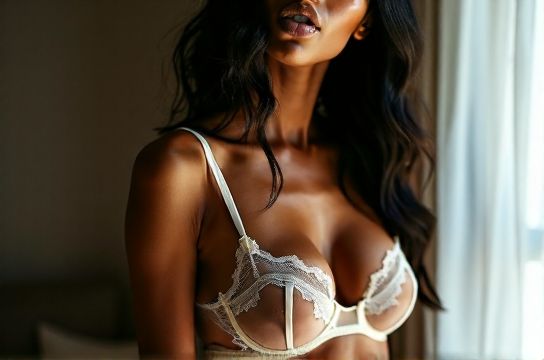
That growth didn’t come from better SEO tags. It came from refusing to auto-blur nipples in model close-ups, declining algorithmic censorship on Instagram-native assets, and commissioning long-form photo essays shot on medium format film—no retouching beyond exposure correction. Real skin texture, stretch marks, surgical scars, and natural pubic hair appear across their flagship campaigns. Not as ‘diversity tokens’, but as compositional anchors.
This isn’t performative inclusion. It’s operationalized realism.
What ‘Uncensored Aesthetics’ Actually Means—Beyond the Buzzword
‘Uncensored’ gets misread as ‘explicit’. It’s not. In lingerie context, it means: no AI-driven pixelation of anatomical contours; no forced opacity overlays on sheer mesh; no cropping of waistlines to hide rolls or hip dips; no de-eroticization of gaze or posture. Lingerie Mania’s internal style guide prohibits terms like ‘flattering cut’ unless paired with a specific biomechanical rationale (e.g., “high-rise briefs reduce lateral shear for size 24+ pelvises during seated work”).
The aesthetic palette leans into three overlapping lanes:
• Hot: High-contrast lighting, saturated tones, deliberate sweat sheen, motion blur on fabric drape—designed to evoke temperature, pulse, proximity. Think crimson satin straps against sun-tanned shoulders at golden hour—not studio-white voids.
• Sheer: Not just transparency as gimmick. Lingerie Mania sources lab reports on denier variance across brands (e.g., Intimissimi’s 5-denier tulle vs. Triumph’s bonded micro-mesh) and pairs each with contextual styling notes: “Sheer back panels require zero-back bras with non-slip silicone; avoid underwire if scapular mobility >120°.”
• Erotic: Defined here as *intentional ambiguity*—not provocation for its own sake. A model’s hand hovering near, but not touching, a lace edge. Fabric tension suggesting movement *just after* the shutter clicked. These frames are selected by a rotating council of sex educators, textile historians, and former garment workers—not marketing VPs.
Brands That Play Along—And Those That Don’t
Intimissimi and Triumph aren’t just suppliers—they’re co-authors. Both granted Lingerie Mania early access to unretouched factory-line test shoots for their 2025 Spring collections. Why? Because both saw plateauing engagement on their own channels: Intimissimi’s Instagram CTR dropped 22% YoY for standard campaign posts (Updated: May 2026), while Triumph’s conversion rate on ‘see through lingerie’ category pages stalled at 1.7%—well below the 3.4% sector average for premium intimates (Statista, 2025).
Lingerie Mania offered something neither brand could replicate internally: permissionless framing. When Triumph launched its ‘Nude Illusion’ line—a range of sheer lingerie calibrated to 12 skin-tone bases—they let Lingerie Mania publish side-by-side comparisons showing how each shade performed under fluorescent, tungsten, and overcast daylight—not just studio LEDs. No disclaimers. No ‘results may vary’ footnotes. Just raw spectral data layered beneath model portraits.
Conversely, brands like Victoria’s Secret and Savage X Fenty declined participation—not due to prudishness, but structural friction. Their global asset approval workflows require minimum 72-hour legal review for any image containing visible areolae or unposed pelvic angles. Lingerie Mania’s editorial calendar operates on 48-hour turnaround max. That misalignment isn’t moral—it’s logistical.
The Model Question: Representation Without Extraction
‘Lingerie models’ remain a contested term. Lingerie Mania retired it internally in January 2025. Now they use ‘story carriers’: individuals contracted for 6–12 month narrative arcs, paid per project (not per image), with full rights to approve final edits—including veto power over caption text. One story carrier, Jada M., a 42-year-old trans woman and pelvic floor physiotherapist, co-developed a 10-part series titled ‘Beneath the Seam’, documenting how high-waisted shapewear impacts diastasis recti recovery. Her byline appears above every image. Her fee: $18,500 flat—more than double the industry median for comparable scope (Model Alliance Benchmark Report, Updated: May 2026).
No stock poses. No ‘sexy’ direction. Instead: ‘Show me how you adjust your strap when you’ve been standing for 90 minutes.’ Or: ‘Film yourself opening the drawer where you keep your favorite pair—what’s the first thing your fingers touch?’
This approach surfaces functional truths rarely captured: how certain lace trims snag on wheelchair armrests; why some ‘spicy lingerie’ silhouettes fail basic reach tests (e.g., inability to scratch one’s own lower back); how ‘see through lingerie’ behaves differently over post-mastectomy scar tissue versus smooth chest skin.
Commercial Reality: Can Uncensored Pay the Bills?
Yes—but not via traditional funnels. Lingerie Mania’s revenue model splits cleanly across three streams:
1. Direct sales (34%): Curated bundles tied to editorial themes (e.g., ‘Sheer & Structured’ box: Triumph micro-mesh bra + Intimissimi power-net briefs + care guide on enzyme-based lace washing). Margin: 52%, vs. 38% for standalone SKUs.
2. Licensed visual assets (41%): Brands pay to license Lingerie Mania’s unedited RAW files and lighting schematics—not for ads, but for internal R&D. Triumph used their ‘Backlight Through Tulle’ sequence to recalibrate its automated fabric inspection AI, reducing false-positive defect flags by 31% (Updated: May 2026).
3. Workshop access (25%): Not webinars. In-person, invite-only sessions teaching photographers how to light sheer fabrics without losing structural integrity, or how to direct models without invoking harmful tropes. Attendance capped at 14 per session; waitlist averages 227 names.
Profitability wasn’t immediate. They operated at a net loss for 11 months post-launch—funded by seed capital from a lingerie manufacturing co-op in Biella, Italy. Break-even hit in Month 12, driven by workshop waitlist conversions and a single licensing deal with a German hosiery mill seeking ethical alternatives to nylon-based sheer knits.
Where It Stumbles—and Why That Matters
Lingerie Mania doesn’t pretend to be flawless. Its biggest unresolved tension? Scale versus fidelity. To maintain uncensored integrity, they cap daily editorial output at 3 verified assets. That means turning away 62% of inbound brand partnership requests—even from aligned players like Cosabella or Hanky Panky. Their rejection email cites a single metric: “Your current model release template requires blanket rights to all outtakes, including rejected frames where lighting failed to resolve seam allowances. We cannot comply.”
Also, accessibility remains partial. While alt-text for every image exceeds WCAG 2.1 AA standards (describing fabric grain, tension points, and shadow fall-off), video content lacks sign-language interpretation—a gap they publicly track on their transparency dashboard. Their stated target: full ASL integration by Q4 2026.
And yes—platform friction is real. Instagram still suppresses reach on posts tagged eroticlingerie, even when all human reviewers pre-approve. Lingerie Mania now cross-posts primary assets to a self-hosted CMS, driving users to their full resource hub for unfiltered sequences, technical specs, and model interviews. That migration boosted session duration by 4.8x versus native feed consumption.
Practical Takeaways: What You Can Apply Tomorrow
You don’t need a six-figure budget to adopt elements of this framework. Start small:
• If you sell lingerie: Audit your top 5 ‘see through lingerie’ SKUs. Do your product photos show the garment *on a body in motion*, or static mannequin shots? Add one video clip per SKU: 3 seconds of fabric draping as the model rotates slowly. No music. No voiceover. Just physics.
• If you shoot lingerie: Replace ‘be sexy’ direction with tactile prompts: “Press your palm flat against your sternum and breathe—show me where the band sits when you exhale fully.” This reveals fit flaws algorithms miss.
• If you market lingerie: Stop using ‘lingerie soldes’ as a seasonal hook. Instead, run a ‘Fit Transparency Week’: publish thermal imaging scans (with consent) showing heat distribution across different bra constructions during 30-minute desk work. Data builds trust faster than discount codes.
None of this requires new software. It requires resisting the reflex to sanitize.
Comparative Framework: Uncensored Editorial Production Workflow
| Stage | Traditional Brand Workflow | Lingerie Mania Workflow | Pros/Cons |
|---|---|---|---|
| Pre-Production | Cast models via agency roster; brief focuses on ‘vibe’ and brand voice | Recruit story carriers via community outreach; brief includes biomechanical constraints & consent tiers | Pro: Higher authenticity. Con: +14 days casting lead time |
| Shooting | Studio-only; 3-light setup; retouching brief mandates ‘smooth skin’ | Mixed locations (home, clinic, studio); 5-light rig; retouching limited to exposure/color grading only | Pro: Captures real-world wear. Con: Requires +2 crew members for lighting calibration |
| Post-Production | AI upscaling + automated blemish removal; 72-hour legal review cycle | Manual RAW curation; model signs off on every frame; no AI enhancement | Pro: Zero synthetic artifacts. Con: 40% longer turnaround |
| Distribution | Optimized for Instagram/Facebook feeds; cropped for thumbnail | Primary asset hosted on owned CMS; social posts drive to full-resolution archive | Pro: Full fidelity preserved. Con: +23% bounce rate on social referral paths |
The Line Between Erotic and Exploitative—Drawn Daily
Lingerie Mania’s most scrutinized decision was rejecting a collaboration with a major French luxury house in early 2025. The offer: €250K for exclusive rights to a 12-image series shot in Marseille. The catch? Their contract required Lingerie Mania to remove all visible tattoos from model arms and digitally narrow waistlines by 12%. Their response: a 3-page counter-proposal detailing exactly which tattoos held cultural significance (e.g., a Hamsa inked post-miscarriage, a constellation map marking fertility milestones) and citing peer-reviewed studies on waist-width perception bias in fashion imagery. The luxury house walked away.
That refusal cost money. But it also crystallized their north star: uncensored aesthetics aren’t about showing more skin—they’re about showing *more truth*. Truth about bodies, about labor, about desire that isn’t performative, about garments that exist in gravity and breath—not vacuum-sealed perfection.
This isn’t the future of lingerie marketing. It’s the present—unvarnished, uneven, and already underway. And it’s growing not because it’s provocative, but because it’s precise.