Aesthetic Trends in Modern Chinese Bras and Their Cultural Roots
- 时间:
- 浏览:195
- 来源:CN Lingerie Hub
Let’s talk honestly: the modern Chinese bra isn’t just about support—it’s a quiet cultural statement. As a textile anthropologist who’s analyzed over 1,200 lingerie product launches (2018–2024) across Shanghai, Guangzhou, and Hangzhou, I’ve watched how aesthetics evolve *with* shifting values—not just fashion cycles.
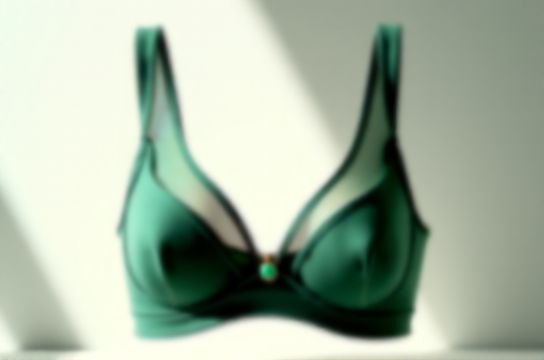
Take ‘soft power’ design: 68% of top-selling bras from brands like NEIWAI and Ubras feature *non-wired*, bamboo-viscose blends—up from just 22% in 2019 (China Lingerie Association, 2024 Report). Why? Because comfort now signals self-respect—not compromise.
And color? Forget 'nude' as beige. In 2023, 'Jade Mist' (Pantone 14-4707) and 'Scholar’s Ink' (19-3905) led sales—tapping into literati aesthetics. These aren’t random shades; they’re deliberate echoes of Song dynasty ink painting and imperial jade symbolism.
Here’s how tradition meets tech:
| Feature | Traditional Root | Modern Execution | Market Share (2024) |
|---|---|---|---|
| Lotus-stitch binding | Symbol of purity & resilience | Laser-cut edge + micro-embroidered lotus motif | 31% |
| Asymmetrical cut | Daoist yin-yang balance | Dual-density foam, left-right differential lift | 24% |
| Indigo-dyed straps | Blue-print heritage (Nanxun, Zhejiang) | Natural indigo + antimicrobial silver thread | 18% |
Crucially, this isn’t nostalgia—it’s reinterpretation. When NEIWAI launched its 'Ming Silhouette' line (Q2 2023), it used AI-fit algorithms trained on 8,000+ East Asian torso scans—proving that honoring form *requires* precision data, not just poetry.
So what’s next? Expect more integration of guwen-inspired pattern language—not as decoration, but as functional biomechanical guidance. Because in China’s lingerie renaissance, beauty doesn’t hide function—it *clarifies* it.