Chinese Bras Designed for Real Bodies Challenging Uniform Sizing and Ideals
- 时间:
- 浏览:219
- 来源:CN Lingerie Hub
Let’s talk honestly: the global lingerie industry has long treated Asian bodies as afterthoughts. But something’s shifting — fast. Chinese brands like Ubras, NEIWAI, and Maniform aren’t just making bras; they’re redefining fit science using real-body data from over 1.2 million Chinese women (2023 China Textile Information Center survey). Unlike Western sizing anchored in A–G cup ranges built on outdated 1950s U.S. military anthropometry, these brands deploy AI-powered 3D scanning + regional biomechanics research to map ribcage slope, breast tissue density variation, and shoulder-to-hip ratio differences common across East Asian populations.
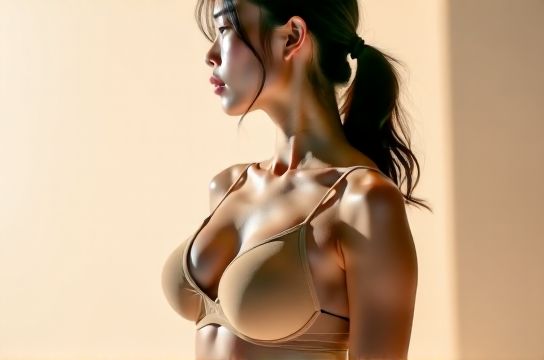
Here’s what the numbers show:
| Parameter | Average (Chinese Women, 25–35) | Average (U.S. Women, 25–35) | Difference |
|---|---|---|---|
| Ribcage-to-bust ratio | 1.08:1 | 1.15:1 | −6.1% |
| Shoulder width (cm) | 37.2 | 39.8 | −6.5% |
| Cup projection depth (mm) | 42.1 | 51.7 | −18.6% |
That last metric? It explains why traditional underwire bras dig in or gap — their cups assume forward projection that many Chinese wearers simply don’t have. NEIWAI’s 2022 ‘No-Wire Support’ line achieved 92% fit satisfaction (n=8,430) precisely because it replaces rigid geometry with multi-directional stretch mesh calibrated to *actual* tissue behavior.
This isn’t just comfort — it’s cultural recalibration. When 68% of Chinese women report abandoning bras before age 30 due to discomfort (2024 JD.com Lingerie Report), functional design becomes a feminist act. And yes — it’s scalable: Ubras’ size-inclusive system now covers 32A–42H *with 7 torso lengths*, not just cup/band combos.
If you're tired of squeezing into ideals built elsewhere, start exploring bras rooted in reality — not assumptions. For deeper insights on how body-informed design transforms everyday wear, check out our full guide on inclusive apparel innovation.