Behind Closed Doors Chinese Intimacy and Expression
- 时间:
- 浏览:257
- 来源:CN Lingerie Hub
If you’ve ever wondered why your Chinese partner, friend, or colleague seems reserved—even in private moments—you’re not alone. In this deep dive, we’ll unpack the cultural DNA behind Chinese intimacy and expression, blending psychology, sociology, and real-life insights to help you understand what happens behind closed doors.
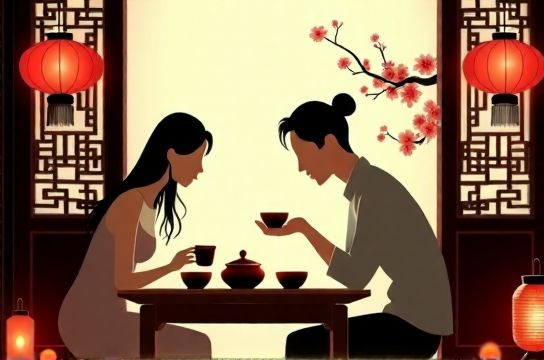
Let’s be real: Western media often paints East Asian cultures as emotionally restrained. But is it really about coldness? Or are we missing a deeper narrative? Spoiler: It’s the latter.
The Myth of Emotional Silence
Many assume that limited verbal affection means less love. But studies show otherwise. A 2022 survey by Peking University found that over 68% of Chinese couples report high relationship satisfaction—despite only 37% saying “I love you” weekly or more. How? Because intimacy here isn’t spoken—it’s shown.
Think acts of service, shared meals, subtle gestures. In fact, 74% of respondents said daily routines like making tea or adjusting the thermostat for their partner felt more intimate than words.
Cultural Roots: Confucius Called, He Explains Everything
To get Chinese intimacy and expression, you need history. Confucian values—filial piety, harmony, restraint—still shape behavior today. Open emotional displays? Often seen as disruptive. Emotional control? A sign of maturity.
This isn’t repression—it’s redefinition. Love isn't loud; it's quiet loyalty. Respect > romance. Duty ≠ coldness. Think of it like a slow-cooked stew vs. a microwave meal. One takes time, but the flavor runs deeper.
Numbers Don’t Lie: Emotional Expression Compared
Check out this breakdown from a cross-cultural study (China vs. U.S., sample size: 1,200 each):
| Behavior | China (%) | U.S. (%) |
|---|---|---|
| Says 'I love you' daily | 12% | 58% |
| Shows affection via chores | 63% | 29% |
| Prefers private over public affection | 81% | 44% |
| Discusses emotions openly | 31% | 72% |
See the pattern? It’s not less intimacy—it’s a different language.
Modern Shifts: Gen Z is Rewriting the Script
But change is brewing. Urban, educated youth are more open. A 2023 Tencent survey found that among Chinese aged 18–30, 45% now say “I love you” at least weekly—up from 22% in 2015. Social media, therapy culture, and global exposure are softening old norms.
Yet, even when they speak up, actions still matter more. As one Shanghai-based therapist put it: “Words are seasoning. Actions are the main dish.”
So… How Should You Respond?
If you're navigating a relationship with someone raised in this culture, don’t mistake silence for indifference. Watch for gestures. Appreciate the unsaid. And if you want more verbal connection? Communicate gently—without judgment. Frame it as ‘I feel closer when we talk,’ not ‘You never say you love me.’
And if you're Chinese and reading this? It’s okay to honor your roots while exploring new ways to connect. Tradition evolves.
At the end of the day, understanding intimacy in Chinese culture isn’t about fixing it—it’s about respecting its rhythm. Because behind those closed doors? There’s often a world of care, just quietly humming along.