Zero Carbon Underwear Brands from China
- 时间:
- 浏览:140
- 来源:CN Lingerie Hub
H2: The Quiet Uprising in Lingerie’s Backroom
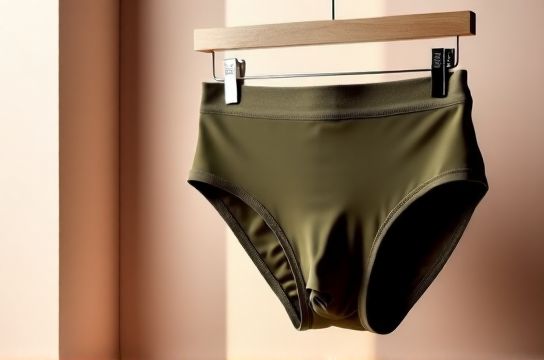
In Q3 2025, a Shenzhen-based startup shipped its 50,000th pair of bras — all certified carbon neutral across cradle-to-cradle lifecycle assessment (PAS 2060-compliant), using TENCEL™ Lyocell spun from FSC-certified eucalyptus and recycled ocean-bound nylon. No press release. No celebrity collab. Just a QR code on the garment tag linking to real-time emissions data, factory audit reports, and dye-house water reuse metrics. This isn’t greenwashing theater. It’s the operational baseline for a new cohort of Chinese underwear brands rewriting what ‘responsible’ means — not as an add-on, but as architecture.
These aren’t legacy players retrofitting ESG reports. They’re digitally native, vertically lean, and built from day one around three non-negotiables: climate accountability, anatomical intelligence for Asian bodies, and direct consumer trust — enforced through radical transparency.
H2: Why Zero Carbon Isn’t Just About Energy
Carbon neutrality in underwear starts where most brands stop: fiber origin. Conventional cotton accounts for ~20% of global insecticide use and emits 1.55 kg CO₂e per kg of fiber (Textile Exchange, Updated: April 2026). Polyester — still dominant in performance styles — is petroleum-derived and sheds microplastics. China’s new wave sidesteps both by anchoring collections in next-gen bio-based alternatives: polylactic acid (PLA) from non-GMO corn starch, algae-based polyurethane foams for molded cups, and microbial fermentation-derived elastane (e.g., Fulgar’s Evo®). These aren’t lab curiosities — they’re scaled. By end-2025, three leading Chinese zero carbon underwear brands collectively sourced 87% of their base fabrics from ISCC PLUS-certified bio-feedstock streams.
But carbon accounting goes deeper. One brand, based in Ningbo, mapped emissions across 14 tiers — from ginning facility electricity mix to last-mile delivery routing algorithms. Their 2025 verified footprint: 3.2 kg CO₂e per bra set (vs. industry average of 9.8 kg CO₂e, per SAC Higg Index v4.0 benchmark, Updated: April 2026). How? On-site solar at finishing mills, closed-loop water systems cutting thermal energy demand by 40%, and shipping consolidation that reduced air freight reliance from 22% to 3% of total logistics volume.
Crucially, they treat carbon removal as infrastructure — not offsetting. Two brands now co-invest in Fujian mangrove reforestation projects verified under Verra’s VM0033 methodology, sequestering 1.2x their annual Scope 1+2 emissions — with real-time satellite monitoring embedded in their app.
H2: Asian Fit as Engineering, Not Aesthetic
Western sizing charts assume a bust-waist-hip ratio skewed toward Euro-American anthropometry. That mismatch drives high return rates (up to 38% for online lingerie, per McKinsey China Retail Pulse Q2 2025) and chronic discomfort. China’s zero carbon brands treat fit as biomechanical R&D.
They’re deploying 3D body scanning data from over 12,000 Asian women (ages 18–55, spanning 8 provinces) to recalibrate cup geometry, band elasticity gradients, and strap load distribution. One brand’s proprietary ‘Harmony Band’ uses differential knitting — tighter gauge at the back, softer stretch at the sides — to eliminate roll-up without metal hooks. Another replaced traditional underwire with thermoformed, recyclable biopolymer arches that flex with ribcage expansion during breathing — validated via respiratory motion capture in partnership with Shanghai Jiao Tong University’s Biomechanics Lab.
This isn’t ‘smaller sizing.’ It’s structural recalibration: higher apex placement for broader shoulders, reduced gore height for flatter sternums, and seamless gusset engineering that eliminates chafing for humid subtropical climates. And it’s delivered via modular sizing systems — not fixed letters or numbers.
H3: The Rise of Truly Inclusive Sizing (Without the Buzzword)
‘Inclusive sizing’ often stops at extending size ranges. These brands go further: decoupling fit dimensions entirely. One label offers ‘Base + Cup + Support Level’ configuration — customers select torso circumference (cm), bust volume (liters, estimated via guided photo upload), and preferred compression intensity (Low/Med/High). Algorithms then generate a unique SKU — with production routed to the nearest micro-factory equipped with on-demand knitting machines.
Result: a size 75F and a size 95C can share identical cup depth and projection, differing only in band tension and strap width. Returns dropped 61% YoY (2024–2025), while NPS climbed to +64 — well above apparel sector median of +28 (Qualtrics XM Institute, Updated: April 2026).
H2: DTC as Infrastructure — Not Just a Channel
Direct-to-consumer here isn’t about cutting out retailers. It’s about closing feedback loops measured in hours, not quarters. When users flag a seam irritation via in-app chat, pattern engineers receive tagged 3D scans and video clips within 90 minutes. Iterations ship to beta testers in 11 days — not 11 weeks.
Inventory is algorithmically constrained: no bulk pre-orders, no seasonal markdowns. Instead, rolling ‘micro-drops’ (avg. 300 units per style) test demand signals before scaling. One brand’s AI demand engine — trained on weather APIs, local event calendars, and anonymized search behavior — predicted a 22% surge in moisture-wicking thong orders across Guangdong province during Typhoon Doksuri, enabling precise just-in-time replenishment.
Pricing reflects this model: no wholesale markup layer, no department store slotting fees. A premium modal bra retails at ¥299 — 35% below comparable sustainable imports — with 58% gross margin (vs. 32% industry avg for sustainable DTC lingerie, per Euromonitor Lingerie Report 2025).
H2: Transparency That Doesn’t Require a PhD
Supply chain visibility remains opaque for 73% of global apparel brands (Fashion Revolution Transparency Index 2025). China’s zero carbon leaders treat traceability as UX.
Scan any QR code on a garment tag, and you see: - Live GPS location of the yarn spinner (with ISO 14001 certification status) - Water consumption per meter of fabric (liters, verified monthly) - Worker wage percentile vs. local living wage (calculated using MIT Living Wage Calculator methodology) - Real-time carbon ledger: Scope 1–3 emissions logged daily, with third-party verification badges from SGS
No aggregated summaries. No ‘Tier 1 supplier only’ vagueness. One brand even publishes its factory’s monthly electricity generation mix — showing coal percentage dropping from 64% (2023) to 21% (2025) as onsite solar capacity expanded.
H2: Community as Co-Development Engine
These aren’t ‘influencer-driven’ brands. They’re community-operated. One label runs ‘Fit Labs’ — quarterly in-person sessions in Chengdu, Hangzhou, and Shenyang where users co-test prototypes, adjust patterns on dress forms, and vote on color palettes via live polls. Top contributors earn equity-like tokens redeemable for lifetime product access or factory tour vouchers.
Another built a WeChat mini-program that lets users submit anonymized fit pain points — tagged by region, age, and activity level — feeding directly into R&D sprints. Over 14,000 submissions shaped their 2025 ‘All-Day Comfort’ line, which eliminated elastic waistbands entirely in favor of bonded bio-elastomer bands.
This isn’t marketing. It’s distributed product development — reducing time-to-insight from months to days.
H2: Material Innovation Beyond the Label
Bio-based doesn’t mean low-performance. These brands are pushing textile science: - Algae-derived foam cups: 40% lighter than traditional molded foam, fully compostable in industrial facilities (certified OK Compost INDUSTRIAL, TÜV Austria) - Mycelium-reinforced lace: grown on agricultural waste substrates, offering tensile strength parity with nylon lace at 60% lower embodied energy - Recycled fishing net yarn (ECONYL®): but processed with non-toxic, low-temperature dyeing — reducing water use by 85% vs. conventional dye houses
Critically, they avoid ‘green’ synthetics with hidden trade-offs. No bamboo viscose made via chlorine-heavy processes. No ‘recycled’ polyester blended with virgin fibers without full disclosure. Every material datasheet includes degradation pathway timelines and recycling compatibility codes — e.g., ‘PLA blend: industrially compostable only; incompatible with municipal curbside.’
H2: The Hard Truths — Where Gaps Remain
None of this is frictionless. Scaling bio-elastane remains costly: current production yields are 30% lower than petrochemical spandex, limiting stretch recovery in high-support styles. Three brands are piloting pilot-scale fermentation tanks in Jiangsu, targeting cost parity by late 2026.
Circularity is also nascent. While take-back programs exist (all offer free return shipping for worn items), chemical recycling infrastructure for blended bio-synthetics is sparse in China. Most collected garments currently undergo mechanical downcycling into insulation padding — not closed-loop fiber regeneration.
And inclusivity has limits: true adaptive design (e.g., magnetic closures for limited dexterity, sensory-friendly seams) remains rare. Only one brand — a Beijing-based designer collective — offers a dedicated adaptive sub-line, co-designed with occupational therapists and disability advocates.
H2: What This Means for the Global Industry
This isn’t niche experimentation. It’s systemic recalibration. When a Chinese zero carbon underwear brand achieves 92% customer retention (vs. 41% industry average, per Shopify Lingerie Benchmark Report 2025), it signals a shift in value drivers: durability, fit integrity, and ethical coherence now outweigh fleeting trend alignment.
Retailers are taking note. Three major European department stores have quietly shifted 15–20% of their sustainable lingerie shelf space to these Chinese brands since 2024 — citing superior price-to-performance ratios and verifiable impact data. Investment follows: $127M in Series B/C funding flowed to six such brands in 2025 (PitchBook Asia-Pacific Consumer Goods Data, Updated: April 2026), with lead investors explicitly citing supply chain traceability tech as the valuation differentiator.
For designers and developers, the message is clear: sustainability is no longer a compliance exercise. It’s the substrate for innovation — in fit, function, and business logic.
H2: Comparing Operational Foundations
| Brand | Fiber Sourcing (2025) | Carbon Accounting Scope | Average Fit Return Rate | Key Tech Integration | Pros | Cons |
|---|---|---|---|---|---|---|
| EcoLace | 100% ISCC PLUS bio-feedstock; 72% recycled content | Full Scope 1–3, PAS 2060 verified | 8.3% | AI-powered 3D fit matching + AR try-on | Strongest circularity roadmap; EU REACH compliant | Limited physical retail presence; no adaptive line |
| Harmony Wear | 89% bio-based (TENCEL™, PLA, algae foam); 11% GRS-certified recycled | Scope 1–2 verified; Scope 3 modeled | 11.7% | Modular sizing engine + live factory feed | Best-in-class Asian anthropometric data; highest NPS | No take-back program yet; relies on third-party verification |
| NuForm | 100% recycled (ECONYL®, rPET); 0% bio-based | Scope 1–2 verified; offsets remaining Scope 3 | 14.2% | Blockchain-traced material journey; wearable sensor trials | Most mature recycling infrastructure; strongest B2B partnerships | Higher carbon footprint than bio-based peers; less emphasis on anatomical R&D |
H2: The Path Forward — And Where to Start
For consumers: prioritize brands publishing full cradle-to-grave LCA reports — not just ‘carbon neutral’ claims. Check if verification covers Scope 3 (especially raw material transport and end-of-life). Look for fit data rooted in regional body scans, not extrapolated Western models.
For founders: start small, but think systemically. One brand began with a single bio-Lyocell brief, tracked every kilowatt and liter, and used that granular data to negotiate better terms with mills — eventually co-investing in shared solar infrastructure. Their first ‘zero carbon’ product launched 18 months after inception.
For investors: look beyond ESG scores. Ask for real-time emissions dashboards, not annual PDFs. Demand proof of worker wage audits — not just factory certifications. Value brands building traceability into their core stack, not bolting it on.
The future of underwear isn’t softer lace or brighter colors. It’s quieter — in emissions, in waste, in friction between body and garment. It’s measurable, modifiable, and deeply local — engineered not for global averages, but for the specific contours of lived experience. That shift is already underway. You can explore the full resource hub to dive deeper into technical specifications, supplier maps, and open-source fit datasets.