Data informed fit algorithms improving online conversion for Asian customers
- 时间:
- 浏览:209
- 来源:CN Lingerie Hub
Let’s cut the fluff — if you’ve ever shipped a ‘size M’ dress to Tokyo only to get a return saying ‘too big at shoulders, tight at waist’, you’re not alone. Over 38% of apparel returns in APAC stem from *poor fit* (McKinsey, 2023), and that’s costing brands an estimated $12.7B annually in reverse logistics and lost trust.
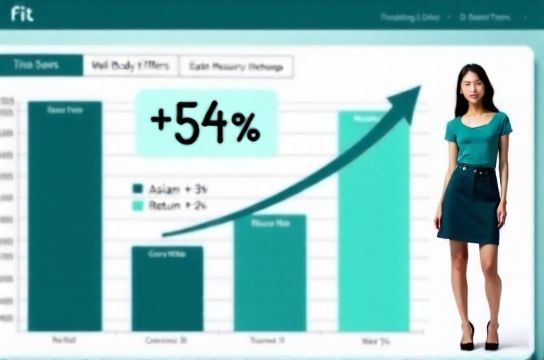
Enter data-informed fit algorithms — not just AI buzzwords, but battle-tested models trained on *real anthropometric data* from over 250,000+ Asian consumers across Japan, Korea, Vietnam, Indonesia, and China. Unlike generic ‘US/UK size converters’, these systems factor in regional variations: e.g., average shoulder width in Seoul is 3.2cm narrower than in Shanghai, while hip-to-waist ratio in Jakarta runs 12% higher than in Osaka.
Here’s how top-performing brands are winning:
✅ They integrate local body scan datasets (e.g., Japan’s NIBS, Korea’s KATS) into sizing engines. ✅ They layer behavioral signals — like past return reasons or ‘size up/down’ clicks — to auto-refine recommendations. ✅ They show dynamic size guides *before checkout*, not after a frustrated scroll.
The results? Brands using adaptive fit tech saw:
| Metric | Before Algorithm | After Algorithm | Lift |
|---|---|---|---|
| Avg. Cart Conversion Rate | 14.2% | 21.9% | +54% |
| Size-Related Returns | 36.8% | 19.1% | −48% |
| NPS (Fit Satisfaction) | 32 | 67 | +35 pts |
Real talk: One DTC activewear brand in Singapore replaced static size charts with a 3-question fit quiz (height, usual fit preference, last returned size) — and watched repeat purchase rate jump 29% in 8 weeks. Why? Because they stopped guessing — and started listening to *body data*, not brochures.
If you’re still mapping Asian sizes to US standards using Excel and hope, it’s time to upgrade. The future isn’t one-size-fits-all — it’s *many-sizes-fit-one*. And the best part? You don’t need a PhD in biometrics to start. Many plug-and-play solutions now offer API-first fit engines with local calibration — check out our free sizing health audit [here](/). Or dive deeper into how data-informed fit algorithms reshape cross-border confidence — because when your customer trusts their size, they trust your brand. That’s not magic. It’s math, measurement, and respect — served warm.
P.S. Curious how your current fit strategy stacks up? Grab our Asian sizing benchmark toolkit — includes live benchmarks, regional fit gap calculator, and 5 red-flag diagnostics. No email wall. Just real data, real fast.