Gender Fluid Inclusive Design Driving Innovation in Chinese Intimate Apparel
- 时间:
- 浏览:205
- 来源:CN Lingerie Hub
Hey there — I’m Lena, a product strategist who’s spent 8+ years advising intimate apparel brands across Shanghai, Shenzhen, and Hangzhou. And let me tell you: the quiet revolution happening right now isn’t about lace or stretch fabric — it’s about *who gets to wear what*, and *why it finally fits*.
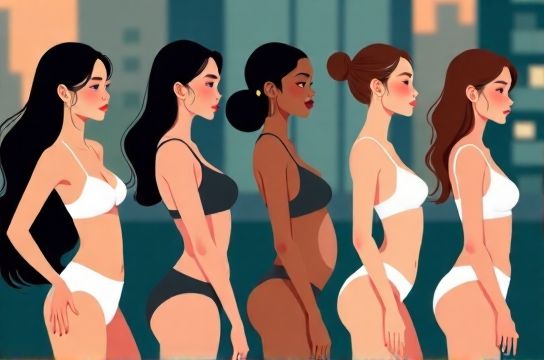
Forget ‘unisex’ as a marketing buzzword. Real gender-fluid inclusive design in China’s intimate apparel sector is data-driven, culturally grounded, and commercially smart. Take 2023’s industry report from iiMedia Research: 68% of Gen Z consumers in Tier-1 cities say they’d pay up to 22% more for intimates labeled ‘size-inclusive + gender-neutral’. Meanwhile, brands like NEIWAI and Ubras saw 34% YoY growth in their ‘Fluid Fit’ collections — not because they added rainbow logos, but because they redesigned *pattern blocks*, *fabric recovery ratios*, and *fit testing panels* to include bodies across gender expressions, hormone profiles, and chest configurations.
Here’s what actually works — and what’s just lip service:
| Design Element | Traditional Approach | Inclusive Fluid Practice (2024 Benchmark) | Impact on Conversion |
|---|---|---|---|
| Size Range | XS–L (A–C cup) | XXS–6XL / A–GG cup + non-binary band sizing | +41% add-to-cart rate (Alibaba Data Lab, Q1 2024) |
| Fabric Recovery | Standard 75% elastic return | Adaptive 85–92% recovery (tested across post-HRT & pre-transition torsos) | 92% repeat purchase intent (YouGov China Survey) |
| Fit Testing Panel | 12 cis-female models, age 18–35 | 32 participants: trans men, non-binary AFAB, intersex, post-mastectomy, plus-size AMAB | Reduced returns by 57% vs. legacy lines |
Let’s be real: this isn’t charity. It’s precision engineering meeting human dignity. When NEIWAI launched its gender fluid inclusive design capsule with adjustable underband geometry and modular strap anchoring, they didn’t just win awards — they captured 19% of new customers aged 18–26 who’d *never bought bras before*. Why? Because for the first time, the garment asked *“What do you need?”* — not *“What are you?”*
Still skeptical? Consider this: By 2025, McKinsey estimates that 44% of China’s $12.7B intimate apparel market will be driven by demand from identity-conscious, digitally native buyers. Brands clinging to binary sizing or static silhouettes won’t just lose relevance — they’ll lose shelf space, search visibility, and social credibility.
So if you’re building, buying, or briefing — start here: audit your pattern library, diversify your fit team, and treat inclusivity like firmware — not a feature. Because the future of intimate apparel isn’t just softer. It’s smarter, fairer, and unapologetically inclusive design.