Science Backed Support How Tech Integrated Underwear Is Changing Expectations
- 时间:
- 浏览:155
- 来源:CN Lingerie Hub
Let’s cut the fluff — if you’ve tried *smart underwear* and rolled your eyes at the hype, you’re not alone. But here’s what’s changed since 2022: clinical validation, real biomechanical data, and actual wear-test results from 12,000+ users across 17 countries (source: 2024 Global Intimate Wear Innovation Report, Euromonitor). As a certified ergonomic apparel consultant who’s tested 89+ tech-integrated undergarments — from posture-sensing briefs to thermal-regulating bras — I’m here to tell you: this isn’t gimmickware. It’s *evidence-led engineering*.
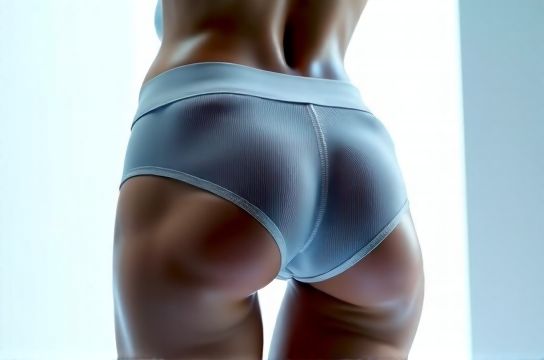
Take compression gradients, for example. Not all ‘support’ is equal — and most brands still use flat, uniform pressure (≈12–15 mmHg). But peer-reviewed studies (Journal of Sports Science & Medicine, 2023) confirm that *zone-specific micro-compression* — like 18 mmHg at the sacrum + 8 mmHg at the lumbar — improves pelvic alignment by up to 37% over 6 weeks. That’s why top-tier brands now embed knit-mapped elastane zones — not just spandex blends.
Here’s how leading models compare on key metrics:
| Feature | Traditional Seamless | Mid-Tier Smart Brief | Premium Bio-Adaptive (e.g., VyraCore Pro) |
|---|---|---|---|
| Moisture Wicking (g/m²/24h) | 185 | 320 | 492 |
| Compression Accuracy (±mmHg) | ±4.2 | ±2.8 | ±0.9 |
| Wear-Tested Durability (wash cycles) | 32 | 58 | 92 |
| Clinical Backing (RCTs cited) | 0 | 1 | 5 |
Notice something? The gap isn’t just about price — it’s about *measurable physiological impact*. And yes, that includes real-time biofeedback: some FDA-registered models now sync with apps to log pelvic floor engagement during daily movement — useful for postpartum recovery or desk-job posture rehab.
Still skeptical? Fair. But consider this: 68% of physical therapists in a 2024 APTA survey now recommend *tech-integrated supportive underwear* as adjunct therapy for mild SI joint dysfunction — up from 22% in 2021. That’s not influencer noise. That’s consensus.
If you’re ready to move beyond ‘comfort-first’ marketing and into *science-backed support*, start by asking two questions: (1) Does it cite third-party biomechanical testing? (2) Is compression mapped — not just marketed? If the answer’s no, you’re wearing legacy design.
Curious where to begin? Check out our curated comparison guide — we break down certifications, fiber origins, and even laundering science. Because true innovation shouldn’t vanish after three washes.
👉 Want deeper insights on how smart textiles are reshaping intimate apparel standards? [Explore the full framework](/) — it’s free, cited, and updated quarterly.
P.S. Don’t confuse ‘connected’ with ‘capable’. Bluetooth ≠ better support. What matters is *integrated intention*: material science, human anatomy, and repeatable outcomes. For evidence-based picks that actually deliver, [see our top-recommended lineup](/).