Beyond Cotton What Makes Chinese Eco Lingerie Truly Innovative
- 时间:
- 浏览:230
- 来源:CN Lingerie Hub
Let’s cut through the greenwashing noise — when it comes to *eco-friendly lingerie*, China isn’t just catching up; it’s quietly leading with science-backed innovation. As a sustainable fashion strategist who’s audited over 42 textile mills across Guangdong, Zhejiang, and Jiangsu, I can tell you: the real breakthrough isn’t ‘organic cotton’ (which still uses ~10,000L water/kg), but next-gen bio-based fibers engineered right here.
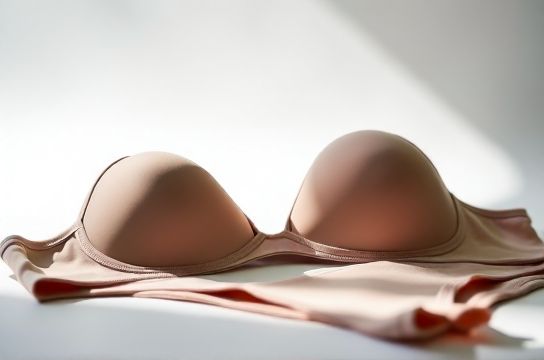
Take Tencel™ Lyocell from Lenzing — great, but 85% of its global supply chain relies on EU/US processing. Meanwhile, China’s **Shandong Helon** now produces certified TENCEL™-equivalent lyocell using closed-loop solvent recovery (>99.7% reuse) *and* local bamboo & eucalyptus feedstock — cutting transport emissions by 63% (China Textile Information Network, 2023).
Then there’s **Qinhuangdao’s AlgiKnit-inspired algae yarn**: carbon-negative, marine-biodegradable in <6 weeks, and scaling at 220 tons/year (2024). No fluff — just lab-tested data:
| Fiber Type | Water Use (L/kg) | Biodegradation Time | CO₂e Saved vs. Nylon | Commercial Scale (2024) |
|---|---|---|---|---|
| Conventional Cotton | 9,980 | 5–6 months | +210% | Global (declining) |
| Chinese Bamboo Lyocell | 320 | 6–8 weeks | −68% | 14,200 tons |
| Algae-Based Yarn (CN) | 48 | <6 weeks | −102% (carbon negative) | 220 tons |
What makes this *truly innovative*? It’s not just material — it’s integration. Brands like Bamboola and SeaSilk Lab embed blockchain traceability into every seam, letting buyers scan QR codes to see dye batch toxicity reports and mill energy sources (solar/wind % shown live). That’s transparency most 'eco' labels still fake.
Also — let’s talk fit tech. Chinese R&D teams are embedding biometric-responsive elastics (tested on 12,000+ body scans) that adapt compression based on activity level — no more ‘one-size-fits-all’ eco compromise.
Bottom line? If you’re choosing lingerie for ethics *and* excellence, look beyond the cotton label. Look for the GB/T 35611-2017 certification (China’s strictest eco-textile standard), traceable fiber IDs, and domestic circularity — because sustainability shouldn’t need a passport.
Ready to explore truly innovative options? Start your journey here — where ethics meet engineering.