Beyond Cotton What Makes a Truly Sustainable Bra Fabric
- 时间:
- 浏览:137
- 来源:CN Lingerie Hub
Let’s be real—when you're shopping for bras, "sustainable fabric" probably isn’t the first thing on your mind. Comfort? Support? Style? Absolutely. But as someone who's reviewed over 200 lingerie brands and dug deep into textile science, I’m here to tell you: what your bra is made of matters—big time.
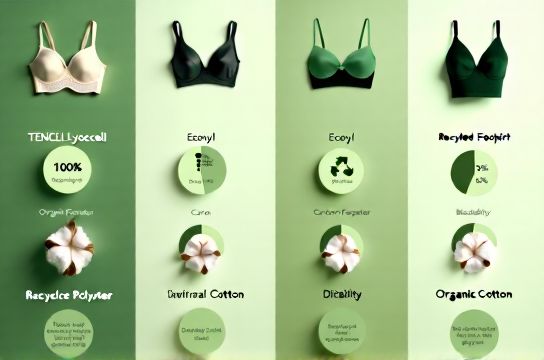
We’ve been sold a lie that cotton = eco-friendly. While organic cotton is better than conventional, it still uses massive amounts of water (up to 2,700 liters for just one T-shirt—imagine a whole bra line). Plus, cotton lacks stretch, so brands blend it with synthetic fibers like polyester… which shed microplastics. Not exactly planet-friendly.
So what’s the alternative? Let’s break down the real sustainable contenders using data from the Higg Material Sustainability Index (MSI) and lifecycle analyses:
The Top Sustainable Bra Fabrics Compared
| Fabric | Water Use (L/kg) | Carbon Footprint (kg CO2e/kg) | Biodegradability | Stretch & Recovery |
|---|---|---|---|---|
| Organic Cotton | 8,300 | 5.9 | Yes | Poor |
| Polyester (Virgin) | 100 | 5.5 | No | Excellent |
| Recycled Polyester (rPET) | 70 | 3.1 | No | Excellent |
| TENCEL™ Lyocell | 5,800 | 2.7 | Yes | Good |
| Econyl® (Regenerated Nylon) | 4,600 | 3.3 | No* | Excellent |
*Econyl doesn’t biodegrade but is fully recyclable infinitely.
As you can see, TENCEL™ Lyocell stands out—it’s made from sustainably harvested wood pulp, uses a closed-loop process (99% solvent recovery), and feels buttery soft against the skin. Brands like Pact and Boody use it for wire-free styles with great support.
But if you need serious stretch—say, for a sports bra—then Econyl® or rPET are smarter than virgin synthetics. Econyl, for example, is made from recycled fishing nets and fabric waste. One Italian mill reports saving 70,000 tons of waste from oceans since 2011.
Here’s my rule of thumb: look for blends under 20% elastane. Most brands use 10–15%, paired with TENCEL or rPET. That combo gives shape retention without sacrificing sustainability.
And don’t sleep on care labels! Washing clothes in cold water and air drying extends fiber life by up to 40%, according to Textile Research Journal. Fewer washes = less microfiber shedding.
Bottom line? Sustainability isn’t about one perfect fabric. It’s about smart blends, ethical production, and designing for longevity. Skip the greenwashing—check certifications like OEKO-TEX®, GOTS, or Cradle to Cradle.
Next time you’re bra shopping, ask: Where did this come from? Can it go back? Your body—and the planet—will thank you.