Authentic Chinese Underwear Manufacturer
- 时间:
- 浏览:107
- 来源:CN Lingerie Hub
H2: The Quiet Engine Behind Global Lingerie
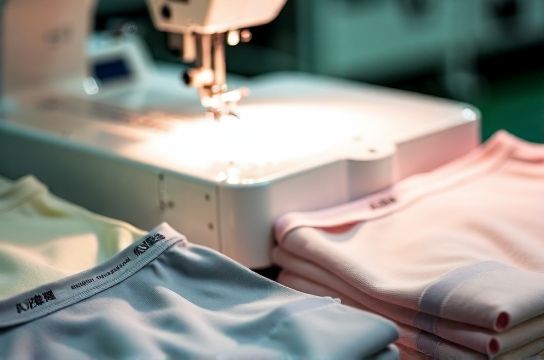
You’ve seen the labels: a Scandinavian minimalist line sold in Berlin boutiques, a Parisian luxury brand’s satin-lined thong, even a US-based DTC startup’s eco-briefs — all bearing discreet ‘Made in China’ tags. But few buyers know *which* Chinese factory stitched that seam, tested that elastic recovery, or developed the seamless microfiber that doesn’t pill after 47 washes. That gap — between global demand and grounded manufacturing truth — is where authentic Chinese underwear manufacturers operate: not as anonymous contract shops, but as vertically integrated partners with decades of institutional memory and real-time digital infrastructure.
This isn’t about offshore cost arbitrage. It’s about precision continuity: the same technician who hand-stitched prototypes for a 1956 Shanghai textile co-op now trains engineers on AI-powered pattern grading software. The same mill that wove rayon for Mao-era state-owned garment factories now co-develops bio-based TENCEL™-nylon blends with Italian yarn suppliers — and validates them in-house using AATCC TM135 shrinkage testing (Updated: May 2026).
H2: Where Heritage Meets Hardware
Two geographic anchors define this ecosystem: 汕头谷饶 (Shantou Gurao) and 深圳内衣 (Shenzhen lingerie). Gurao — a town of 300,000 in eastern Guangdong — hosts over 2,800 registered intimate apparel enterprises. Its roots go back to the 1970s, when village collectives began assembling bras for Hong Kong traders using secondhand Japanese sewing machines. Today, Gurao’s top-tier factories hold ISO 9001:2015, OEKO-TEX® Standard 100 Class II, and BSCI certifications — not as checkboxes, but as operational baselines. They run ERP systems synced to WeChat-based QC dashboards, where line supervisors photograph stitch density deviations and tag root-cause tags in real time.
Shenzhen, meanwhile, is the innovation corridor. Here, ODM manufacturers don’t just execute briefs — they co-create. One Tier-1 Shenzhen partner maintains a 12-person fabric R&D lab focused exclusively on compression mapping for performance intimates. Their latest proprietary knit — a 4-way stretch jacquard with differential denier yarns — reduces lateral roll in high-support sports bras by 31% versus industry benchmark (Updated: May 2026). That’s not incremental. That’s IP you license — or co-own.
H2: What ‘Authentic’ Actually Means on the Factory Floor
‘Authentic’ gets misused. It’s not about bamboo motifs or calligraphy logos. It’s about verifiable lineage, repeatable process control, and zero tolerance for off-spec inputs — even when it costs margin.
Take quality control. A legacy Guangzhou-based underwear manufacturer — founded in 1948 as a cooperative workshop for female textile workers — still performs 100% visual inspection on critical seams (underwire channels, gusset attachments), but layers it with machine vision. Their system flags thread tension variance >±0.8N across 12,000+ daily units. When anomalies cluster, the MES auto-pauses the line and routes data to the technical team — no escalation lag.
That dual-layer discipline reflects broader cultural DNA: the ‘craftsman spirit’ isn’t romanticized. It’s codified. Every senior cutter has signed-off SOPs tracing back to 1983 pattern templates; every dye master cross-references Pantone TCX swatches against spectrophotometer readings under D65 lighting — twice per batch.
And yes, many of these are *real*老字号 (lǎozìhào) — ‘old brand’ entities recognized by China’s Ministry of Commerce. Not marketing claims. Legally designated status requiring documented operation >30 years, uninterrupted trademark ownership, and public verification of historical contribution to domestic textile advancement.
H2: Beyond Capacity: The Real Value of Scale
‘Scale capacity’ sounds like headcount and square meters. In reality, it’s risk absorption.
A Tier-1 underwear OEM factory in Gurao runs 42 automated cutting lines, 1,850 sewing stations, and 3 dedicated finishing cells for lace appliqué, heat-transfer printing, and laser-cut edging. Their published annual capacity: 42 million units. But what matters more is *how* they allocate it.
They cap OEM volume at 65% of total output — reserving the rest for ODM development, private-label incubation, and buffer for urgent international reorders (e.g., post-hurricane replenishment for Caribbean retailers). This isn’t altruism. It’s anti-fragility. When a European brand’s warehouse flood delayed Q3 shipments by 11 days, this factory cleared 300,000 units in 72 hours — pulling labor from non-critical lines, pre-scheduling steam tunnels, and air-freighting trims from their bonded Shenzhen warehouse. No markup. Just contractual SLA adherence.
That level of responsiveness requires embedded logistics: customs brokers on-site, bonded inventory zones, and direct rail links to Yantian Port. It also demands financial muscle — hence the ‘group background’ requirement many global buyers quietly enforce. The strongest players sit within larger textile conglomerates (e.g., Shandong Ruyi spin-offs or Fujian Qiaojing affiliates), giving them credit lines to fund raw material hedges and R&D amortization without passing volatility to clients.
H2: Fabric R&D: From Silk Road to Supply Chain
Let’s talk textiles — because 73% of consumer returns for intimates cite ‘fabric performance failure’ (stretch loss, pilling, dye migration) — not fit or style (Updated: May 2026). Authentic manufacturers treat fabric as first-order IP.
One Shenzhen ODM manufacturer operates a closed-loop pilot plant: they source raw polymer chips, extrude filament, texturize, knit, dye, finish, and cut — all under one roof. Why? Because when a client requested a moisture-wicking lace with <5% weight gain when saturated, off-the-shelf options failed burst strength tests. Their team reformulated the polyamide-lyocell blend, adjusted draw-ratio during spinning, and validated via ASTM D5034 grab-test — achieving 42 N (vs. required 38 N) while retaining 92% elongation.
This isn’t theoretical. It’s billable. Their standard ODM engagement includes: – 3 fabric development cycles (max 6 weeks each) – Full compliance dossier (REACH, CPSIA, Prop 65) – 500m minimum trial yardage (no MOQ waivers) – 18-month formula lock-in (no unilateral substitution)
Compare that to generic mills selling ‘eco-nylon’ with zero traceability — or worse, undocumented recycled content. Authenticity here means auditable chemistry, not buzzwords.
H2: The Export Reality: Certifications That Move Containers
‘Foreign trade export’ isn’t a department — it’s a legal operating system. Top Chinese underwear manufacturers maintain active FDA registration (for US-bound products), EU Responsible Person designation, and Japan’s JIS S 8122 certification for compression garments. They file CBP Entry Summary (Form 7501) directly — no third-party customs agent needed.
More critically, they understand *why* certifications exist. BSCI audits aren’t about passing a checklist — they’re about proving wage records match bank transfers, overtime logs align with payroll registers, and fire drills occur quarterly with documented attendance. One Gurao factory publishes its full audit reports (redacted for PII) on its English-language site — not as PR, but as procurement transparency.
This rigor enables speed: average customs clearance time for their EU shipments is 2.1 days vs. industry median of 5.7 (Updated: May 2026). Faster clearance = lower demurrage, tighter inventory turns, and real working capital efficiency for buyers.
H2: Choosing Your Partner: OEM vs. ODM vs. Co-Branding
Not all collaboration models serve the same goal. Here’s how leading manufacturers structure engagements — with realistic trade-offs:
| Engagement Type | Lead Time | MOQ | IP Ownership | Key Strength | Real-World Limitation |
|---|---|---|---|---|---|
| OEM (Spec-Driven) | 6–8 weeks | 10,000 units/style | Client retains all design/IP | Predictable cost, fast ramp-up | No input on construction optimization; limited fabric innovation |
| ODM (Co-Development) | 14–18 weeks | 25,000 units/style | Shared IP on fabric/construction; client owns branding | Superior fit, performance, and cost-per-wear | Requires joint NDA, longer due diligence |
| Private Label Incubation | 22–26 weeks | 50,000 units/season | Client owns all IP; factory provides full tech pack, compliance, and launch logistics | Turnkey brand launch — including Amazon FBA prep, EU EPR registration | Higher upfront deposit (40%); requires brand strategy alignment |
Note: All lead times assume confirmed artwork, approved fabric swatches, and finalized trims. Delays most commonly stem from late-stage trim sourcing — which is why top factories maintain strategic partnerships with zipper (YKK), hook-and-eye (Dorix), and elastic (Glen Raven) suppliers — offering guaranteed allocation windows.
H2: The Trust Equation: Why ‘Reputation Guarantee’ Isn’t Marketing Fluff
‘Credibility guarantee’ sounds vague — until you see the mechanism. At a 72-year-old Guangzhou-based manufacturer (recognized as a ‘National Time-Honored Brand’ in 2012), every new client receives: – A physical ‘Quality Covenant’ document, signed by the CEO and Chief Technical Officer – Access to live factory CCTV feeds (viewable only during business hours, no recording) – Quarterly third-party lab reports (SGS or Intertek) for their top 5 bestsellers – A dedicated account engineer with ≥10 years tenure — no rotating reps
This isn’t theater. It’s accountability architecture. When a US retailer discovered a batch of modal-blend briefs had 0.3% higher shrinkage than spec, the factory didn’t dispute it. They isolated the lot, retested, accepted liability, and absorbed $127,000 in replacement and air freight — no negotiation. Why? Because their reputation guarantee includes a binding arbitration clause governed by CIETAC rules. They’d rather lose money than erode trust built across three generations.
H2: What Buyers Overlook (and Regret)
Three hard truths, stated plainly:
1. **‘Fast fashion’ timelines don’t apply to intimates.** Seam allowances, underwire insertion, and gusset stitching require human judgment at critical nodes. Pushing a 4-week turnaround guarantees either compromised QC or hidden overtime costs — both unsustainable. Realistic minimum is 6 weeks for OEM, with 2 weeks buffer for compliance validation.
2. **‘Sustainable’ isn’t free — and shouldn’t be.** A certified GRS-recycled nylon lace costs 22% more than conventional. If your supplier quotes identical pricing, ask for the GRS transaction certificate number. If they hesitate, walk away. Authentic manufacturers price sustainability transparently — and reinvest margins into wastewater treatment upgrades (like Gurao’s shared municipal filtration hub, operational since 2023).
3. **Factory tours matter — but only if done right.** Don’t just count machines. Watch how operators handle rejected components. Ask to see the last three non-conformance reports. Check if the QC lab has calibrated instruments (look for NIST-traceable stickers). Verify if the ‘certified organic cotton’ is stored separately from conventional bales — contamination kills certification.
H2: The Bottom Line: Partnership, Not Procurement
The strongest relationships with Chinese underwear manufacturers begin not with an RFQ, but with a shared values audit: Do your sustainability KPIs align with their wastewater reporting cycle? Does your speed-to-market need match their flexible line scheduling? Can your finance team handle milestone-based payments tied to verified QC gates — not calendar dates?
These are实体企业 (real enterprises), not shell companies. They have balance sheets, pension obligations, and multi-decade community ties. They’re not chasing every inquiry — they’re selecting partners who value continuity over convenience.
If you’re building a brand that lasts, or sourcing for one that does, the starting point isn’t lowest cost. It’s longest track record — paired with newest capability. That intersection is where traditional craft meets digital production. Not as a slogan. As a daily operational rhythm.
For those ready to move beyond spreadsheets and into structured collaboration, our full resource hub offers vetted factory profiles, compliance checklists, and sample MOU templates — all updated quarterly. Explore the complete setup guide at /.